


CityU Hosts The 8th Annual Silk Road Entrepreneurship Education Network Conference Focusing on AI, Green Enterprises and Leadership
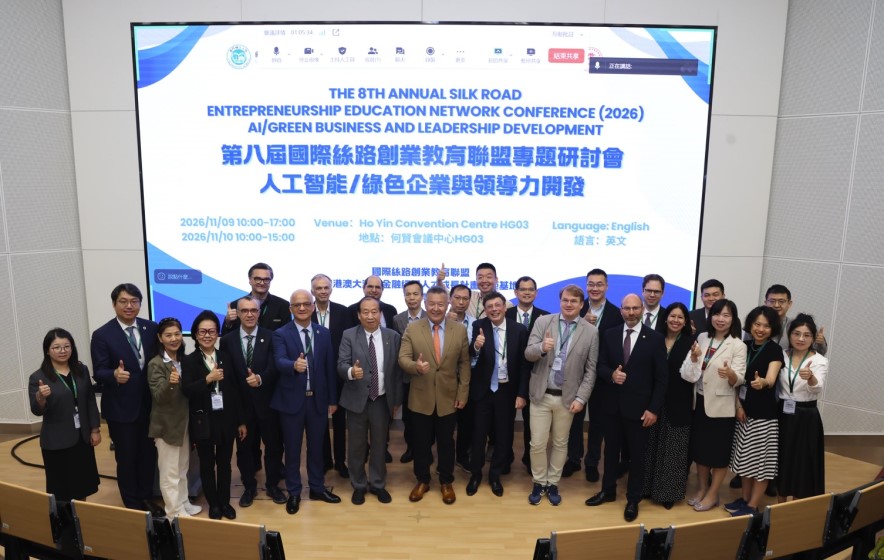
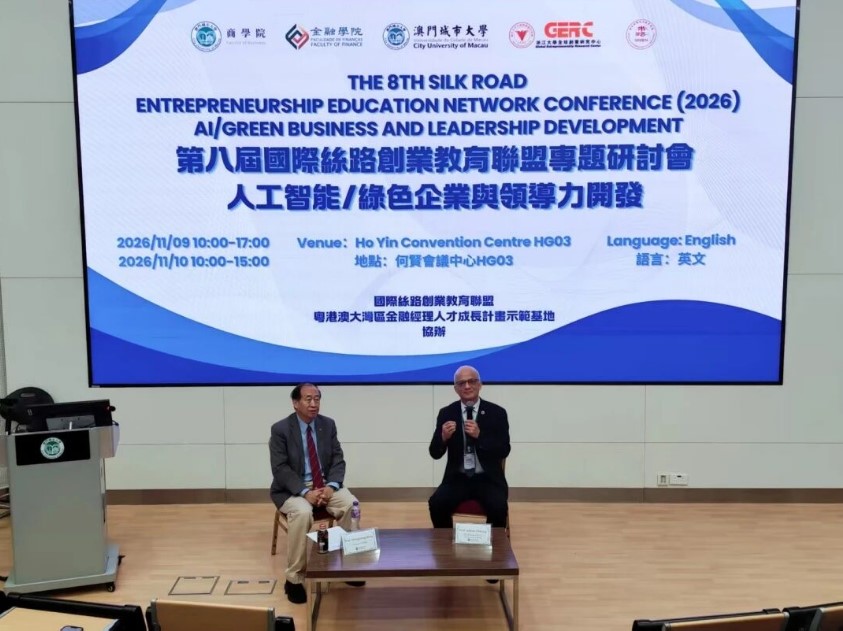
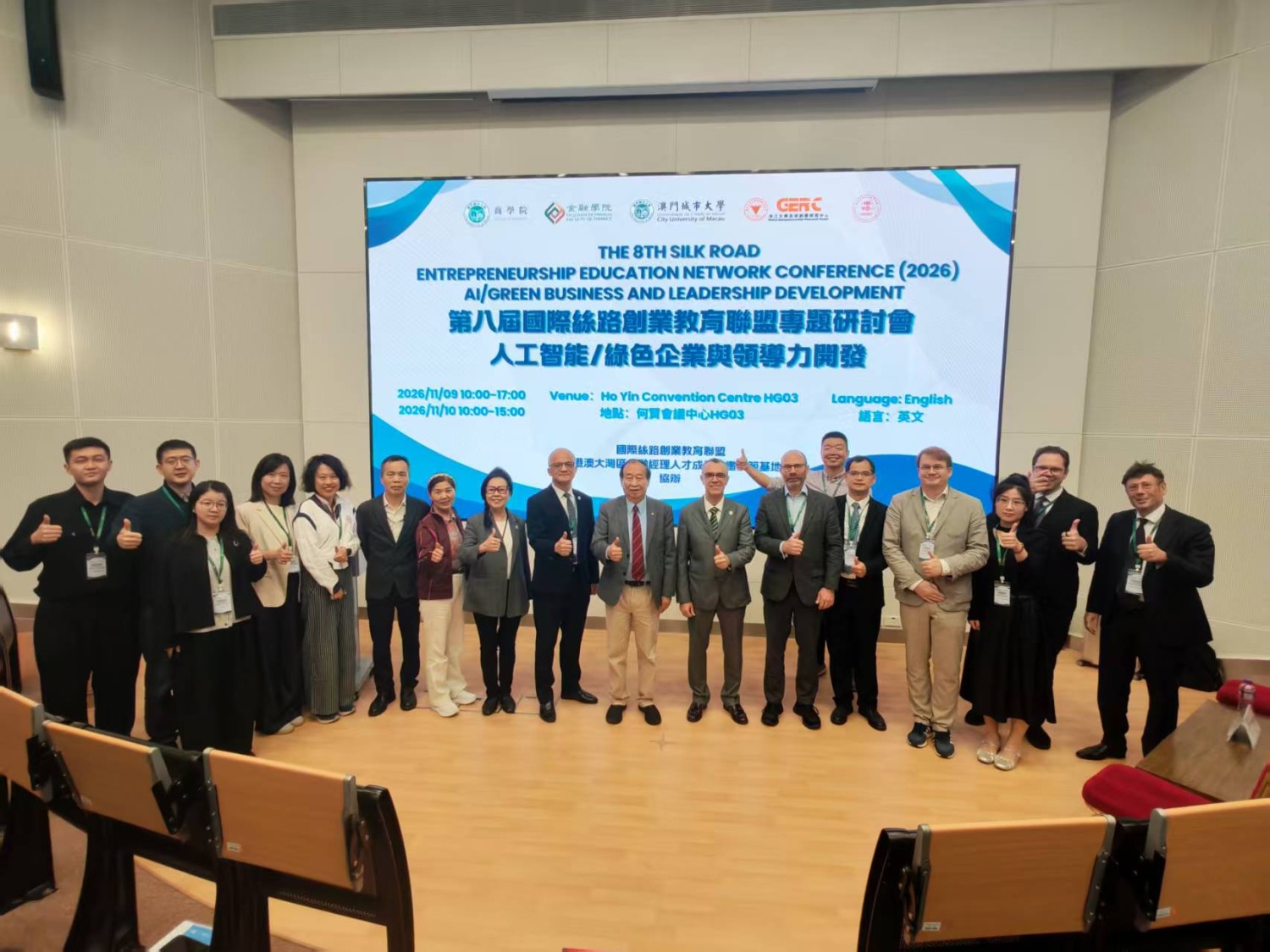
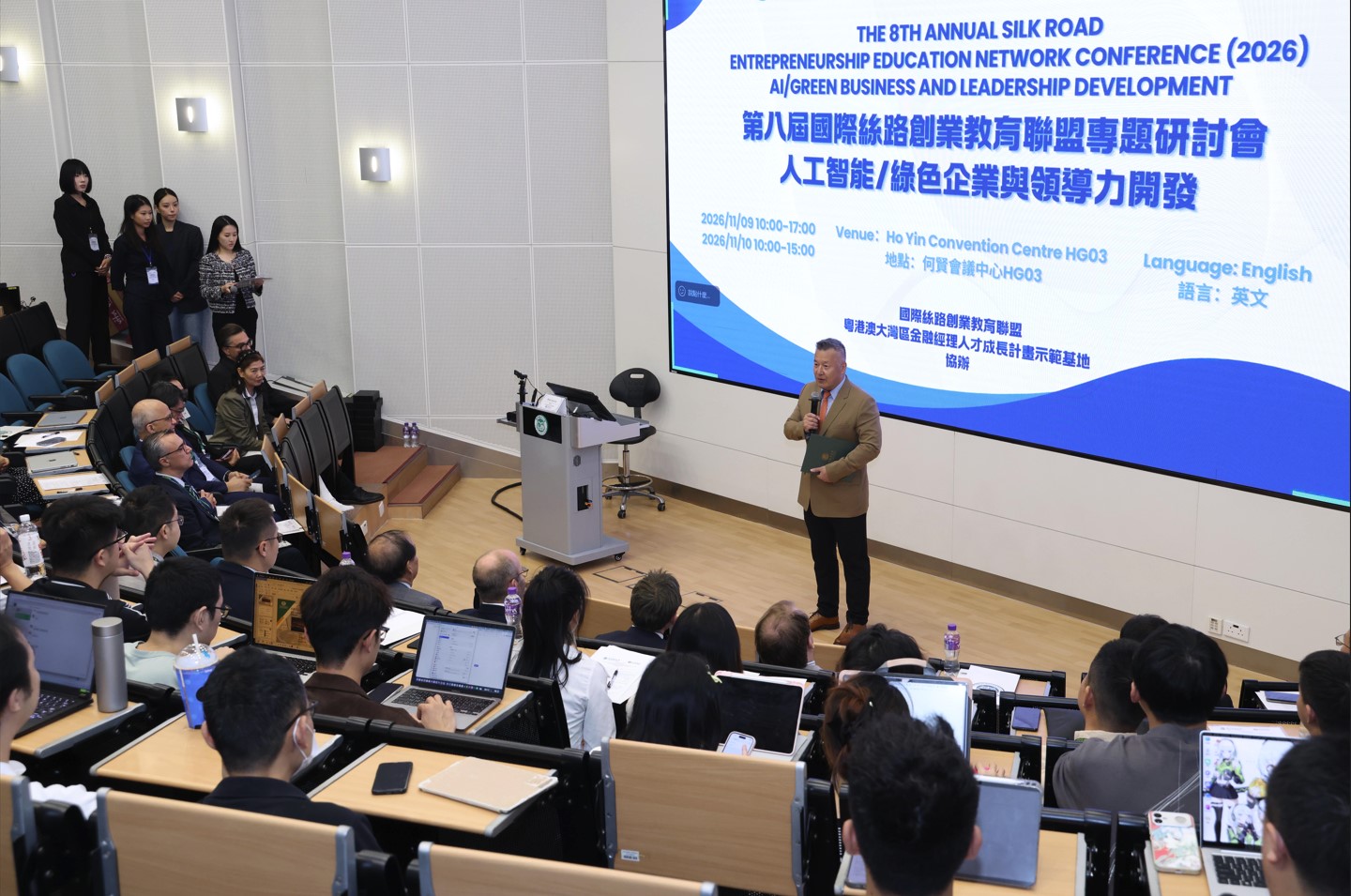
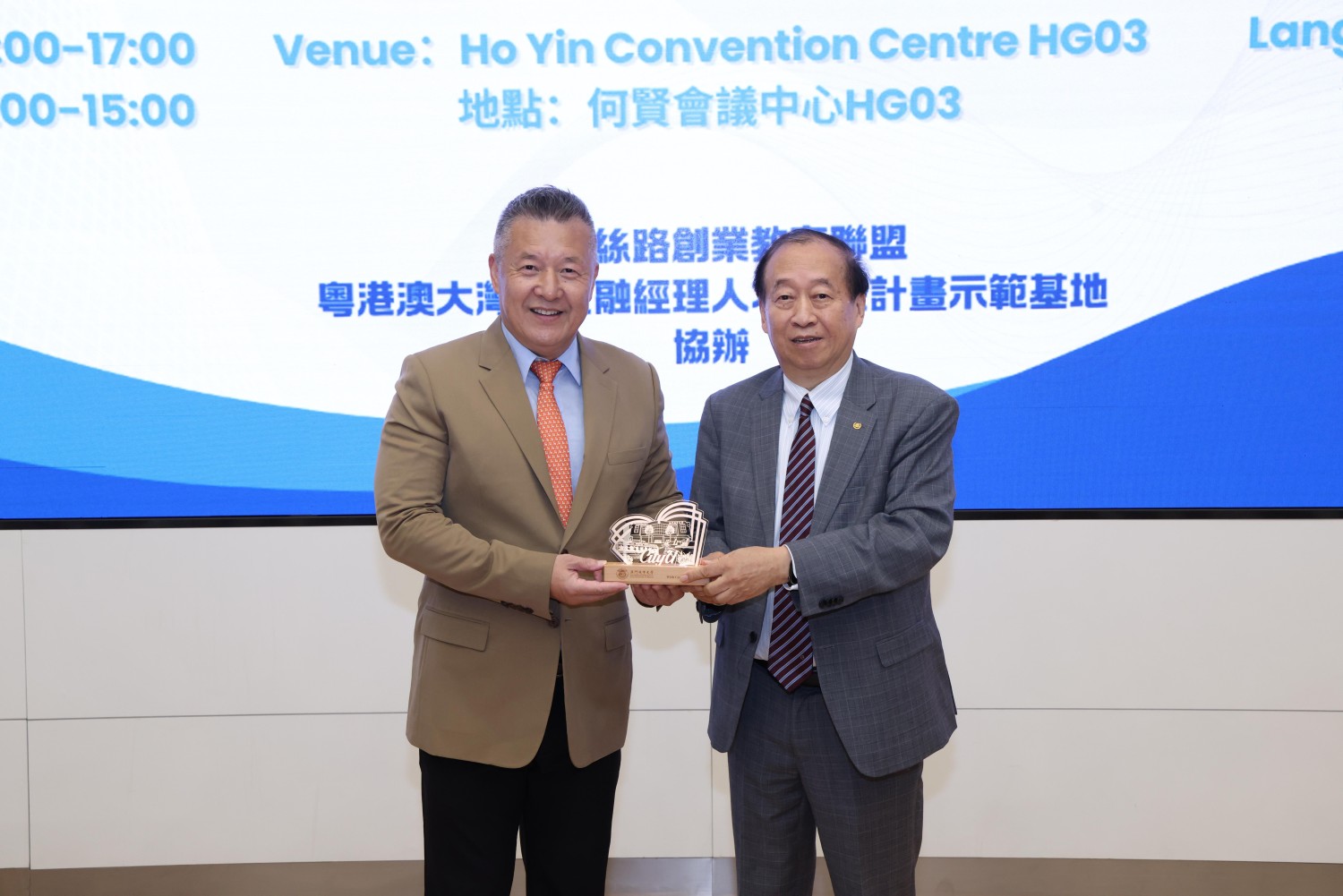
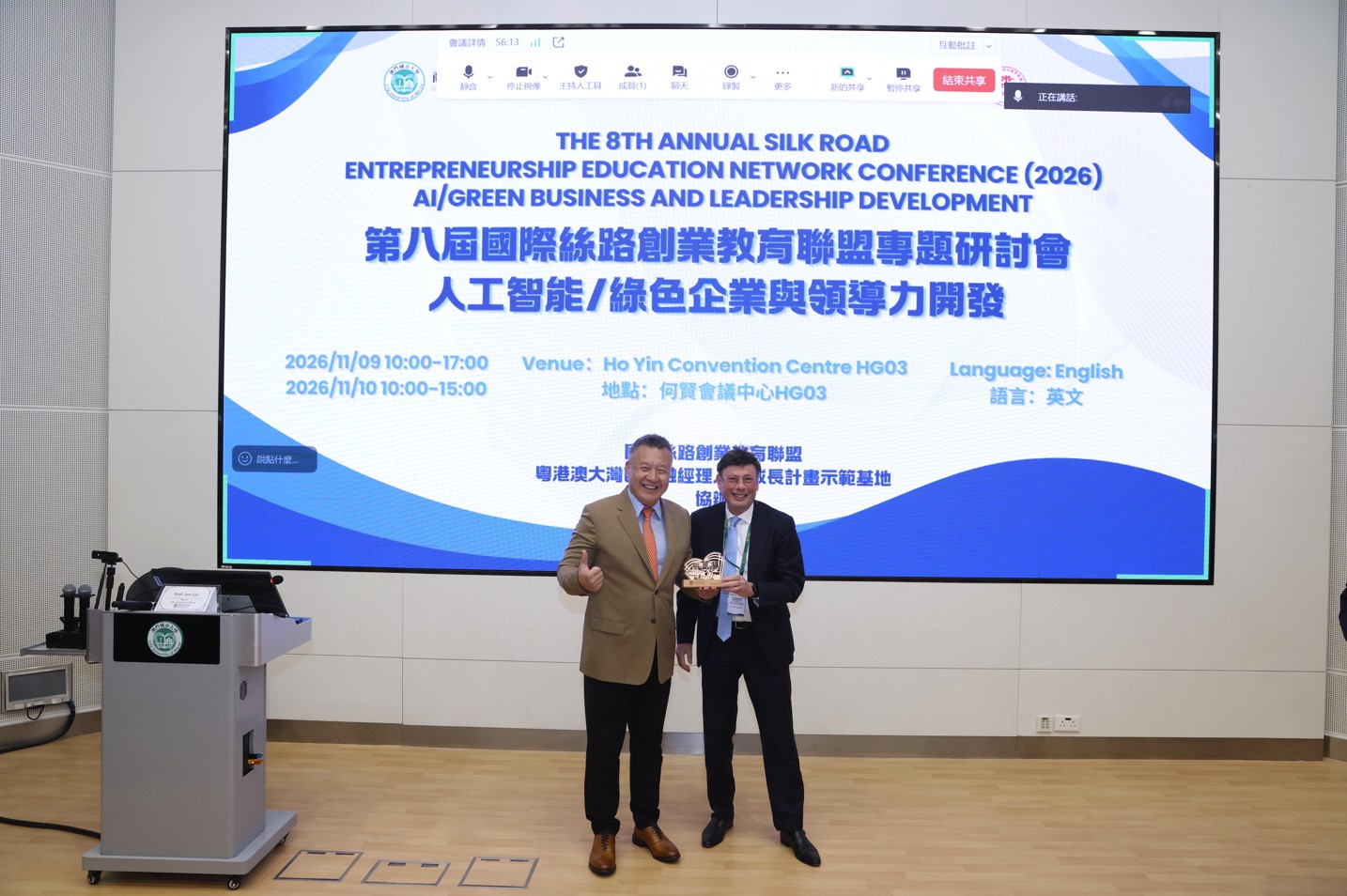
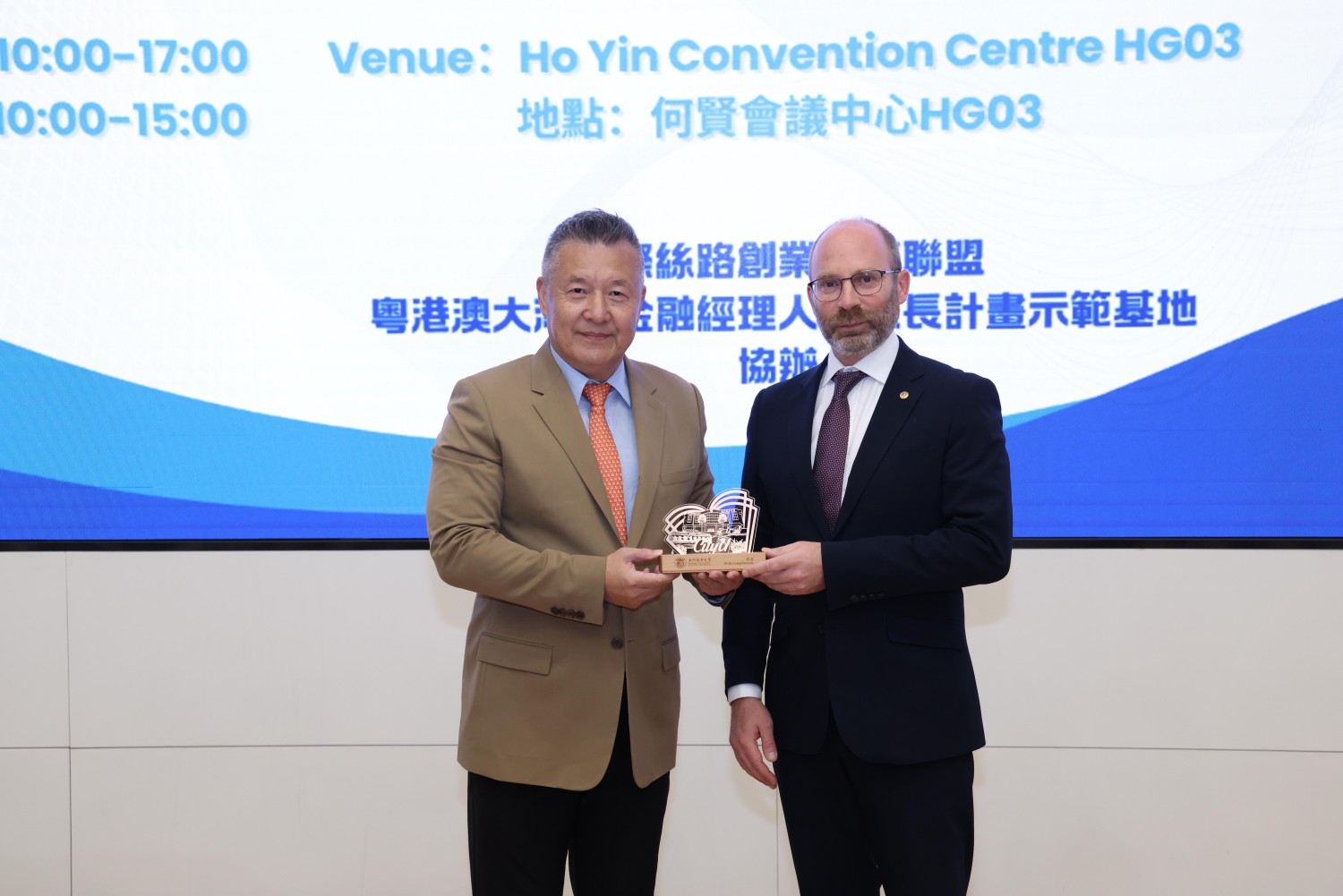
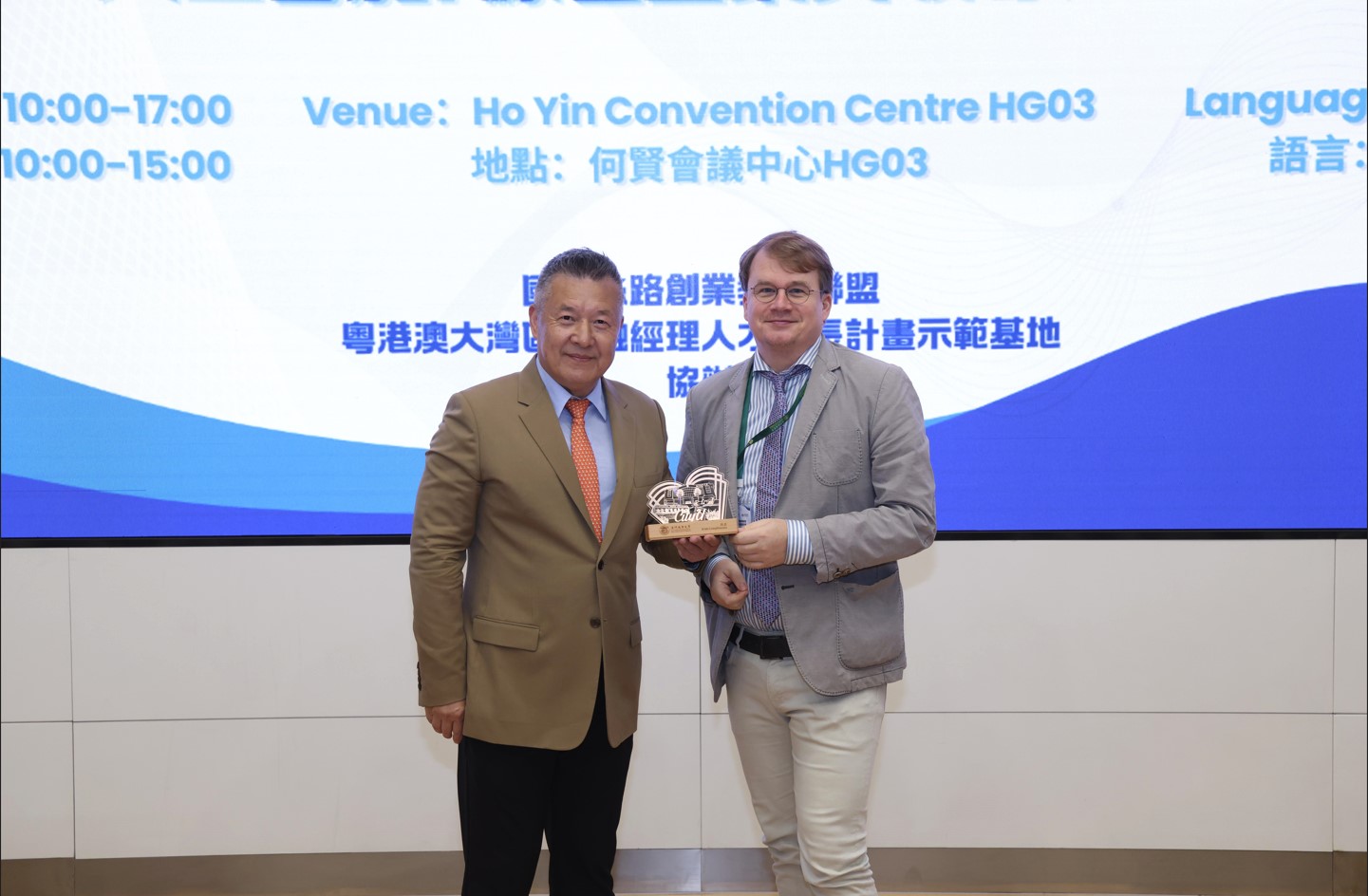
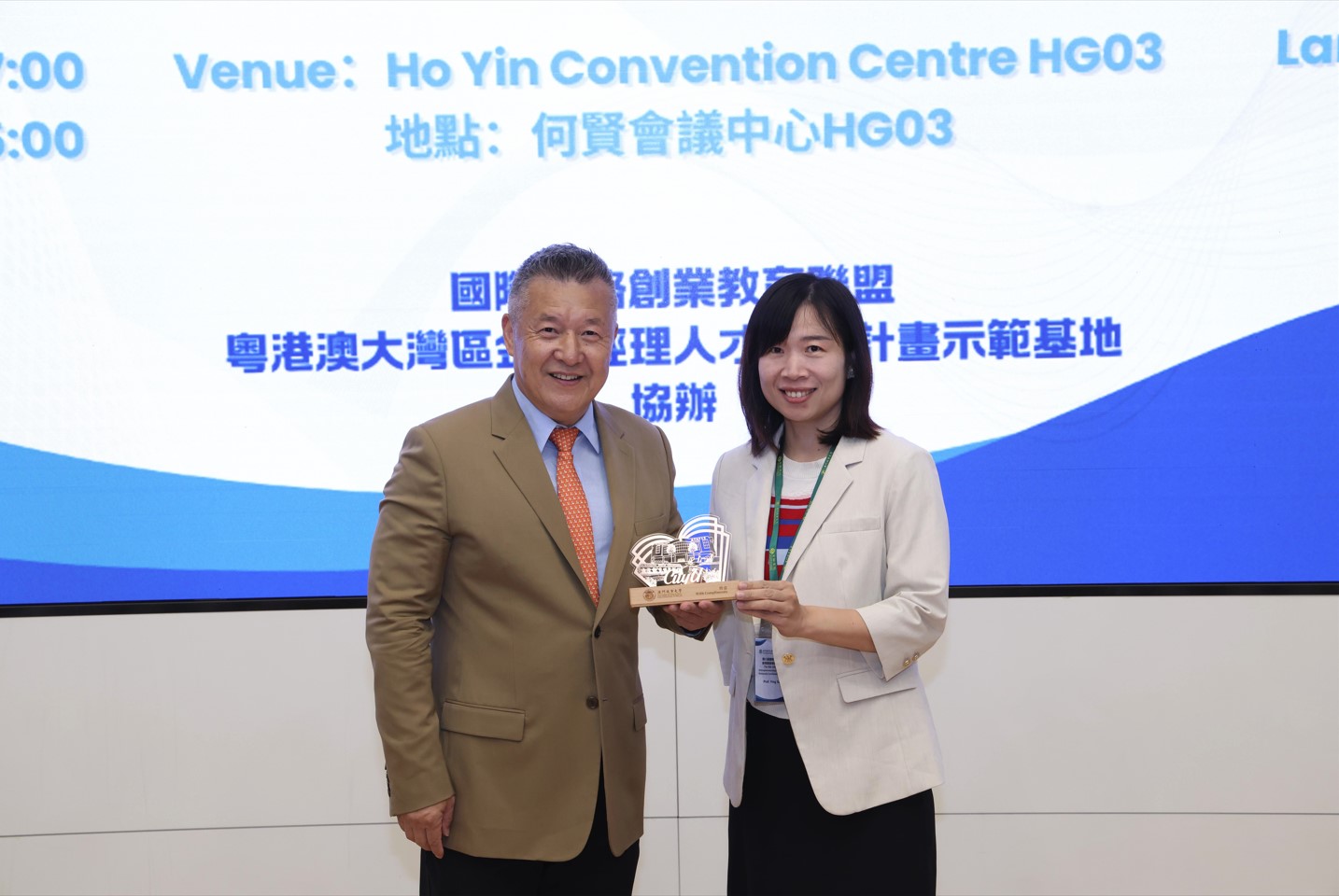
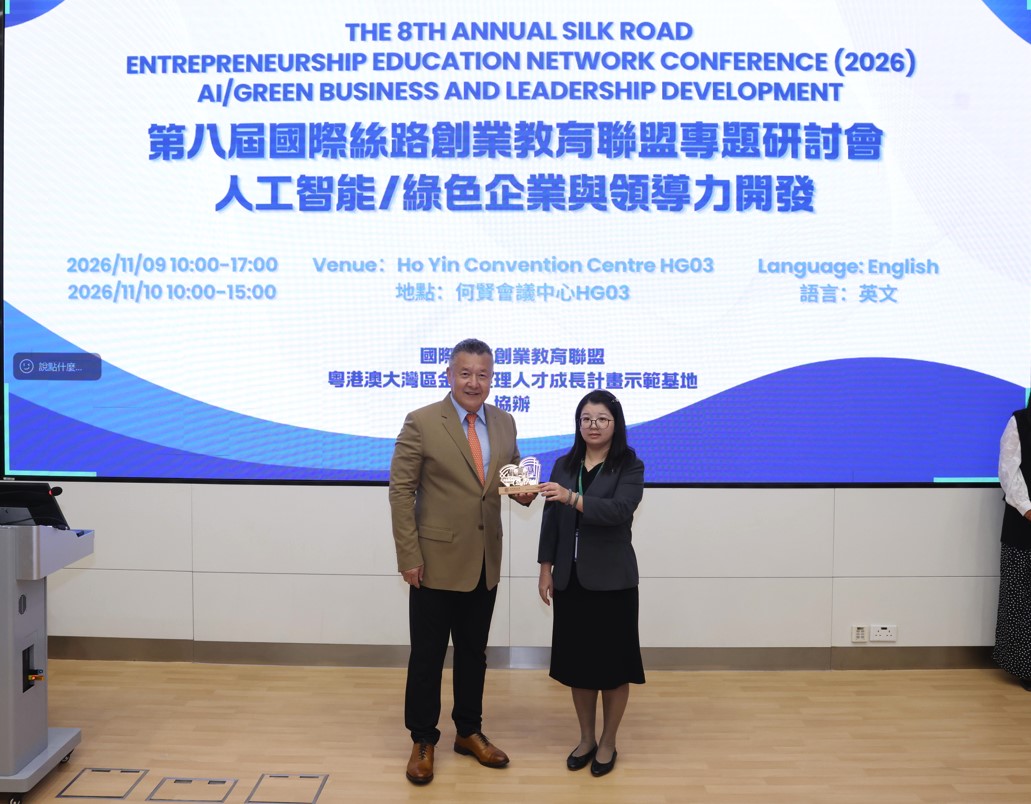
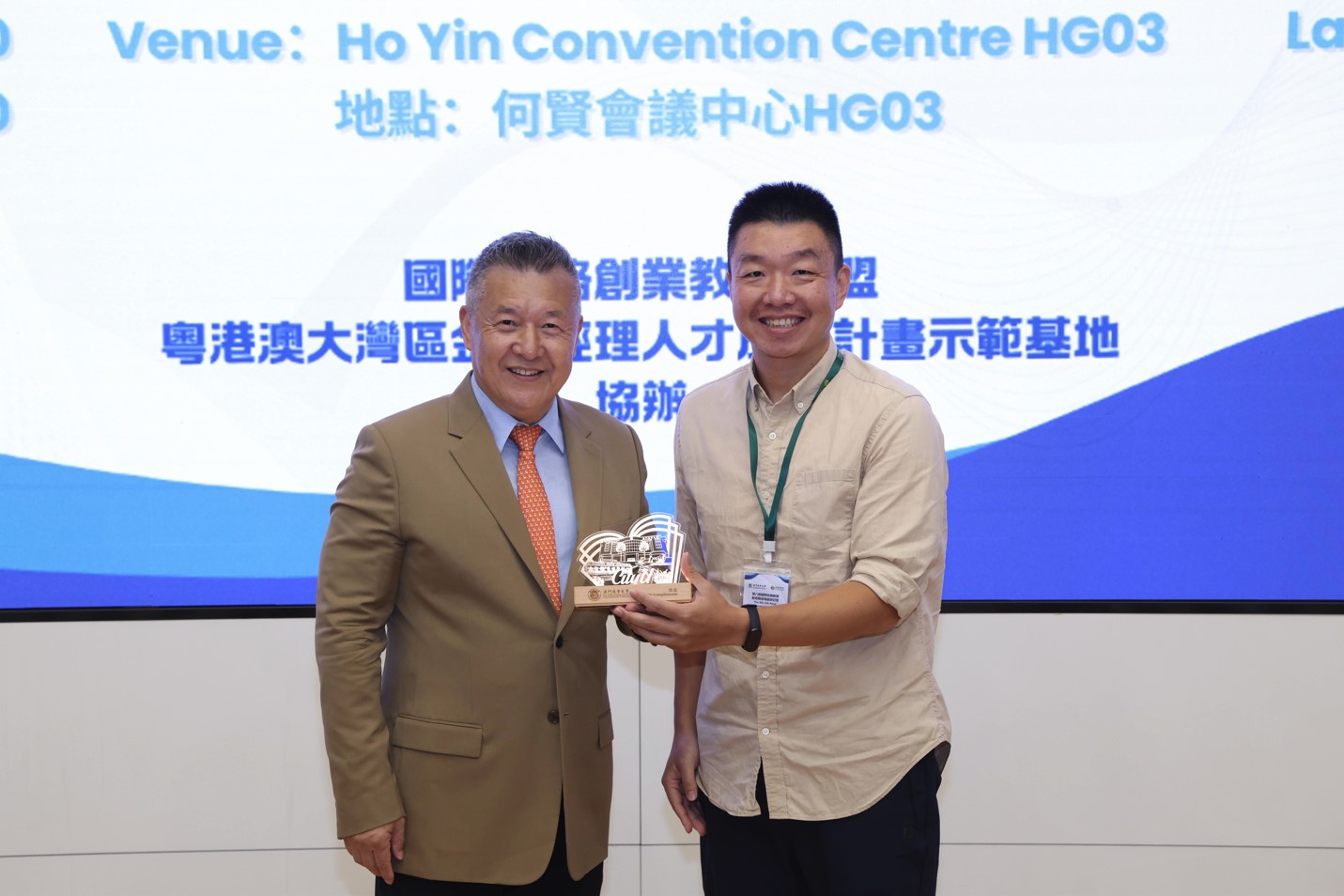
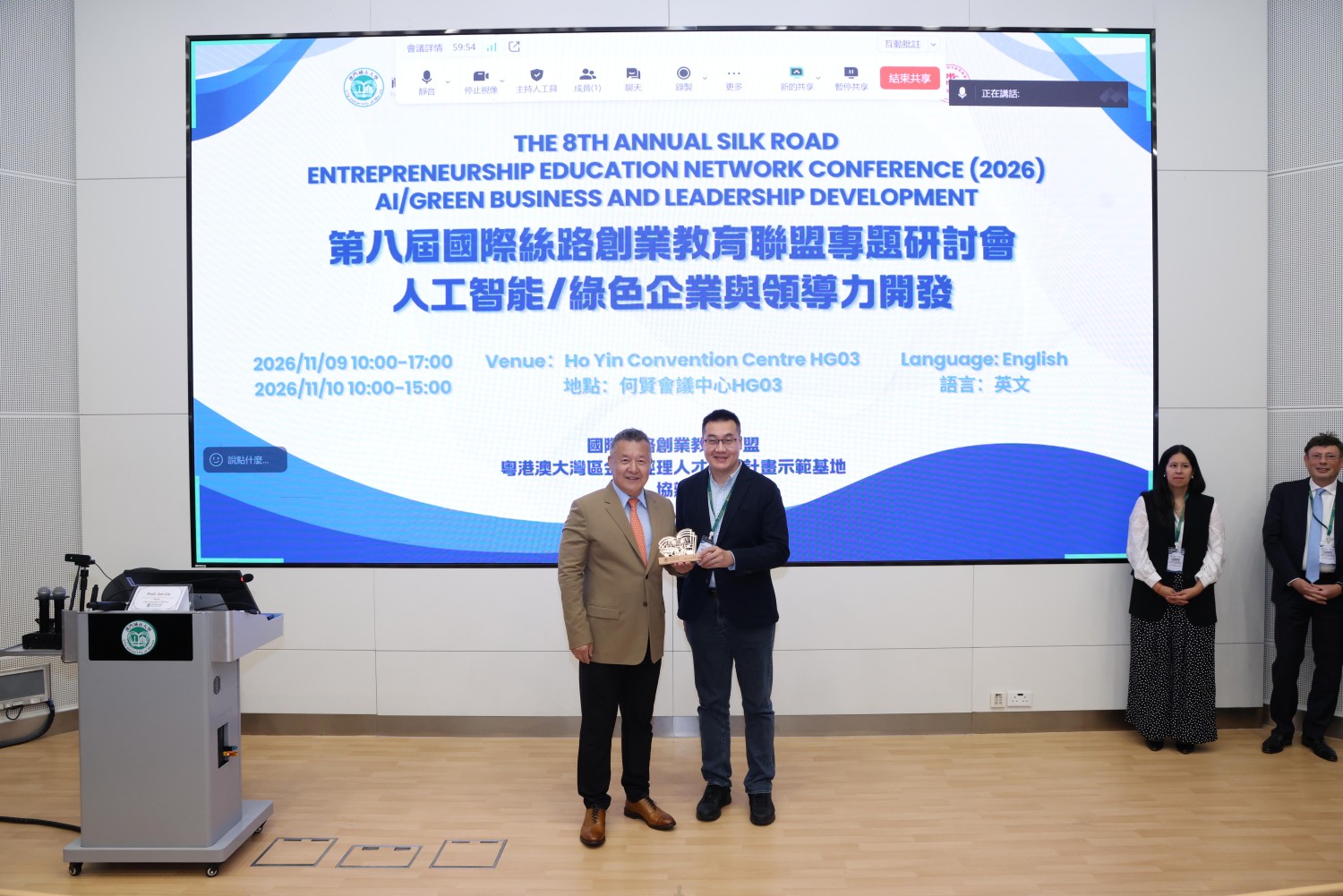
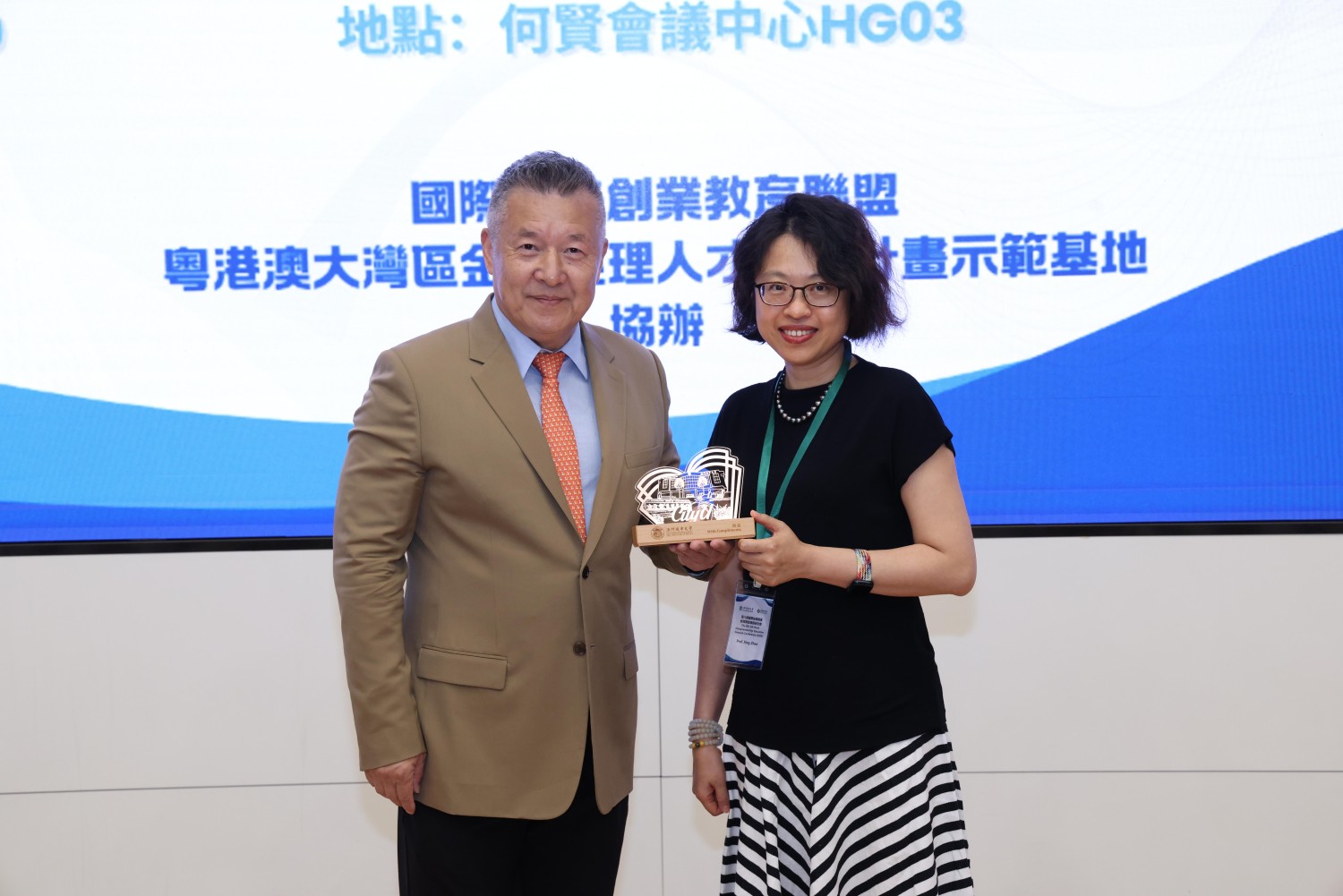
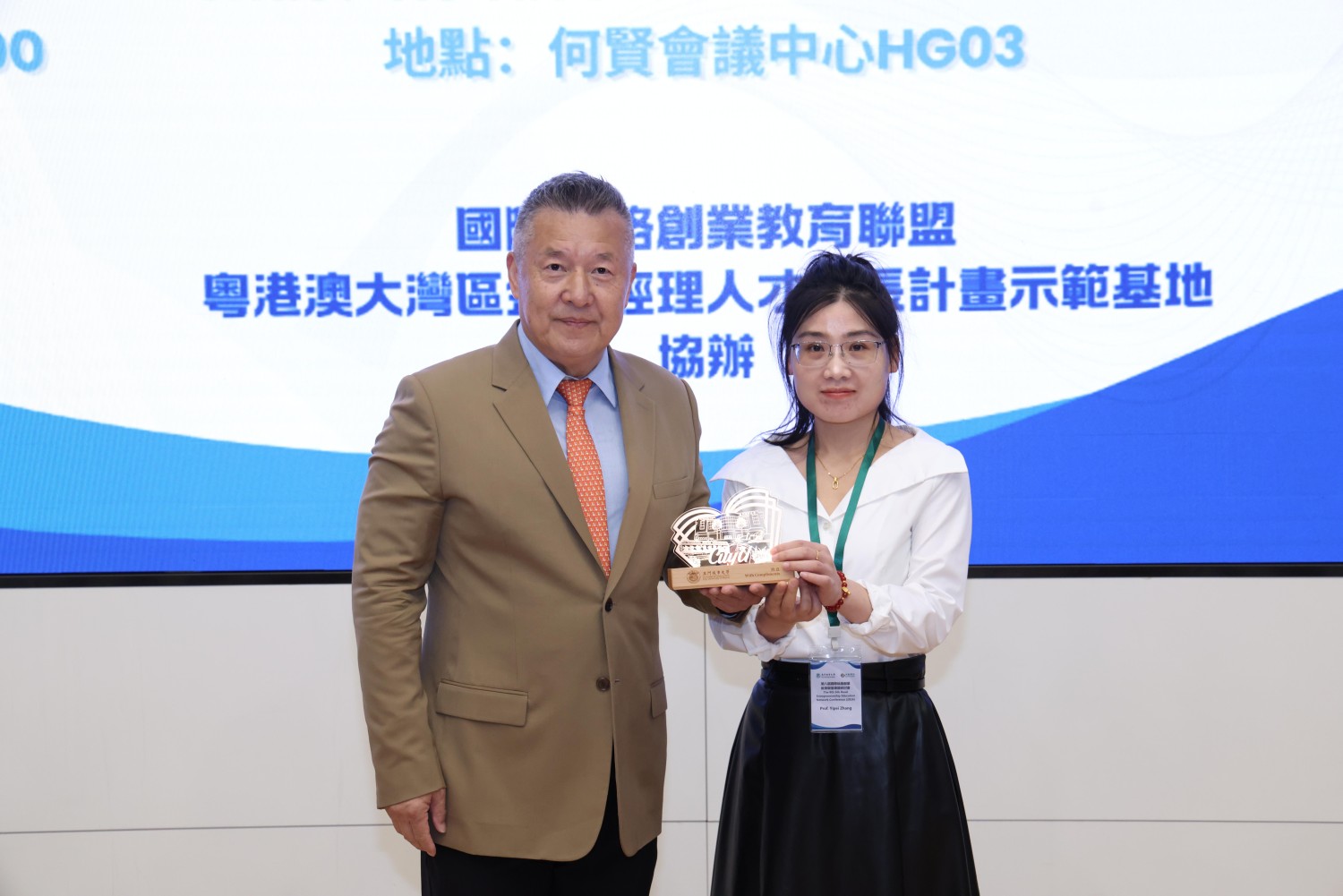
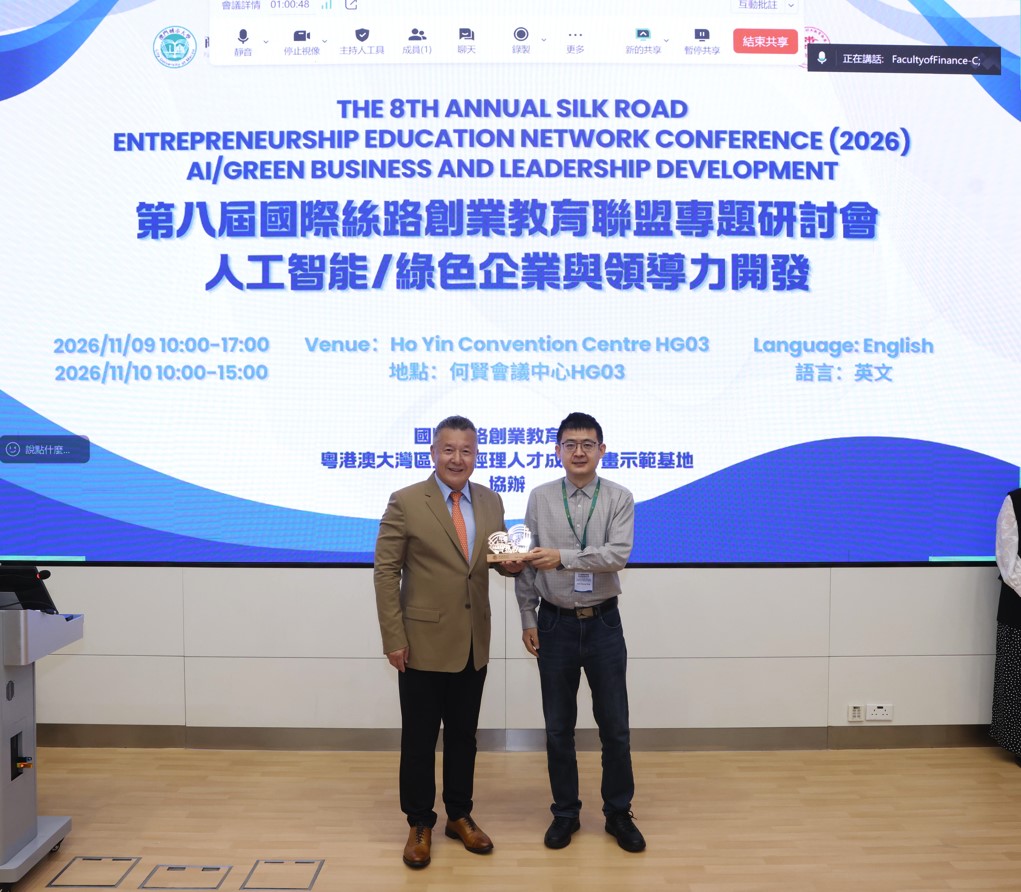
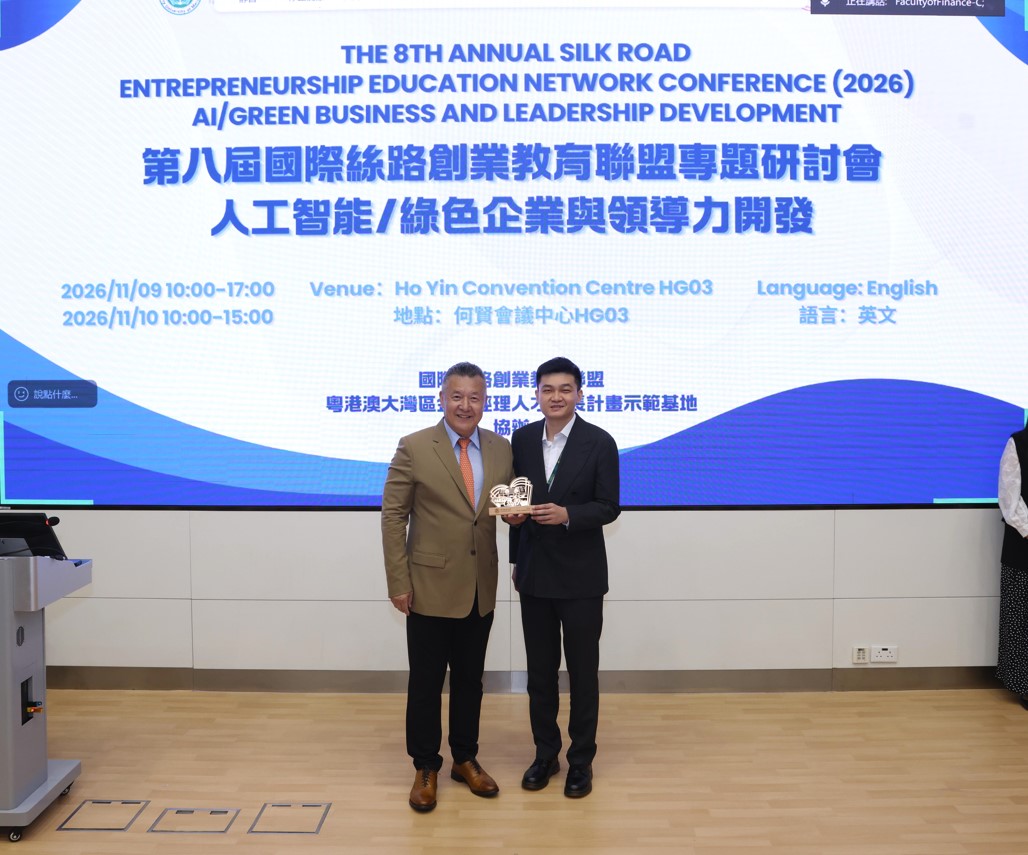
The 8th Annual Silk Road Entrepreneurship Education Network Conference opened on 9 November at the Ho Yin Conference Centre, City University of Macau. The two-day conference, themed ‘Artificial Intelligence, Green Enterprises and Leadership Development’, brought together experts and scholars from universities across multiple countries for in-depth academic exchanges. Attendees at the opening ceremony and the first day's entrepreneurship education development conference included Wang Zhongming, Chairman of the International Silk Road Entrepreneurship Education Network and Senior Professor of Humanities at Zhejiang University; Gábor Áron Zemplén, Vice-Rector for International Affairs at Eötvös Loránd University in Hungary; Marc Salomon, Dean of the Business School at the University of Amsterdam in the Netherlands; as well as Liu Jun, President of City University of Macau; Adrian Cheung Dean of Faculty of Finance; José Alves, Dean of Faculty of Business; and representatives from the academic staff.
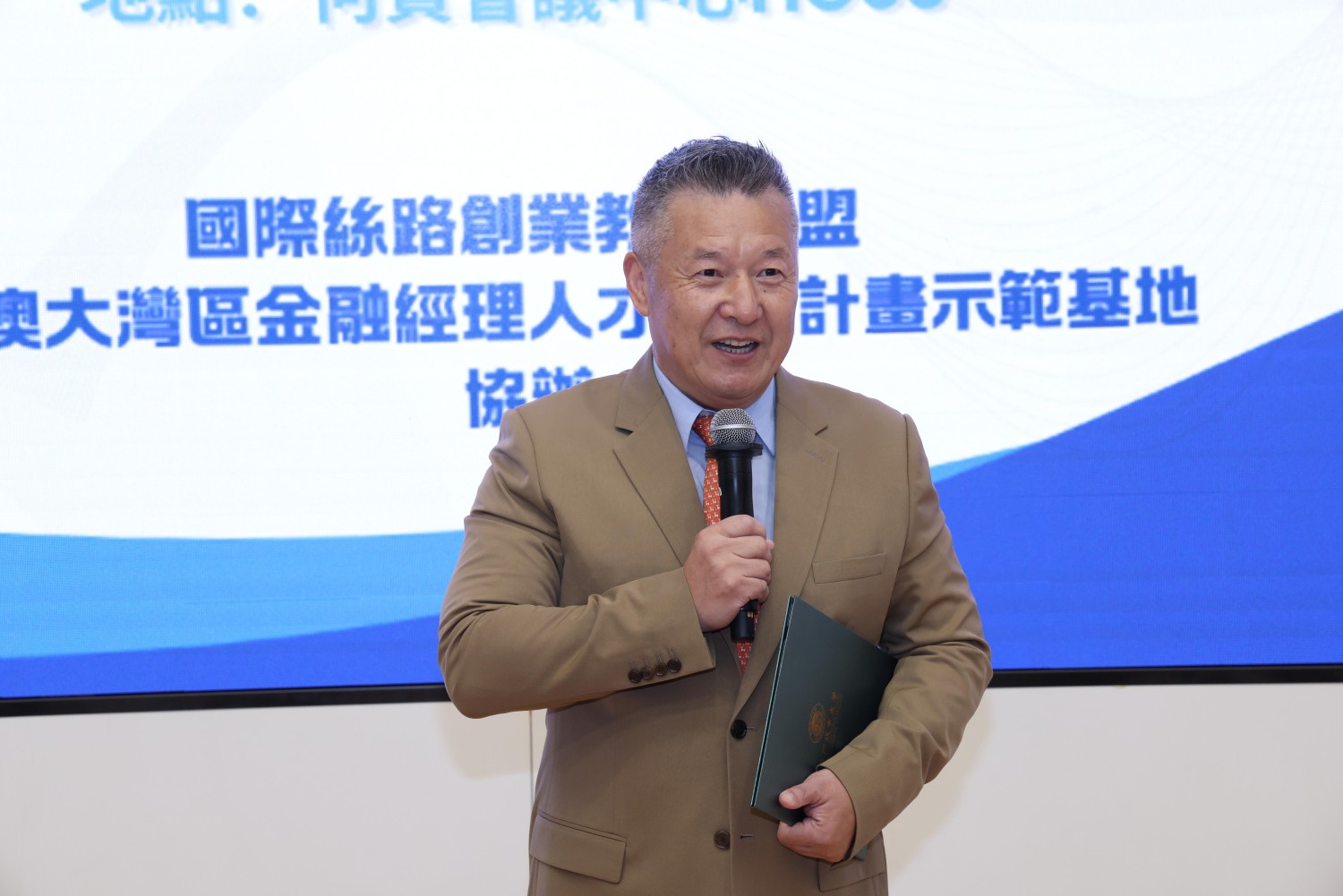
In the address, President Liu Jun noted that artificial intelligence is gradually being integrated into all aspects of university management, curricula, teaching and assessment, and that universities must also examine whether new technologies can effectively enhance students’ learning outcomes. Citing the example of students using artificial intelligence to complete essays quickly, he emphasised that critical thinking and creativity remain key priorities in talent development. He expressed the hope that, whilst making good use of new technologies, students would reflect on how to apply their learning to meet societal needs and deepen their understanding of leadership through cross-cultural exchange.
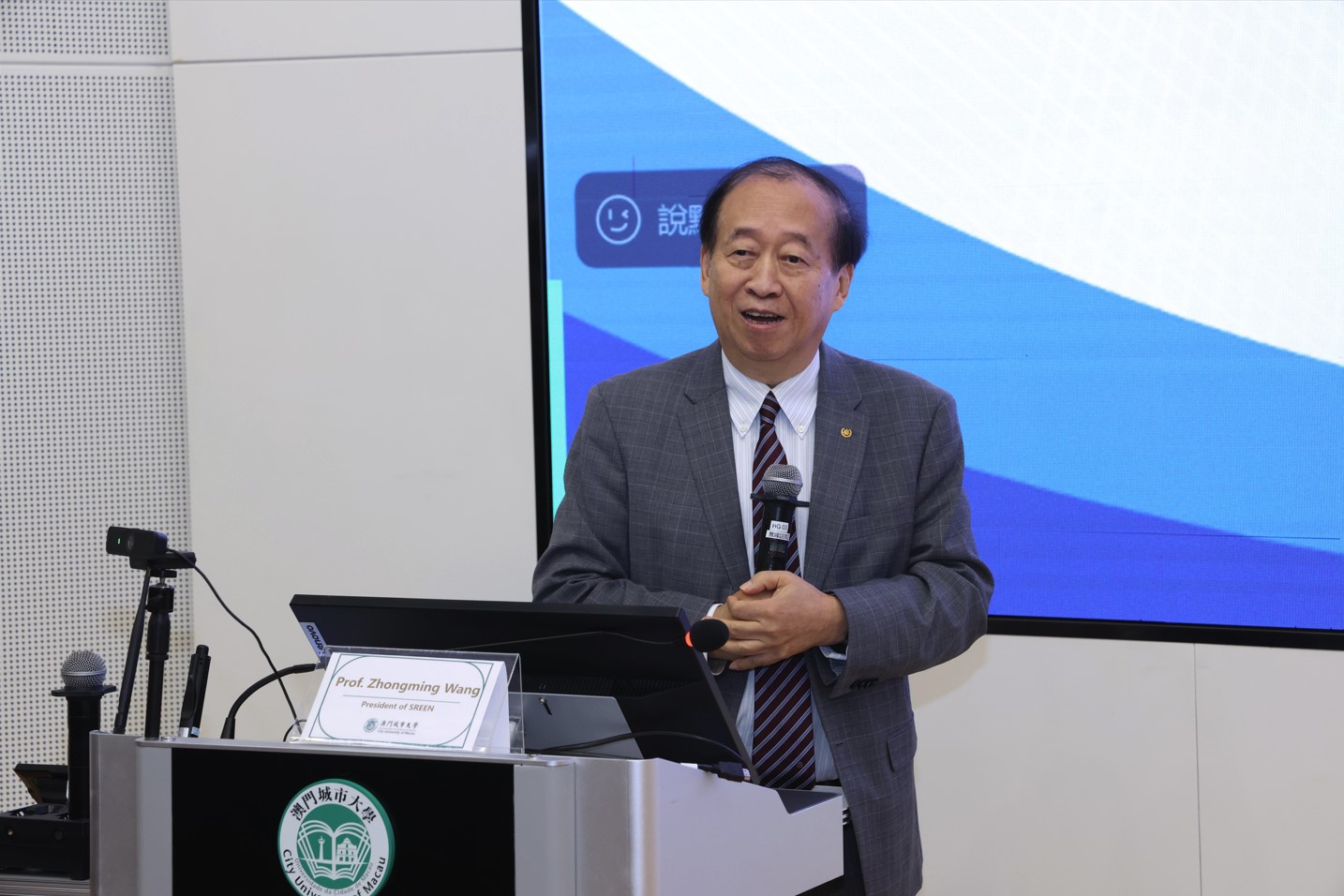
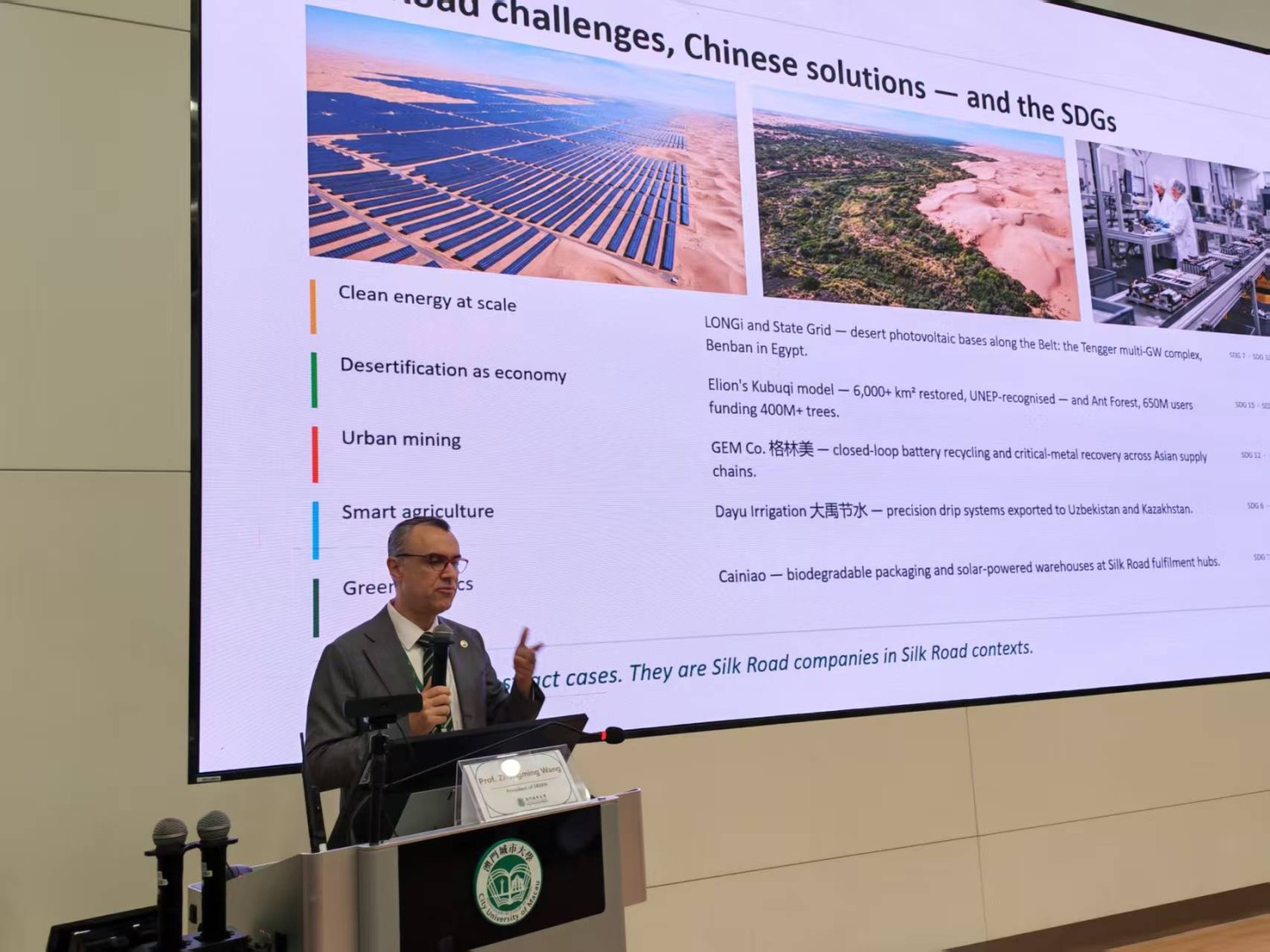
The opening session of this year’s conference was chaired by Professor Wang Zhongming, Chairman of the International Silk Road Entrepreneurship Education Network and Senior Professor of Humanities at Zhejiang University, who reviewed the Silk Road Entrepreneurship Education Network (SREEN) development over the years. Professor Wang Zhongming stated that since the establishment of the Macao base at CityU in 2018, the CityU has become a key hub for SREEN in promoting inter-institutional dialogue and international academic cooperation.
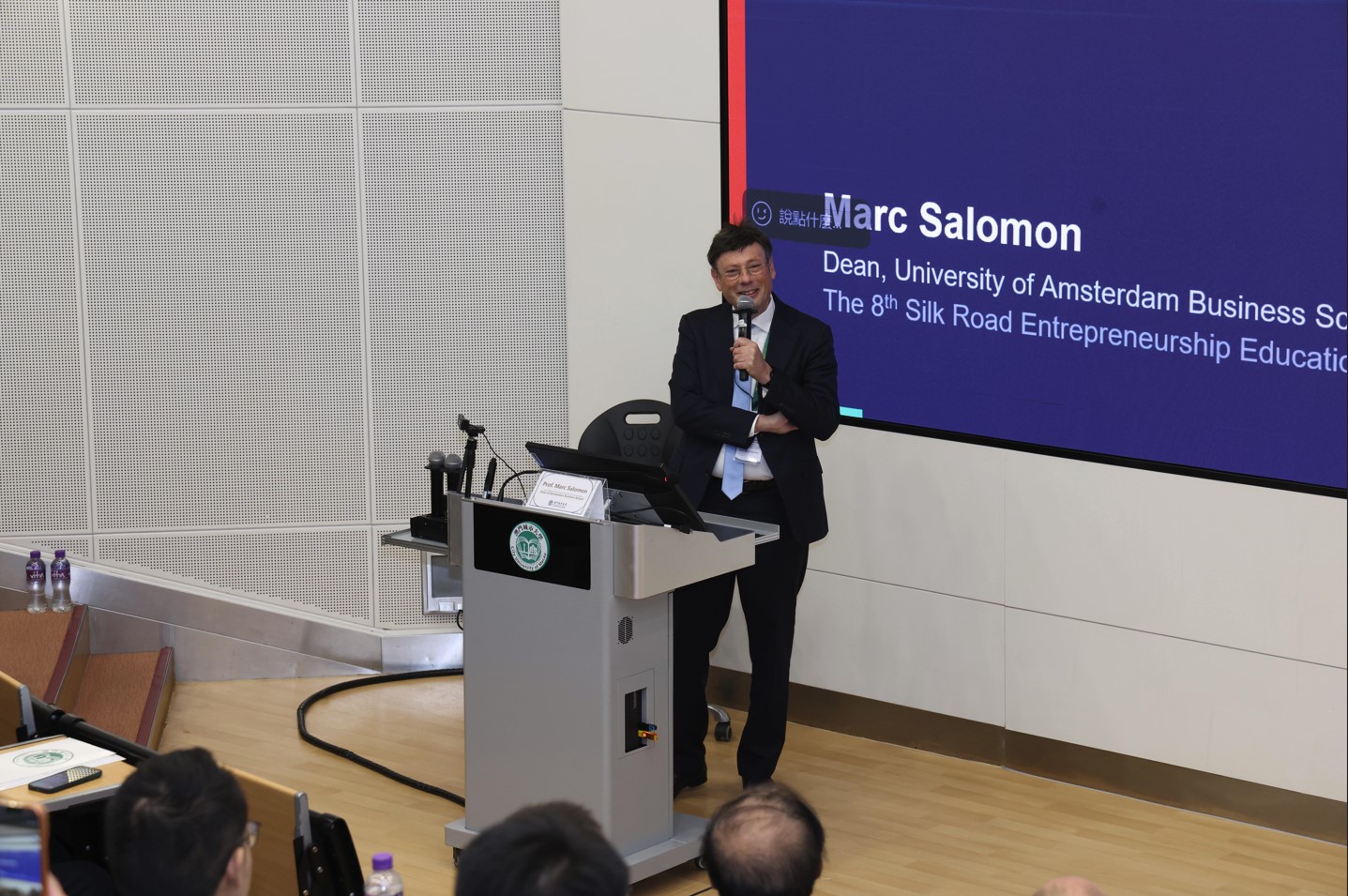
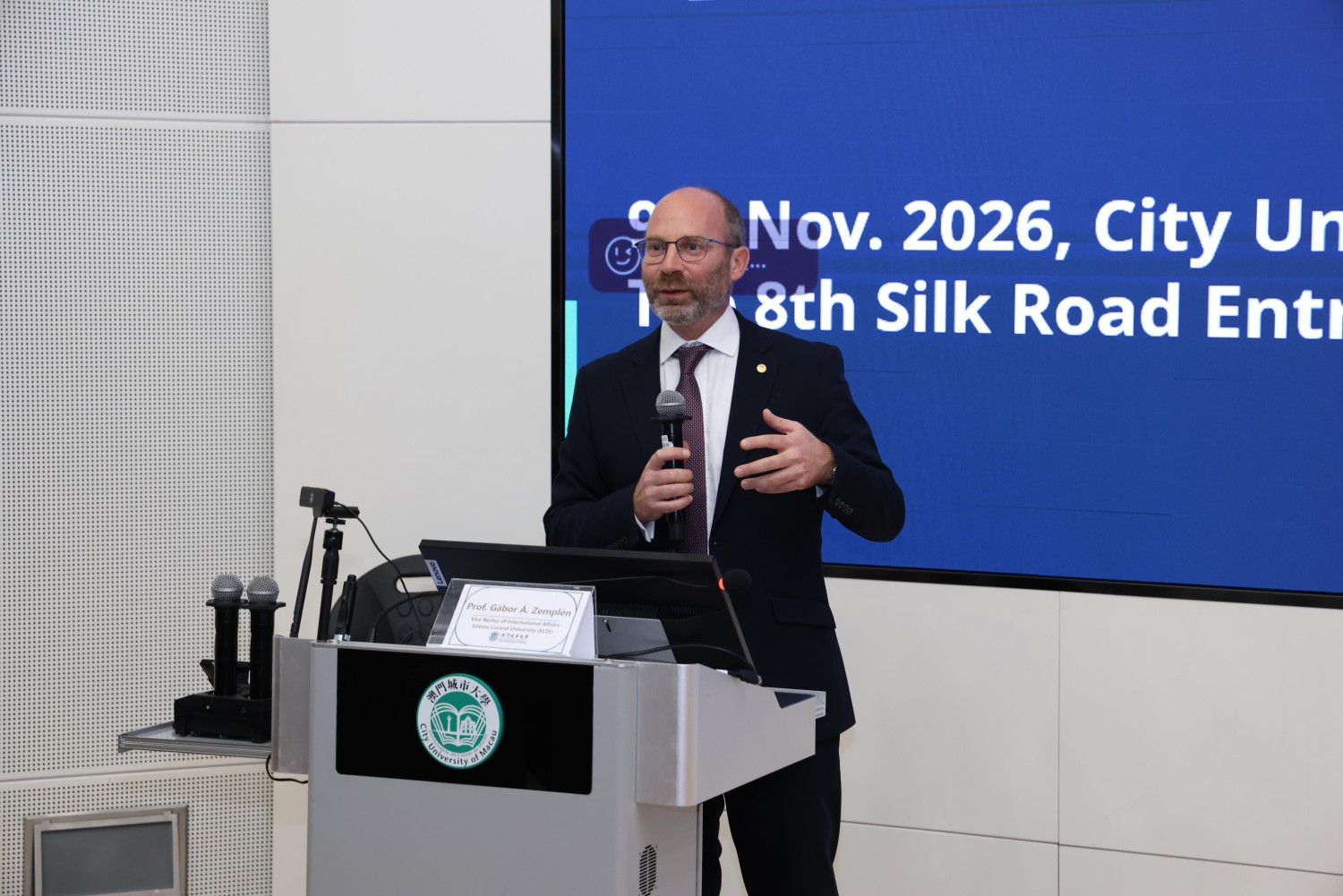
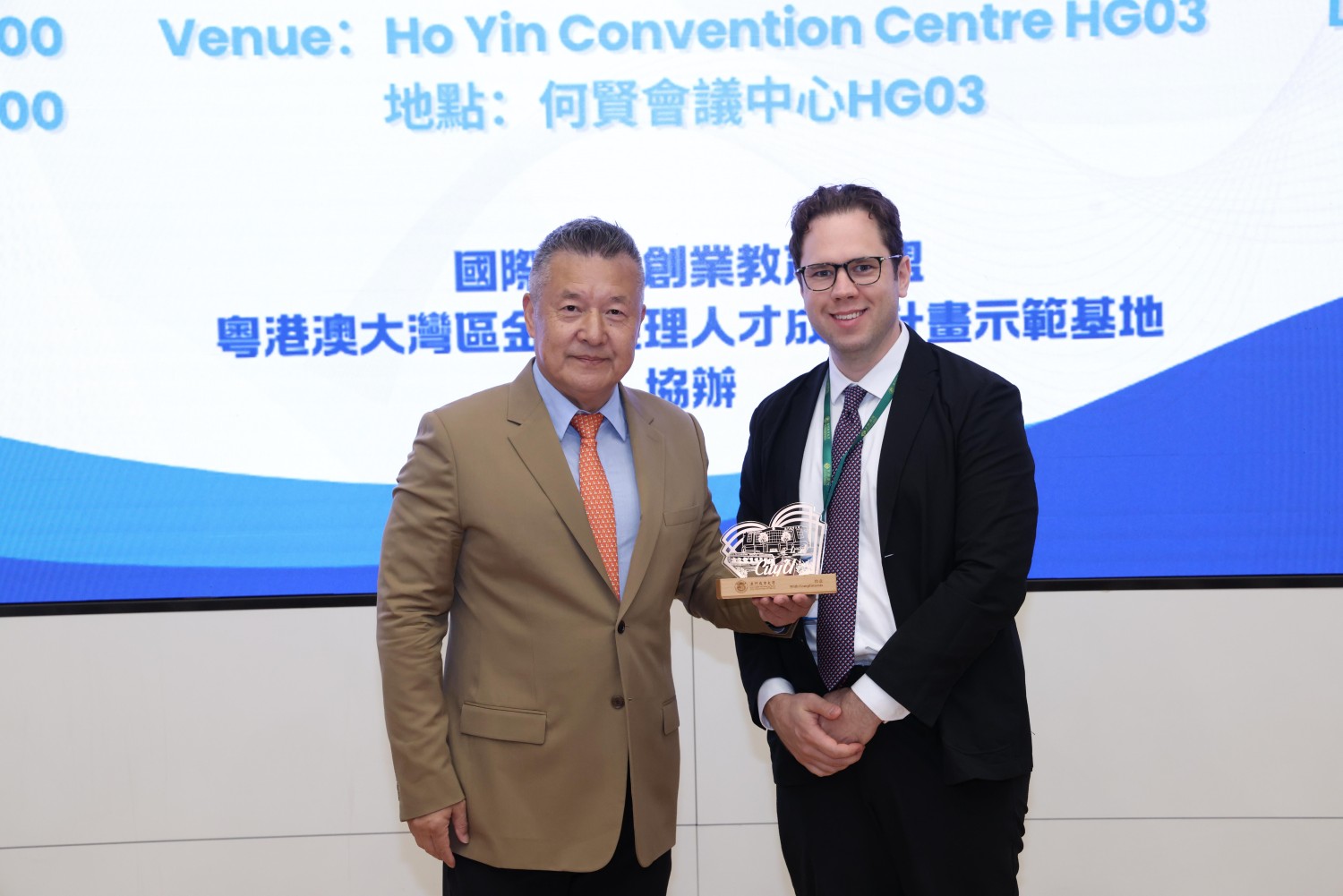
During the keynote session, Marc Salomon, Dean of the Business School at the University of Amsterdam in the Netherlands, discussed the impact of artificial intelligence on business programmes and outlined the school’s plans to introduce an ‘AI Auditing’ specialisation within its Master’s programmes, designed to equip students with the skills to scrutinise algorithms and assess risks. Professor Zemplén Gábor Áron, Vice-Rector for International Affairs at Eötvös Loránd University in Hungary, used public procurement in Hungary as an example to demonstrate how artificial intelligence can assist in identifying risk signals, such as unduly short tender deadlines, whilst emphasising the importance of manual review, process traceability and data security.
Representatives from institutions within the SREEN’s cooperation platform exchanged experiences on integrating artificial intelligence into business education. A representative from the School of Economics and Management at the University of Electronic Science and Technology of China shared details of in-depth curriculum collaboration with the School of Engineering, as well as extensive industry-academia integration with the business sector. A representative from Guangdong University of Technology introduced the ‘3+X+2’ curriculum framework, which integrates foundational AI courses, specialised application modules and corporate practical experience. A representative from Zhejiang Gongshang University shared their approach to co-developing case studies with industry partners, whereby students form teams with corporate managers to tackle real-world problems under academic supervision.
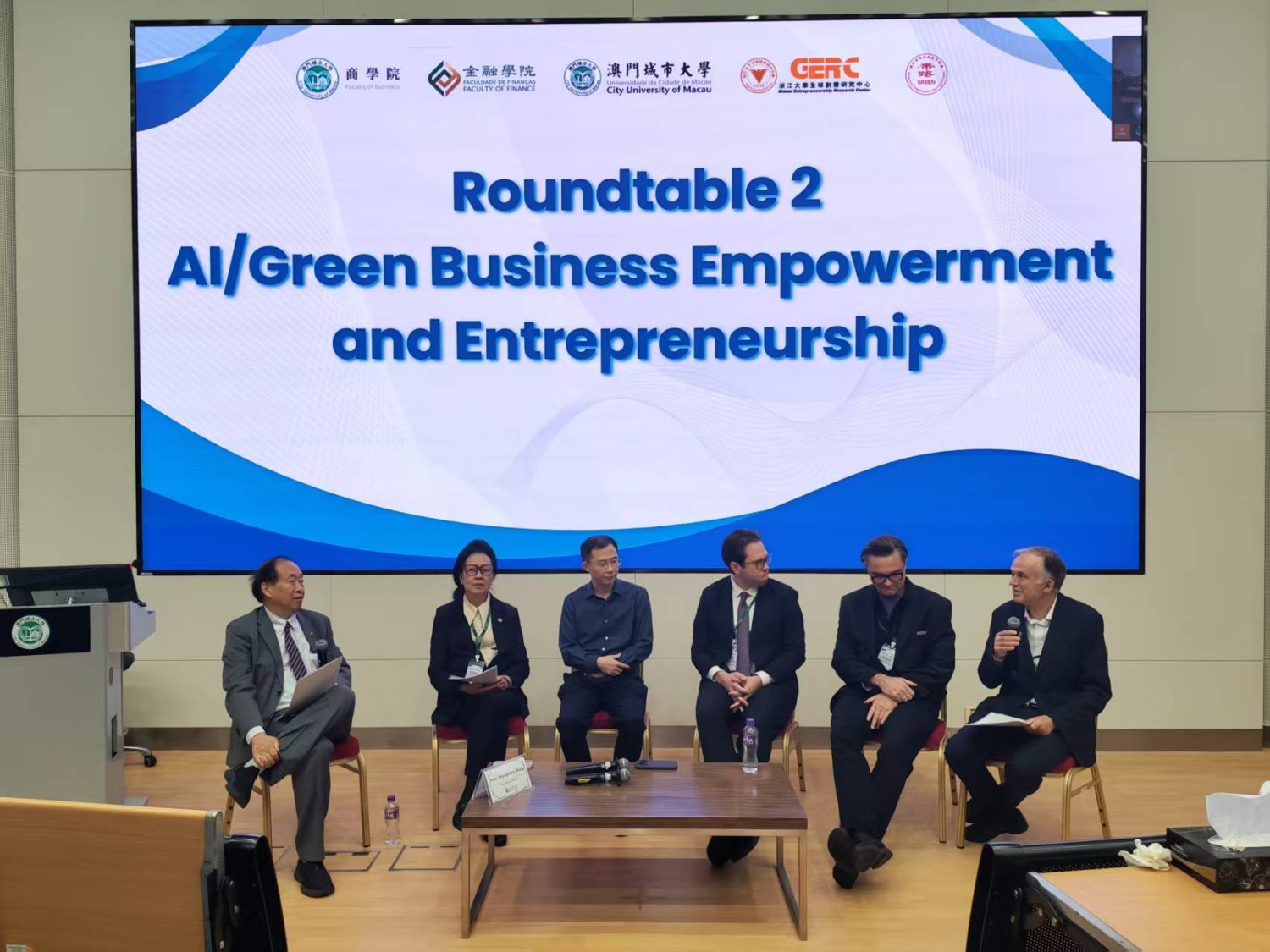
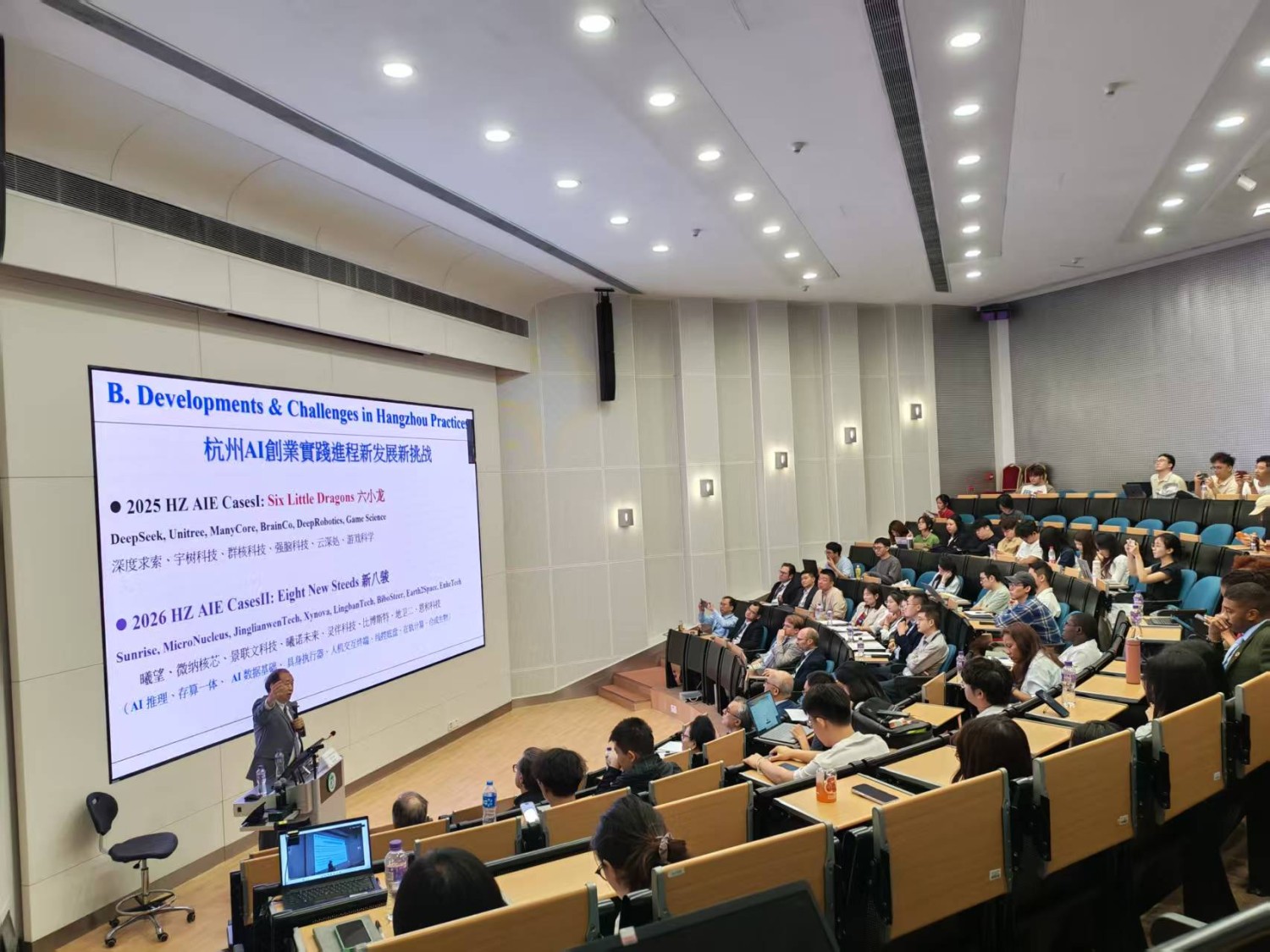
During a special session on AI entrepreneurship, Martin Obschonka, Head of Entrepreneurship at Amsterdam Business School in the Netherlands, cited a field study from Kenya to highlight that business advice provided by AI yields varying results for different entrepreneurs. Using the example of a ‘one-person company’, he explored decision-making and risk-taking in the context of lowered barriers to entry. Professor Wang Zhongming, drawing on the example of AI enterprises in Hangzhou, emphasised that entrepreneurs must understand the entire value chain—from technological foundations to product applications—and incorporate cross-team collaboration, ethical compliance and skills retraining into leadership development.
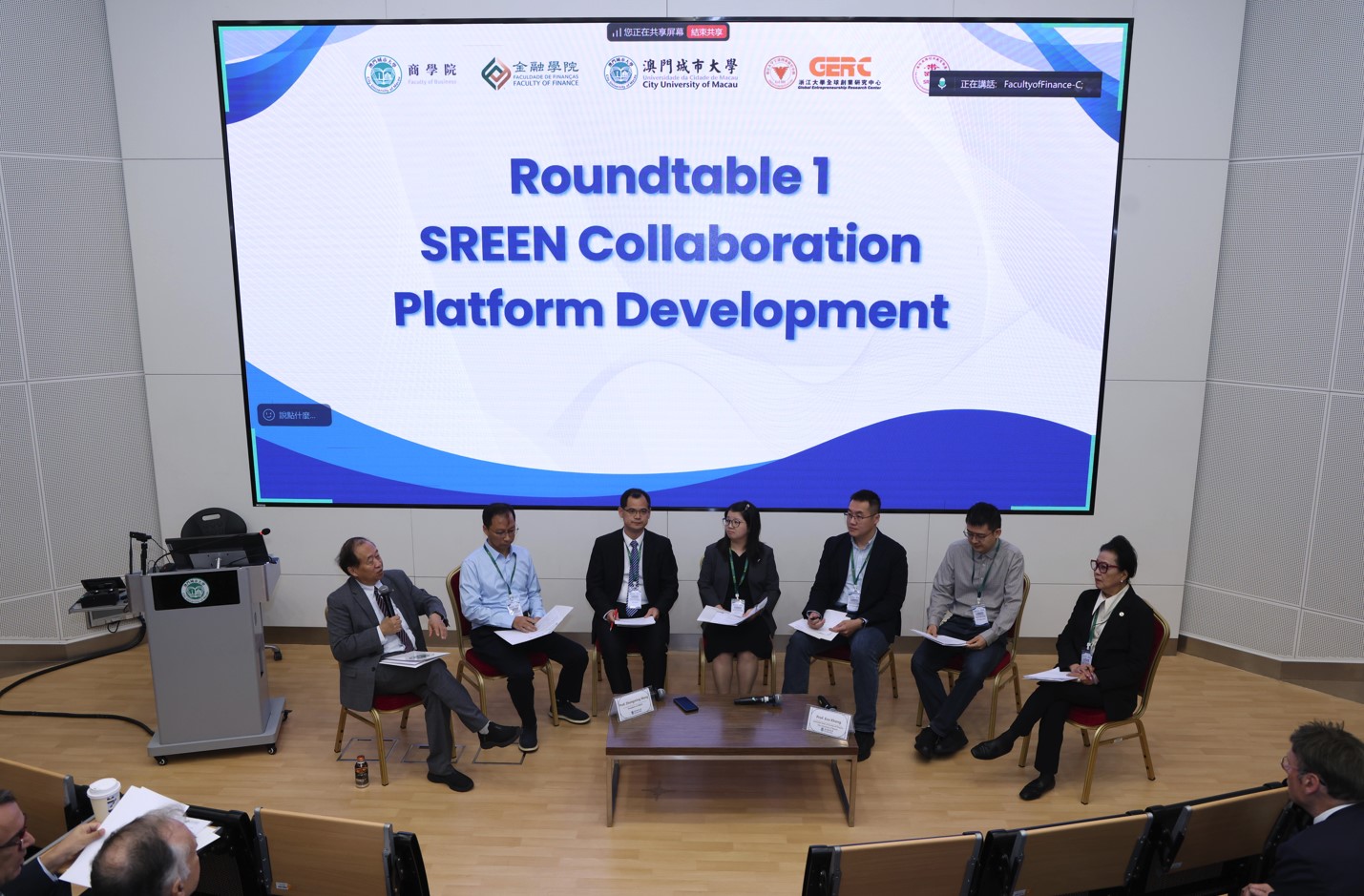
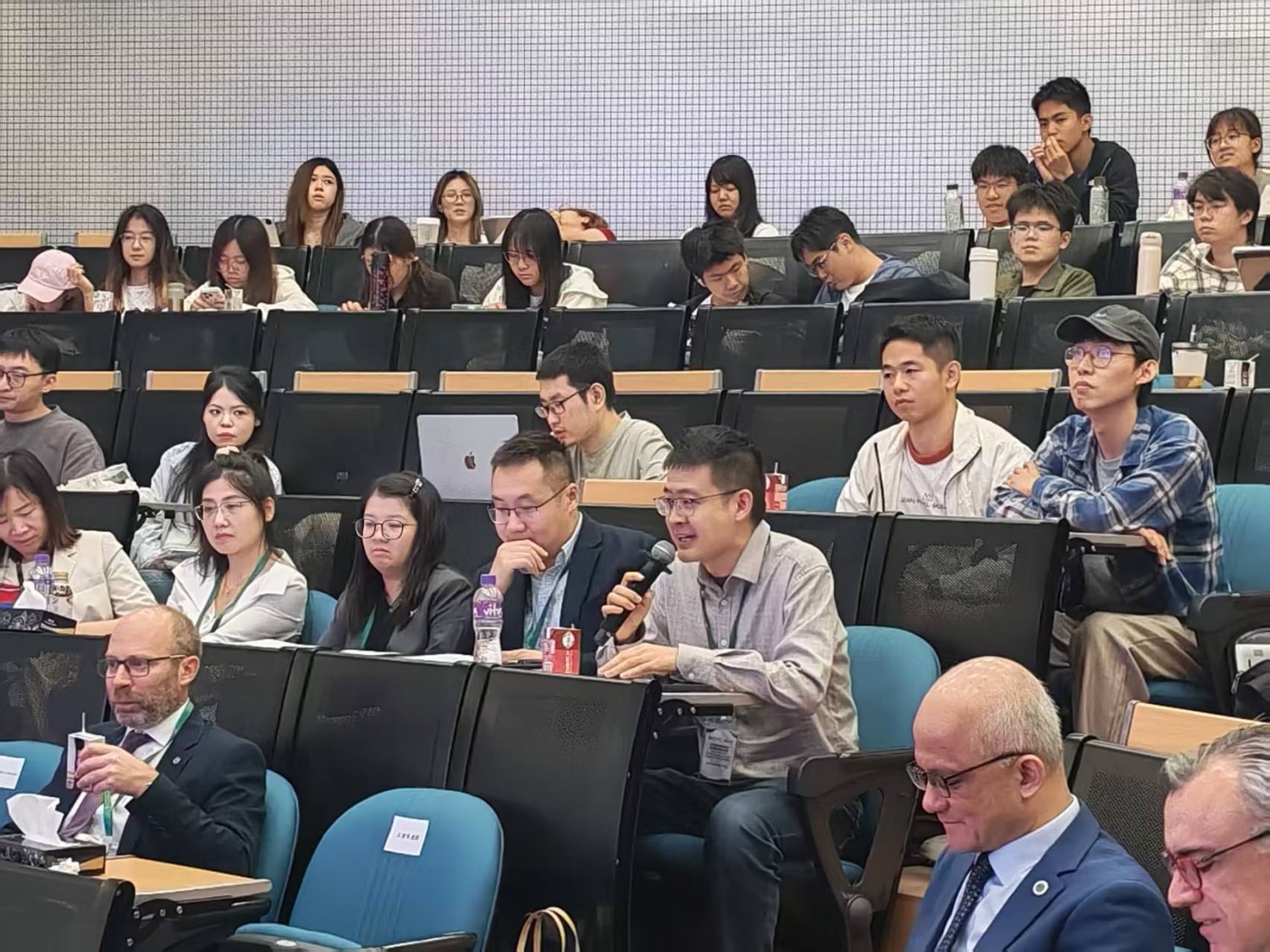
During the roundtable session, José Paulo Afonso Esperança, a professor at CityU’s Faculty of Business, shared his teaching experience with cross-disciplinary teams, suggesting that students could devise start-up projects based on the practical needs of Portuguese-speaking countries. Markus Leibrecht, a professor at CityU’s Faculty of Finance, pointed out that local regulations and social norms can influence the application of artificial intelligence, and that business education should guide students in assessing the associated risks. Jonas Valkonen from Zhejiang University’s Global Entrepreneurship Research Centre used Nordic gaming start-ups as an example to illustrate how small teams can utilise AI agents to share the workload in development, testing and marketing. Associate Dean Eva Khong, from Faculty of Finance, City University of Macau, outlined the Faculty’s collaboration with the Macao International Carbon Exchange to cultivate talent in green finance, as well as training programmes on ‘AI+Finance’ for financial institutions. She also shared how Faculty fosters students’ practical skills through curriculum design, industry-academia research, student competitions and experiential placements.
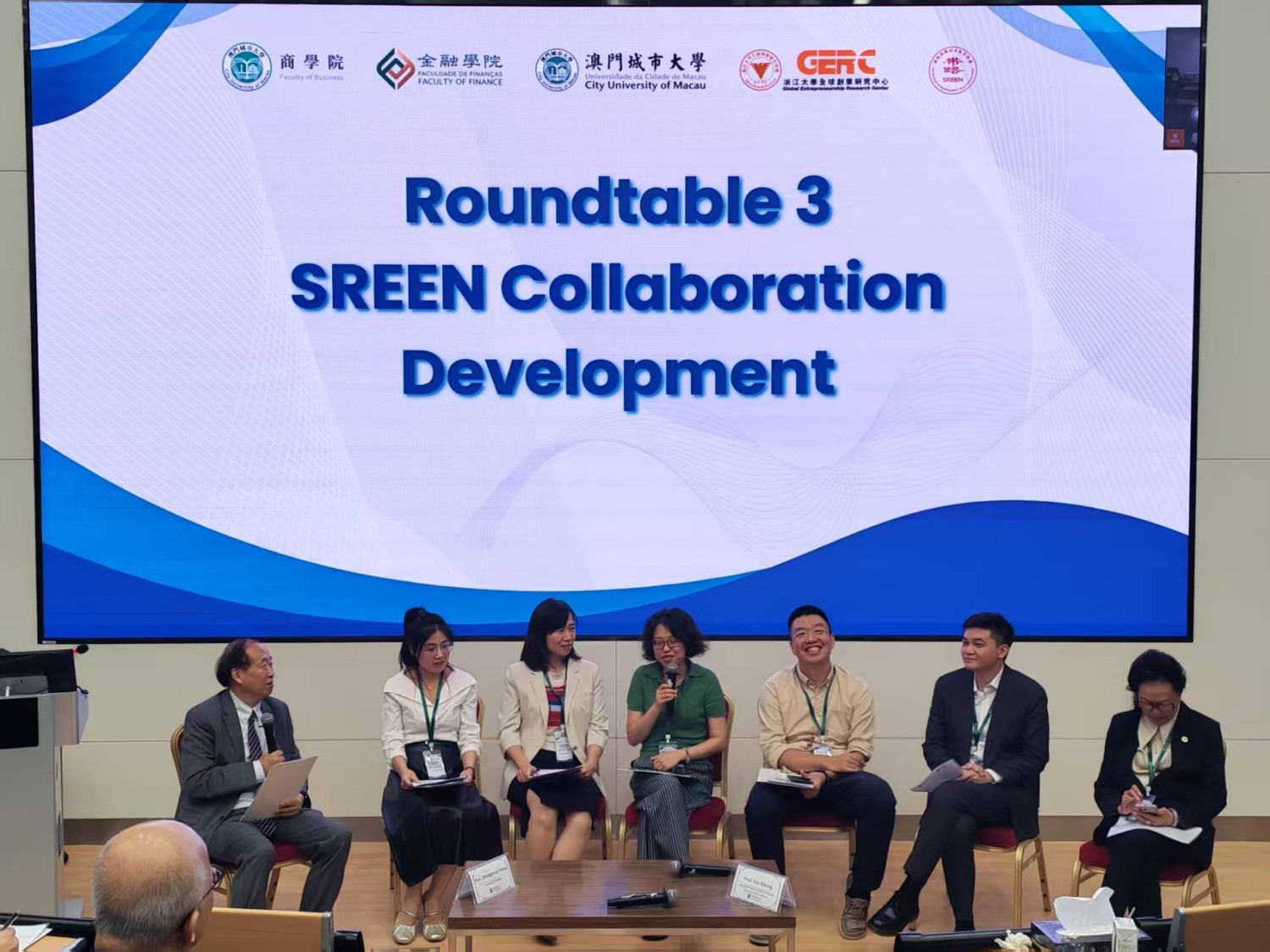
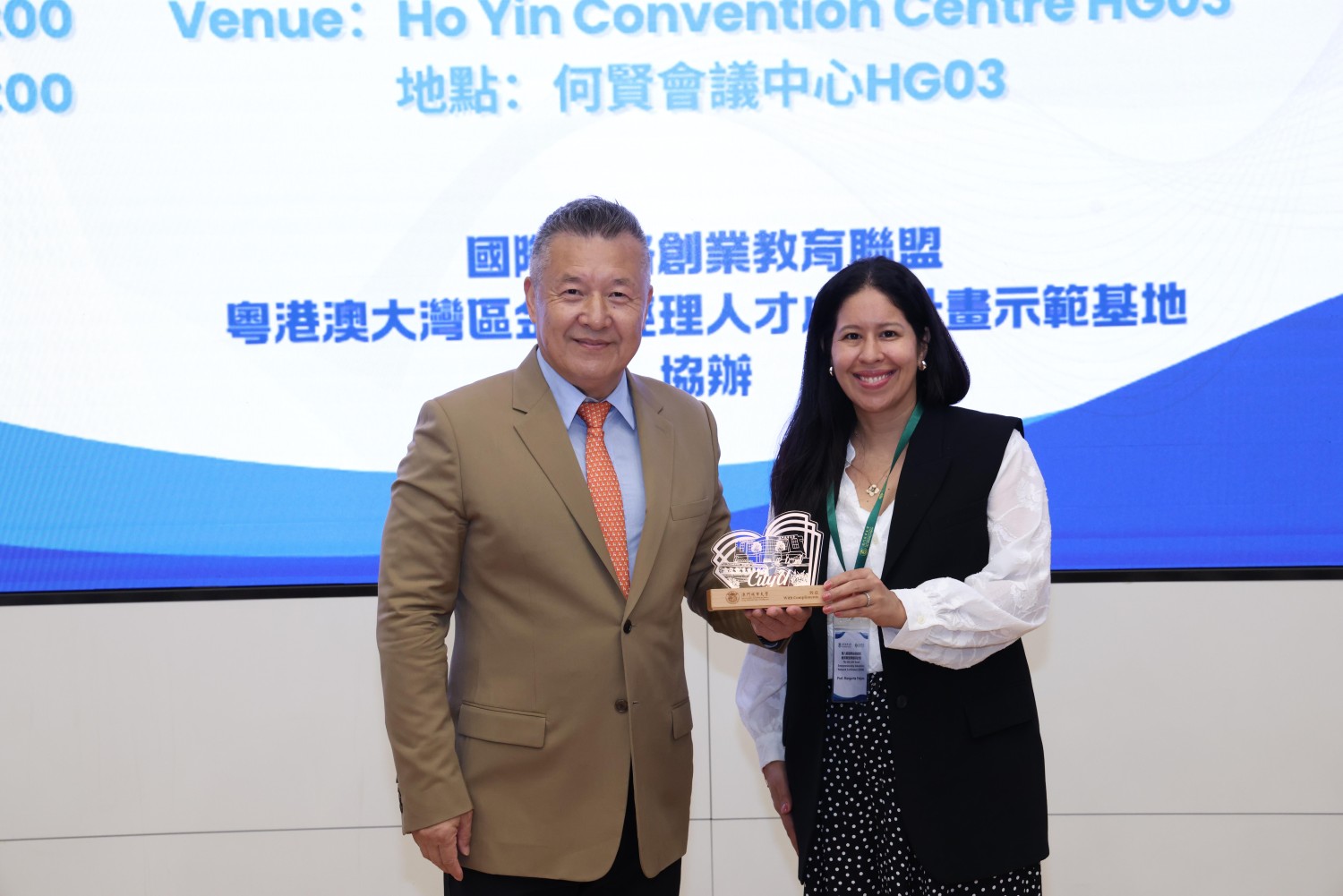
Another roundtable discussion focused on university consortium collaboration, centring on interdisciplinary joint research, industry-academia integration, international expansion and consortium cooperation, whilst conducting an in-depth analysis of future transformation strategies. Professor Margarita Feijoo from the Pacífico Business School in Peru cited a consortium comprising four local universities as an example, sharing her experience of jointly establishing research laboratories and organising inter-university exchange programmes.
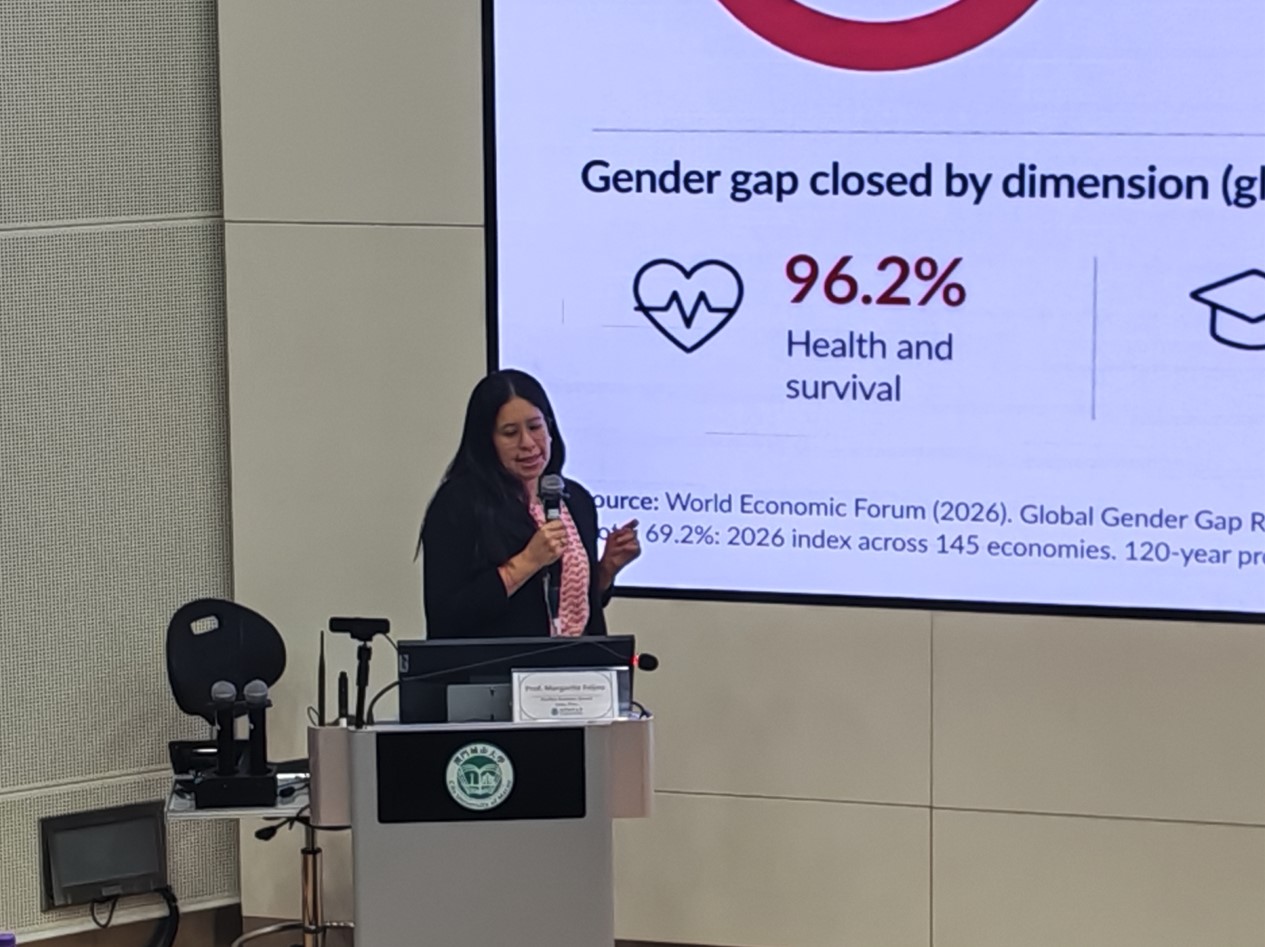
At the seminar held the following day, Professor José C. Alves, from Faculty of Business, City University of Macau proposed organising an inter-university business case competition, in which students from different institutions would form teams to engage with businesses under academic supervision and develop teaching cases on internationalisation and sustainable development. Professor Margarita Feijoo from the Pacífico Business School in Peru spoke on the topic of women’s leadership development in Latin America. She shared how the school fosters participants’ self-awareness and influence through mentorship and practical projects, whilst guiding them to apply what they have learnt to address real-world challenges within their organisations.
Professor Wang Zhongming subsequently introduced the presentation materials provided by Professor Andrew Godley of the University of Sussex Business School in the UK and Professor Andreas Rauch of Audencia Business School in Nantes, France. Andrew Godley used the Entrepreneurship Centre at the Henley Business School, University of Reading, as an example to explore how to link research, curriculum and external entrepreneurial resources. Andreas Rauch, meanwhile, presented evidence combining scientific research, practical experience and specific contexts, demonstrating how organisational experiments and validation can be used to improve entrepreneurial decision-making in businesses.
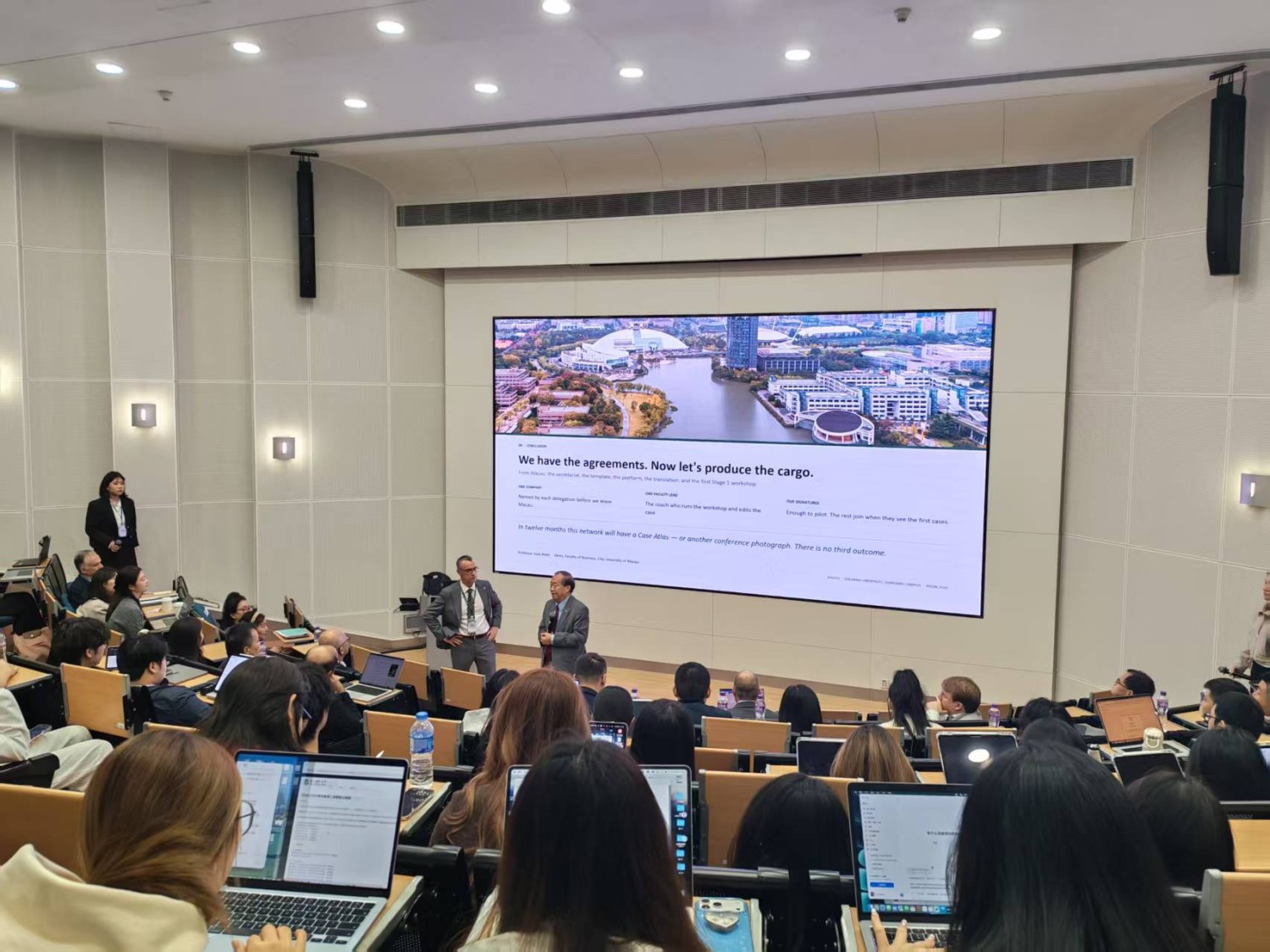
During the concluding session, Adrian Cheung, Dean of Faculty of Finance at City University of Macau, emphasised the need for future leaders with vision and a sense of responsibility who can integrate artificial intelligence with sustainable development, and expressed his hope that participating institutions would continue to deepen their cooperation. Professor Wang Zhongming thanked the experts who had participated, noting that this year’s symposium had seen greater participation from a wider range of institutions. He looked forward to multi-level collaboration across various domains, with all institutions working together to advance the sustainable development of international Silk Road innovation and entrepreneurship education.
This symposium brought together experts from China and abroad. Focusing on artificial intelligence, green enterprises and leadership development, it established a cross-regional and cross-cultural dialogue platform for entrepreneurship education, assisting SREEN members in deepening the integration of industry and education as well as international collaborative innovation, whilst jointly exploring development pathways for entrepreneurship education in the new era.