


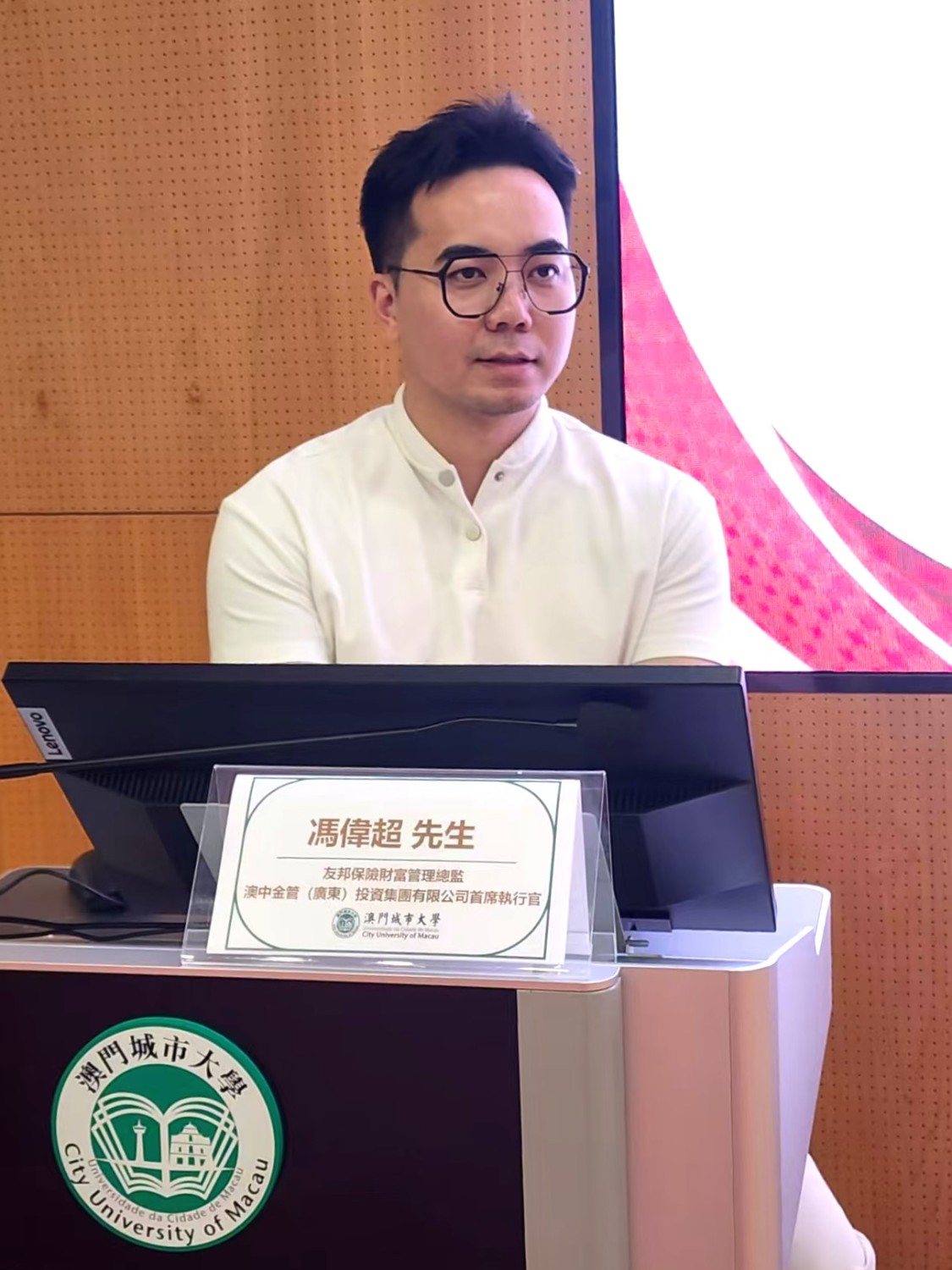
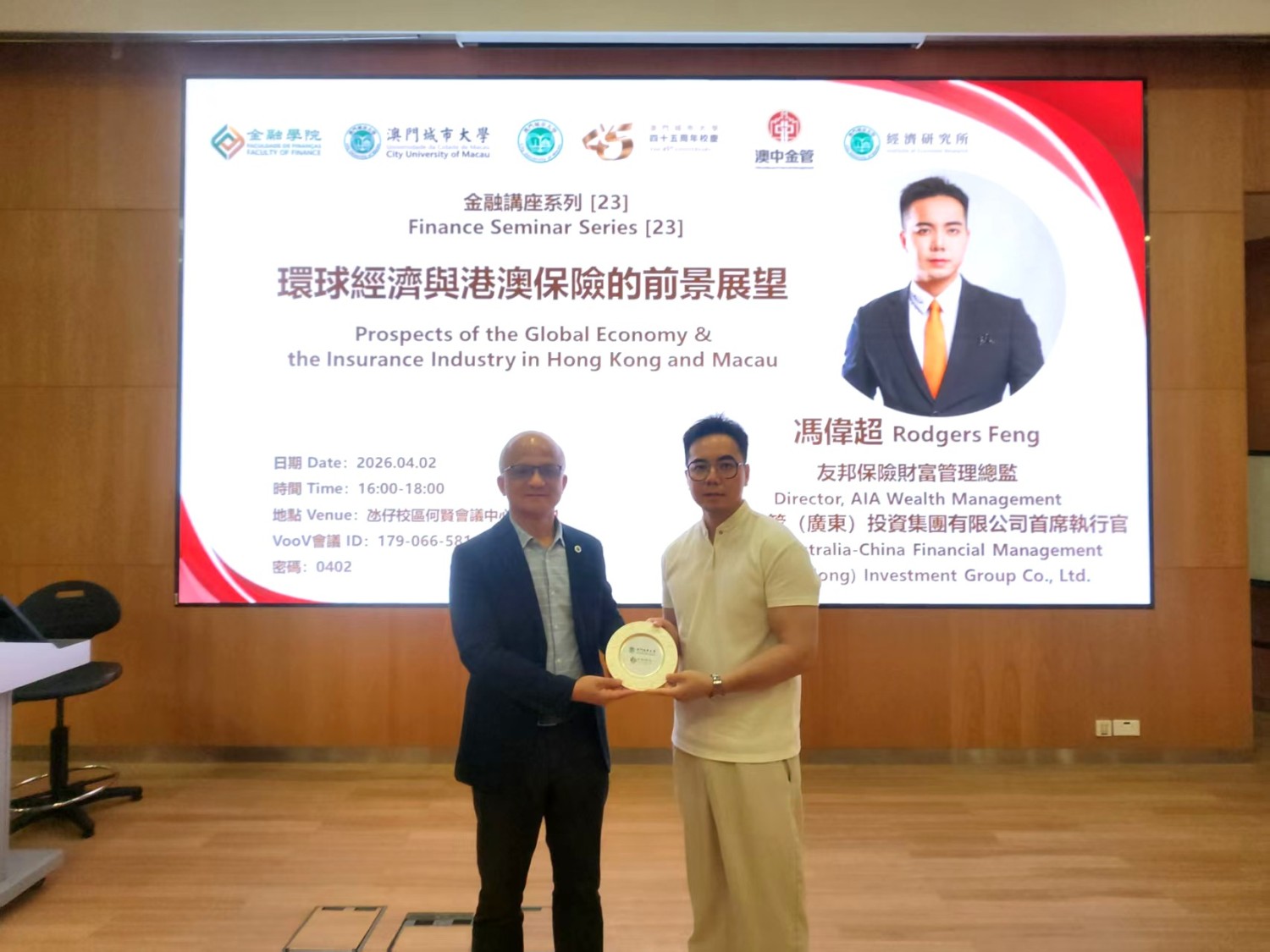

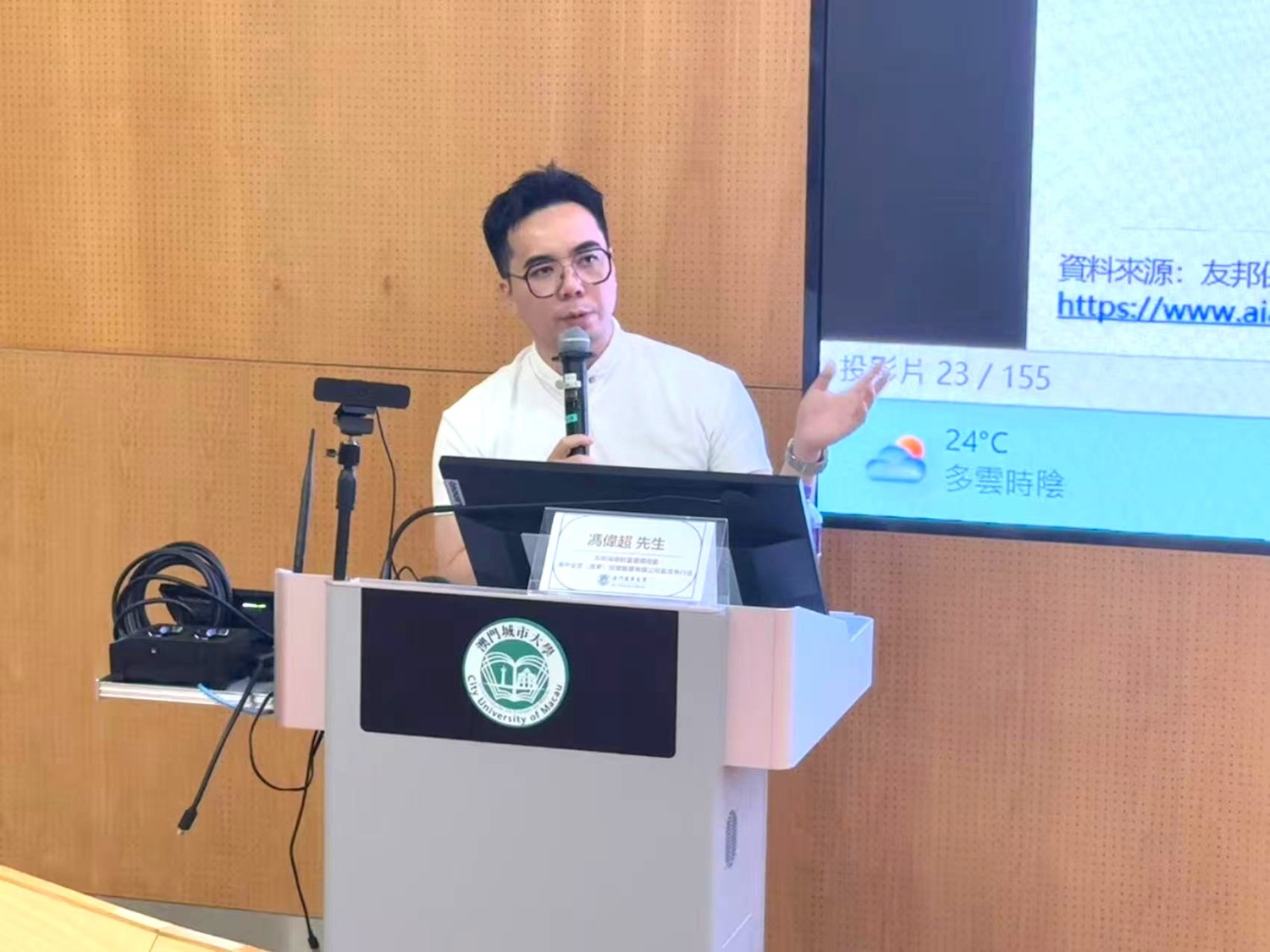
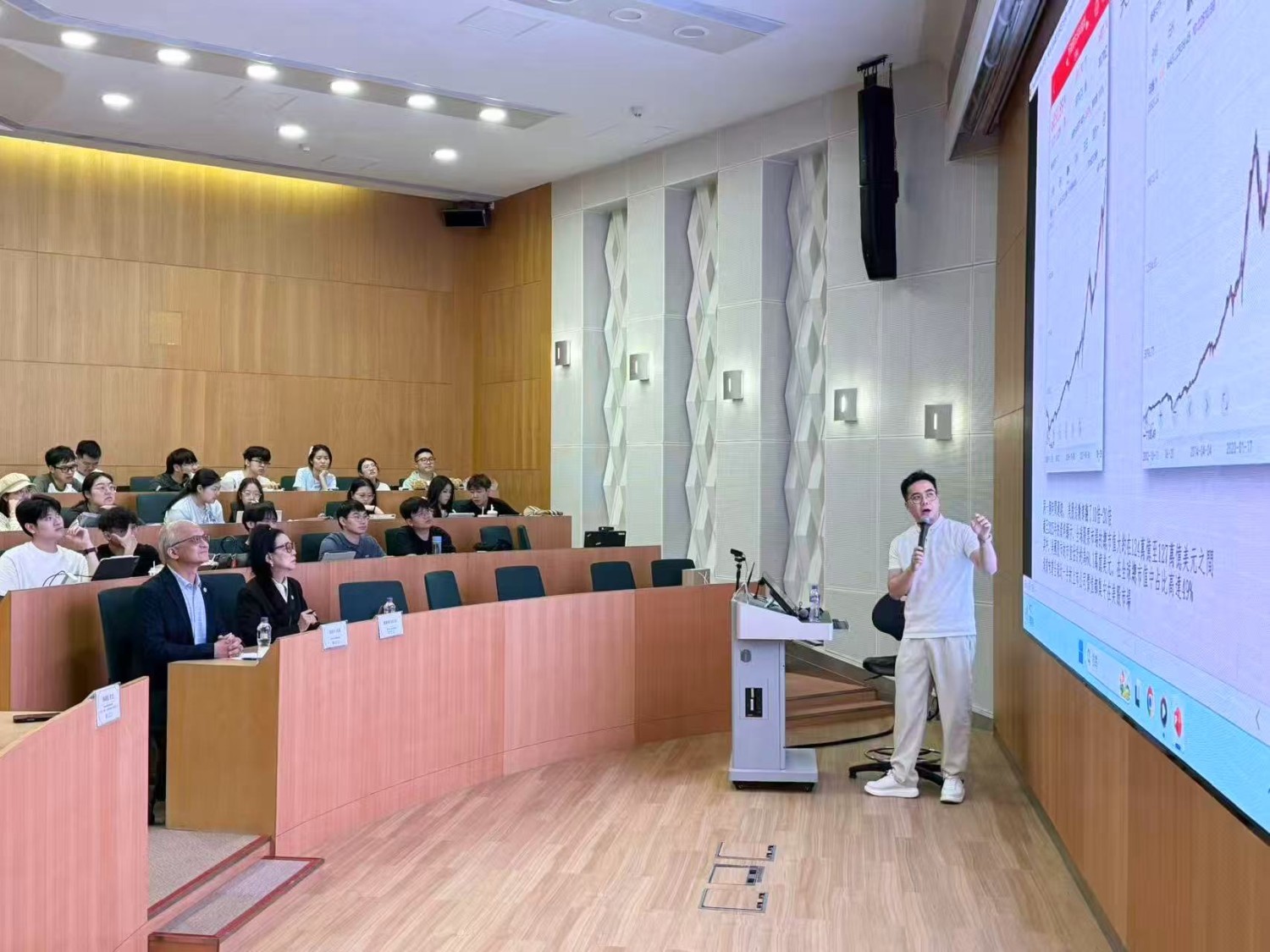
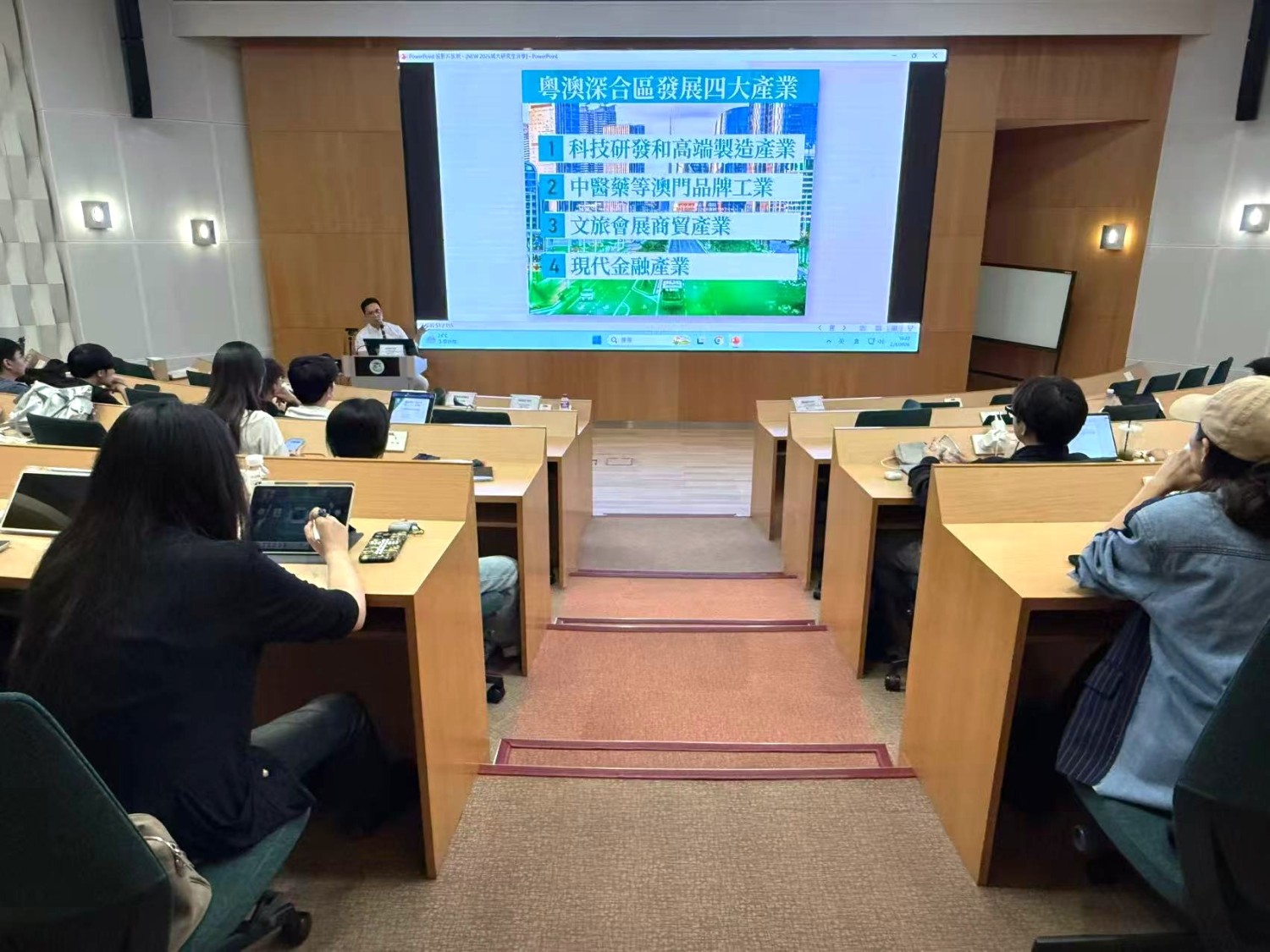
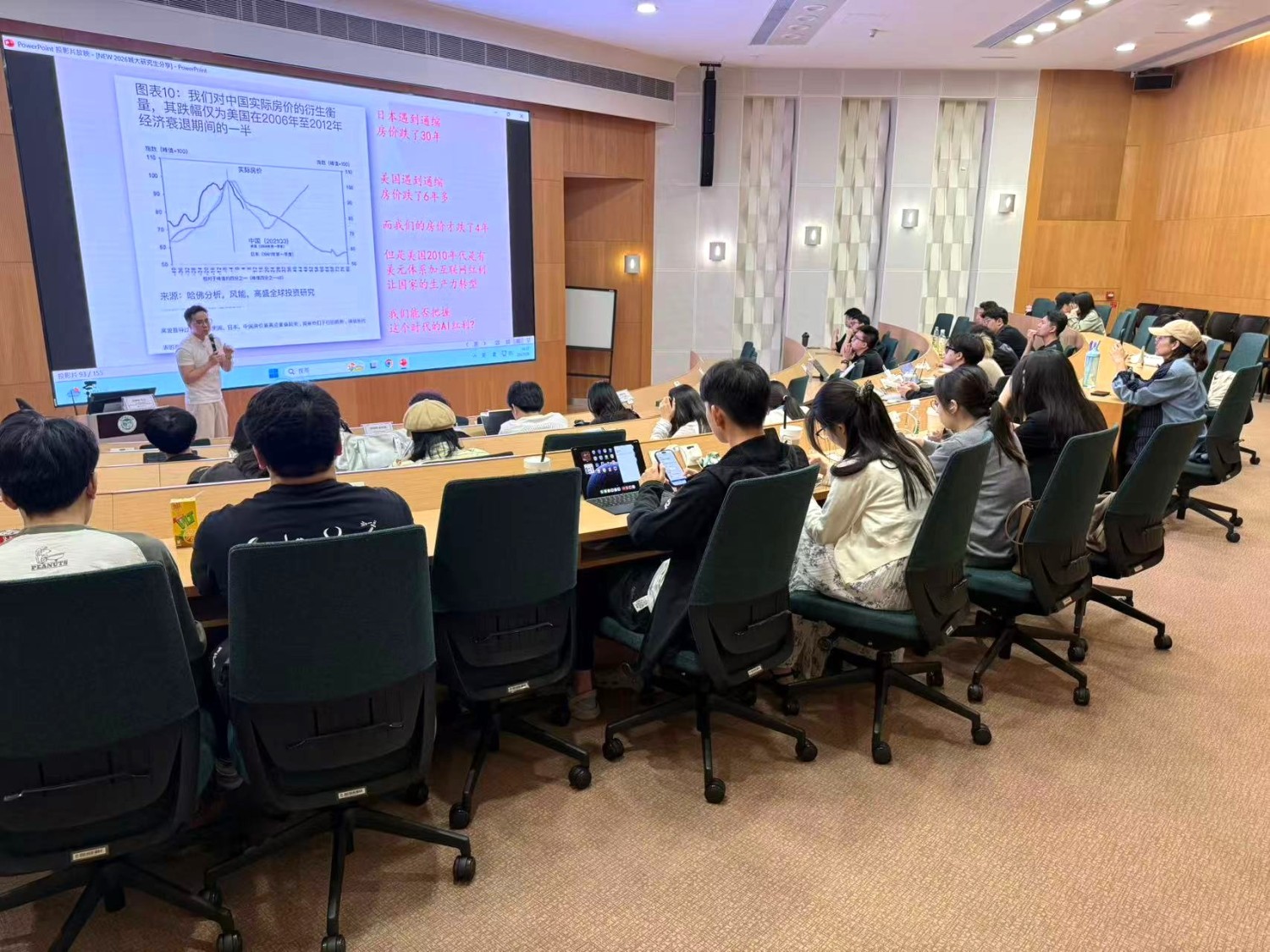
On April 2, 2026, the Faculty of Finance at City University of Macau held a finance seminar at Ho Yin Conference Center on Taipa Campus. The seminar featured Mr. Rodgers Feng, Director of AIA Wealth Management and CEO of Australia-China Financial Management (Guangdong) Investment Group Co., Ltd., was invited as the keynote speaker. The seminar focused on the theme "Prospects of the Global Economy & the Insurance Industry in Hong Kong and Macau". Distinguished guests included Dean Adrian Cheung and Associate Dean Eva Khong of the Faculty of Finance.
During the seminar, Mr. Feng provided an in-depth analysis of global insurance industry trends, focusing on the unique opportunities and challenges facing the Hong Kong and Macau insurance sectors in the current environment. As the global economy and technological landscape undergo rapid changes, the insurance industry—as a key pillar of the financial system—is facing structural transformation, with steady growth in the global insurance industry. The insurance markets in Hong Kong and Macau are experiencing both opportunities and challenges. In 2025, the Hong Kong and Macau insurance markets performed remarkably well. According to data from the Hong Kong Insurance Authority, total new policy premiums in Hong Kong reached HKD 264.5 billion, a year-on-year increase of 55.9%, setting a new record. Leveraging its mature market, comprehensive risk management solutions, strategic geographic location, and internationally aligned regulatory framework, Hong Kong has attracted companies from mainland China and the Belt and Road Initiative countries to set up captive insurance companies to manage cross-border project risks. Compared to the mainland Chinese insurance market, the insurance markets in Hong Kong and Macau offer significant advantages in returns, with an average yield of 6.5% versus 2–3% on the mainland. Furthermore, the Hong Kong and Macau markets feature more robust regulation and a wide variety of insurance products, including critical illness, medical, life, savings, and fund-linked products, meeting diverse customer needs. Insurance companies also leverage professional investment teams to engage in global asset allocation, enhancing long-term value.
Mr. Feng pointed out that amid the current economic deflationary cycle, volatility in traditional risk assets such as real estate and equities has intensified, and returns on conventional investment instruments have declined. In this context, savings-type insurance products in Hong Kong and Macau—offering principal protection, compound interest growth, asset segregation, and wealth succession—have become
the preferred choice for high-net-worth individuals and middle-class families. As the Guangdong-Macao In-Depth Cooperation Zone promotes the development of four major industries, modern finance is seen as a key driver of Macau’s economic transformation. As a core component of the financial system, the insurance industry is benefiting from policy support, cross-border capital flows, and the internationalization of the renminbi. Data from the second quarter of 2025 show that the median monthly income in Macau’s financial sector reached MOP 22,000, higher than in gaming and hospitality, demonstrating its capacity to generate high-quality employment. Mr. Feng also noted that artificial intelligence is driving industrial transformation, rapidly reshaping the global industrial structure. The resulting energy consumption and infrastructure demands have become new variables that the insurance industry must consider in its investment strategies.
Mr. Feng actively engaged with students, using market data analysis to deepen their understanding of the development prospects of the Hong Kong and Macau insurance industries, asset allocation strategies, and global economic trends. He encouraged students to make the most of their time at university by actively pursuing relevant professional certifications, which not only enhance their professional value but also improve their competitiveness in the job market, offering tangible benefits for future career planning. The faculty and students expressed their gratitude to Mr. Feng for his insightful and valuable presentation.