



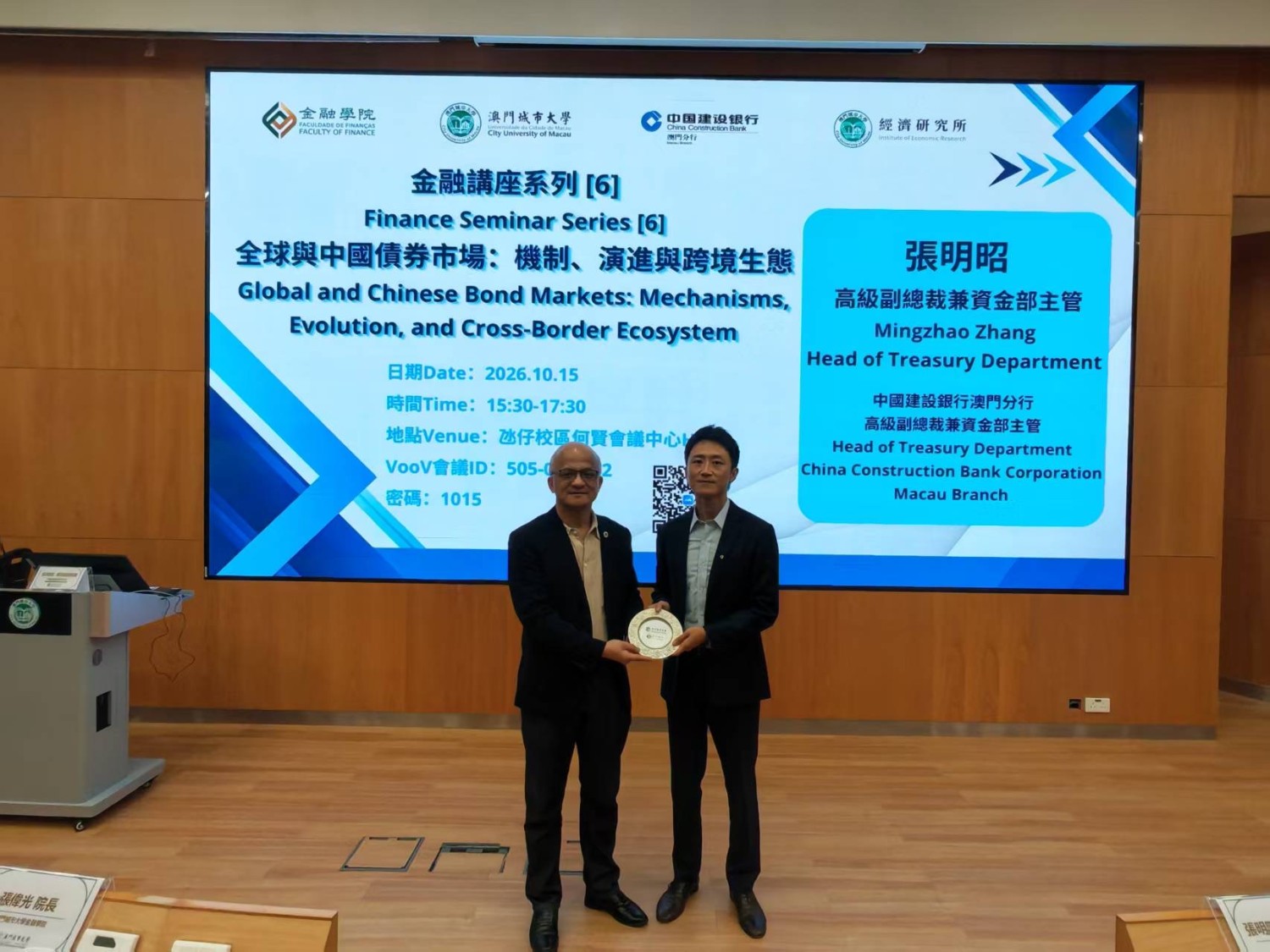
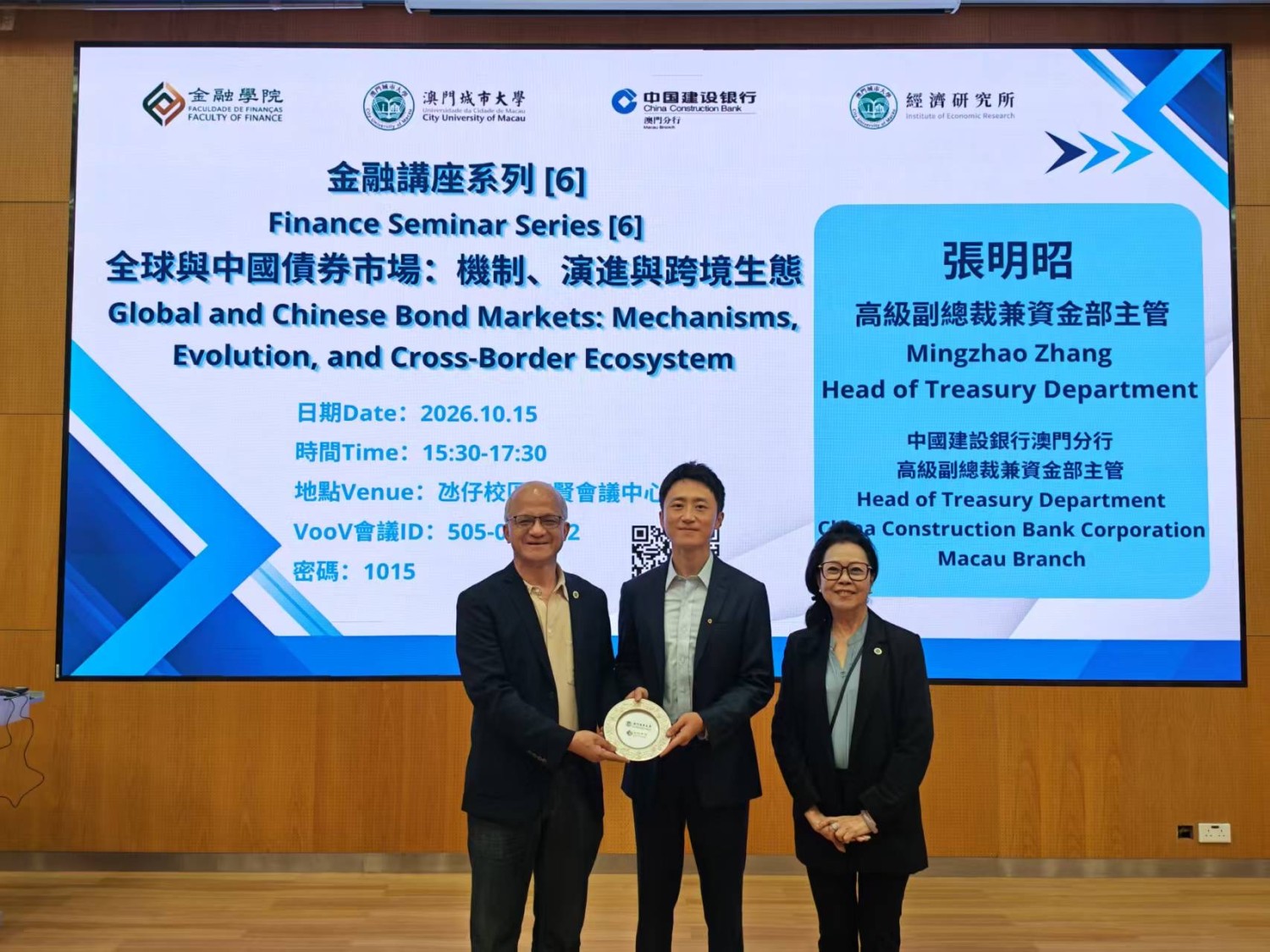
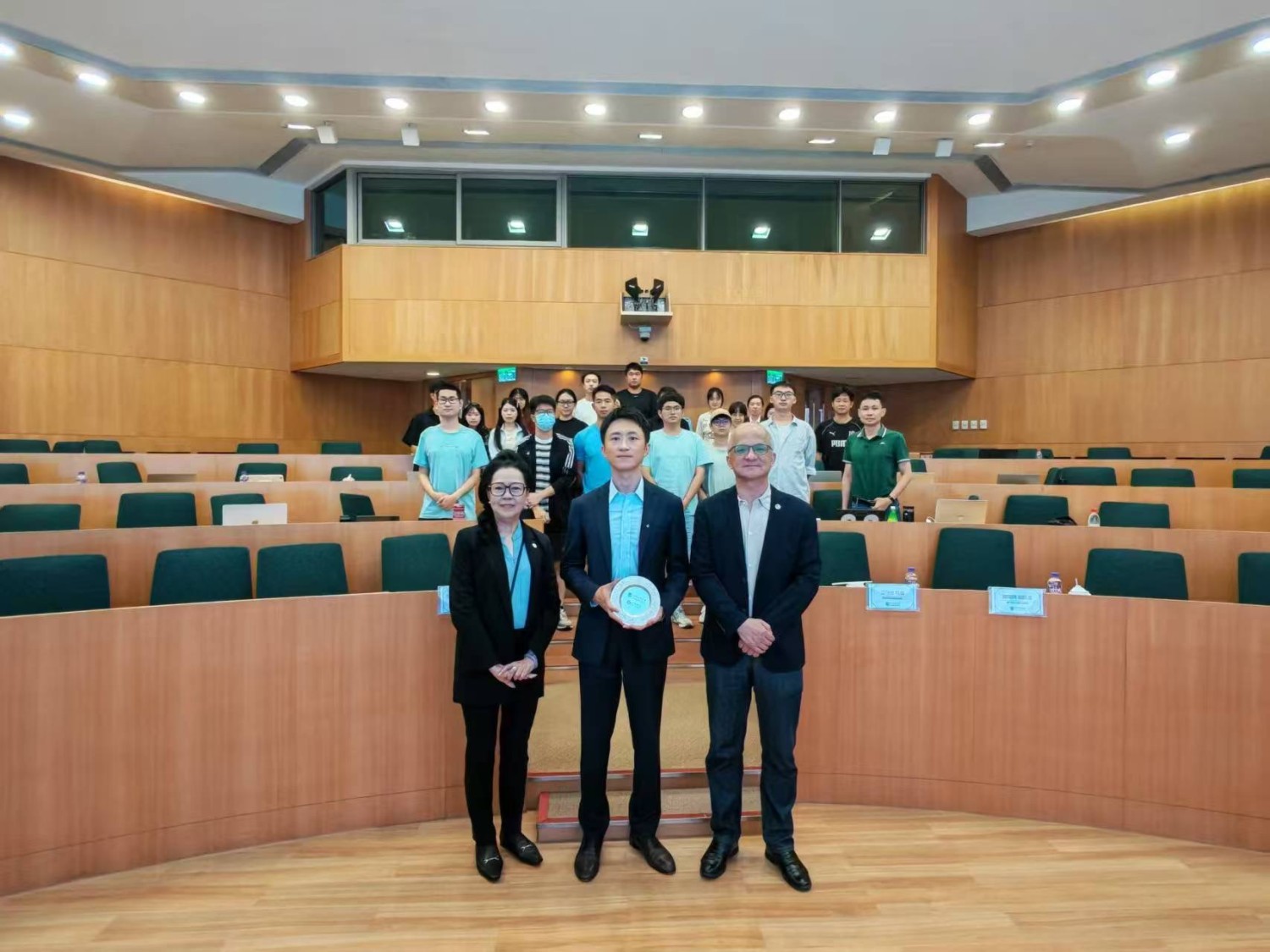
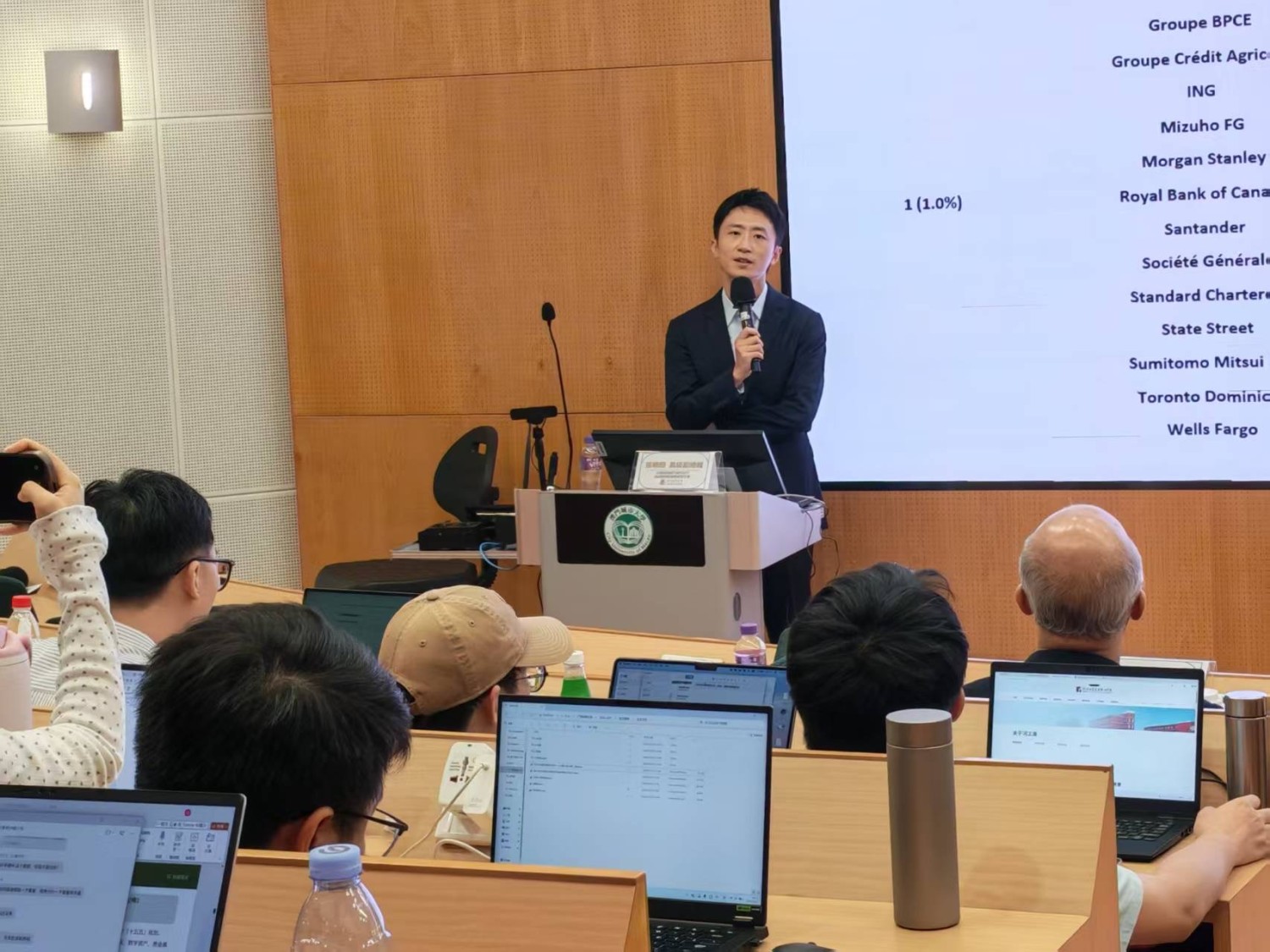



On October 15, 2026, the Faculty of Finance at City University of Macau held a finance seminar at Ho Yin Conference Center of Taipa Campus. The seminar featured Mr. Mingzhao Zhang, Senior Vice President and Head of Treasury Department of China Construction Bank Macau Branch, as the keynote speaker. The seminar focused on the theme "Global and Chinese Bond Markets: Mechanisms, Evolution, and Cross-Border Ecosystem". Distinguished guests included Dean Adrian Cheung and Associate Dean Eva Khong from Faculty of Finance of City University of Macau.
Mr. Mingzhao Zhang holds a Bachelor of Laws from Fudan University and a Master of Business Administration from Tsinghua University. He has previously worked in the Financial Markets Department and Investment Banking Department of the Head Office of China Construction Bank, as well as CCB International Securities Limited. Currently serving as Head of the Treasury Department of China Construction Bank Macau Branch, he has long been engaged in domestic and international financial market and investment banking businesses. He is well-versed in fixed-income products and operations, with extensive experience in financial markets, investment banking and bank asset-liability management.
At the start of the seminar, Mr. Zhang began with the underlying logic of bond markets, elaborating on the full-dimensional functions of bond markets ranging from financing to pricing anchors. The bond market serves not only as a vital channel for government fiscal financing and corporate leverage expansion, but also as a core vehicle for monetary policy transmission and the benchmark for risk-free rate pricing. China's bond market can be divided into the exchange bond market, interbank bond market, over-the-counter market and free trade zone market. In terms of credit types, it consists of government bonds, credit bonds and asset-backed securities.
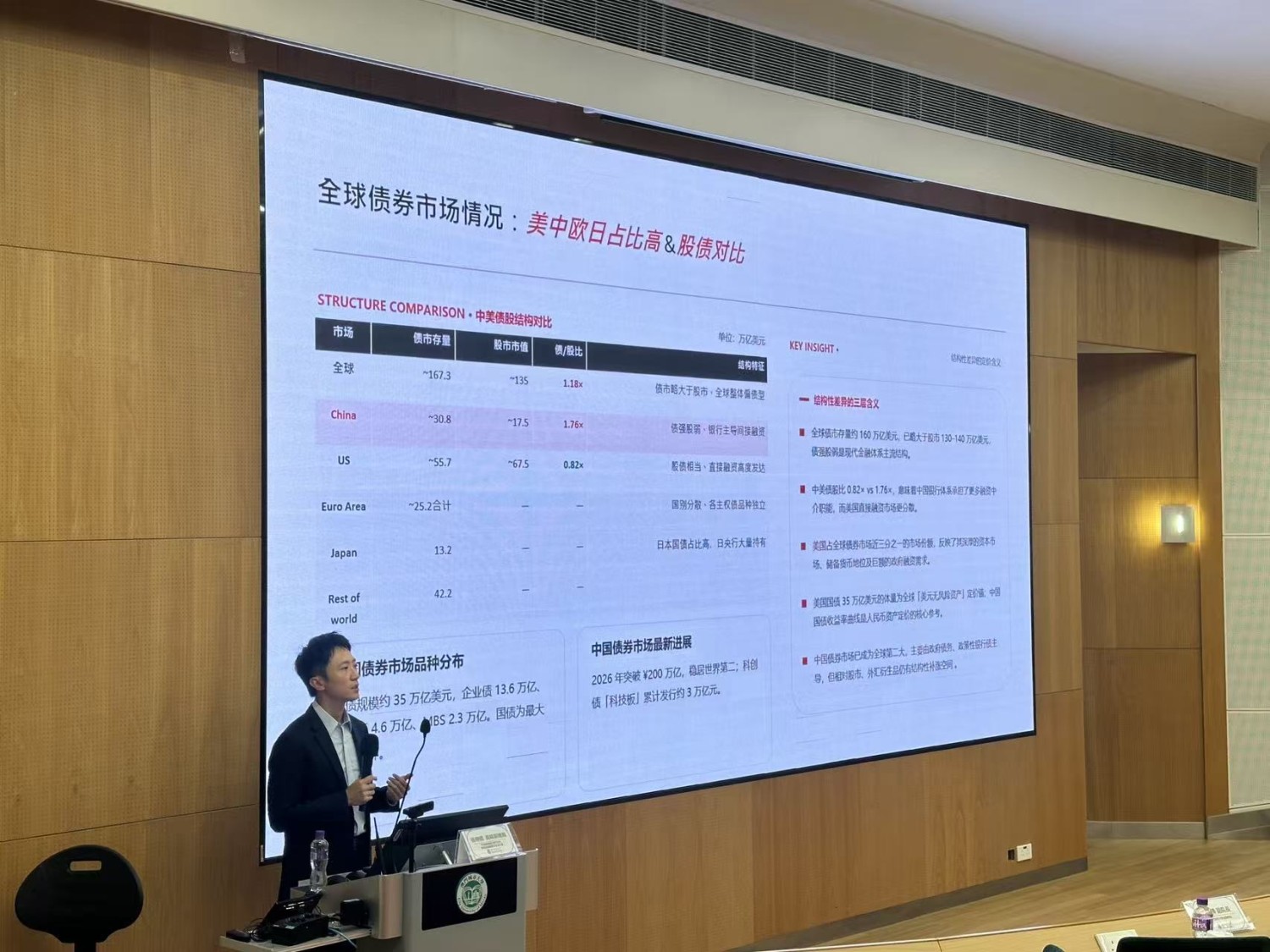
Mr. Zhang noted that the global bond market is dominated by the United States, China, Europe and Japan, and he drew comparisons between equities and bonds. From a global structural perspective, the outstanding volume of bonds has slightly exceeded that of stocks, forming the mainstream structure of the modern financial system characterised by "bonds outweighing equities". The bond-to-equity ratios of China and the United States stand at 0.82 and 1.76 respectively. This marked disparity implies that China's banking system undertakes more functions as a financing intermediary, while the United States features a more decentralised direct financing market. The US bond market ranks first worldwide, with Treasury bonds as its largest segment, reflecting its deep capital market, reserve currency status and massive government financing needs. He further emphasised that China's bond market has grown from an initial balance of less than RMB 500 billion in the interbank market in 1997 to a total size exceeding RMB 200 trillion at present, firmly securing the world's second position. The market is mainly led by government bonds and policy bank bonds, yet there remains room for structural growth relative to the stock market and foreign exchange derivatives.
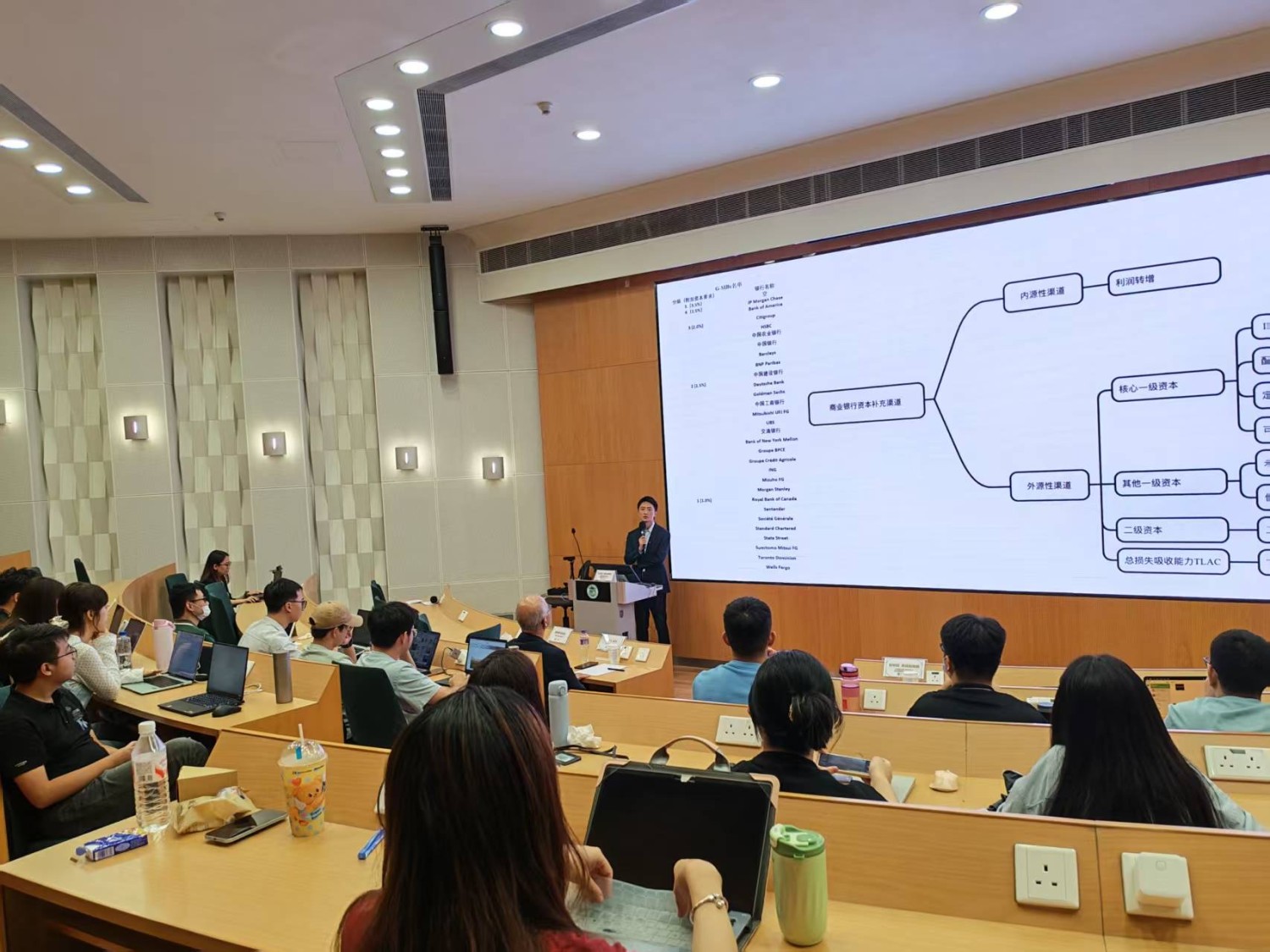
Mr. Zhang went on to elaborate on bond issuance rules and pricing, focusing on the evolutionary trajectory of China's bond market. He reviewed the shift in external debt administration from an approval-based system to a review-and-registration system, and explained the rules and pricing logic of commercial bank capital instruments such as Tier 2 capital bonds, perpetual bonds and TLAC bonds. In terms of investor behaviour, notable changes are taking place in domestic institutional bond holdings: banks have kept raising their bond allocation ratio, while mutual funds show stronger willingness to invest in bonds. The rapid expansion of "fixed income plus" funds mirrors the steady improvement of market depth and breadth.
Turning to cross-border ecosystem and RMB internationalisation, Mr. Zhang summarised the cross-border opening path of the bond market as "dual-track advancement". On the investment side, connectivity mechanisms including Bond Connect (Northbound / Southbound), CIBM Direct, Swap Connect and QFII/RQFII have been continuously refined. Southbound Connect has been expanded to four types of non-bank institutions: securities firms, mutual funds, insurers and wealth management entities. On the financing side, he discussed China's efforts to build an "onshore-offshore onshore-in-offshore" RMB bond system. He identified four categories of cross-border RMB bonds: Panda Bonds (onshore), Dim Sum Bonds (offshore), Free Trade Zone / Yulan Bonds (onshore-in-offshore). Taking Chinese USD bonds as a reference, he outlined the capital market pathway for the internationalisation of RMB bonds.
Lastly, Mr. Zhang concluded that the limitations of China's bond market lie in liquidity improvement and the convergence of investor profiles. Future directions include further expanding the offshore RMB capital pool to consolidate the foundation for the development of the Dim Sum Bond market; refining the issuance and governance mechanism for Dim Sum Bonds to deepen market depth; fostering a diversified investor base and lifting secondary market liquidity.
During the exchange session, Mr. Zhang engaged in active exchanges with students. Faculty and students of the Faculty of Finance expressed sincere gratitude to Mr. Mingzhao Zhang for his insightful sharing. They remarked that the seminar was well-supported by facts and logically rigorous, offering important academic references and practical insights for understanding the operating logic and future trends of global and China's bond markets. Students commented that they had gained abundant takeaways and looked forward to more industry sharing and exchange events organised by the Faculty.