


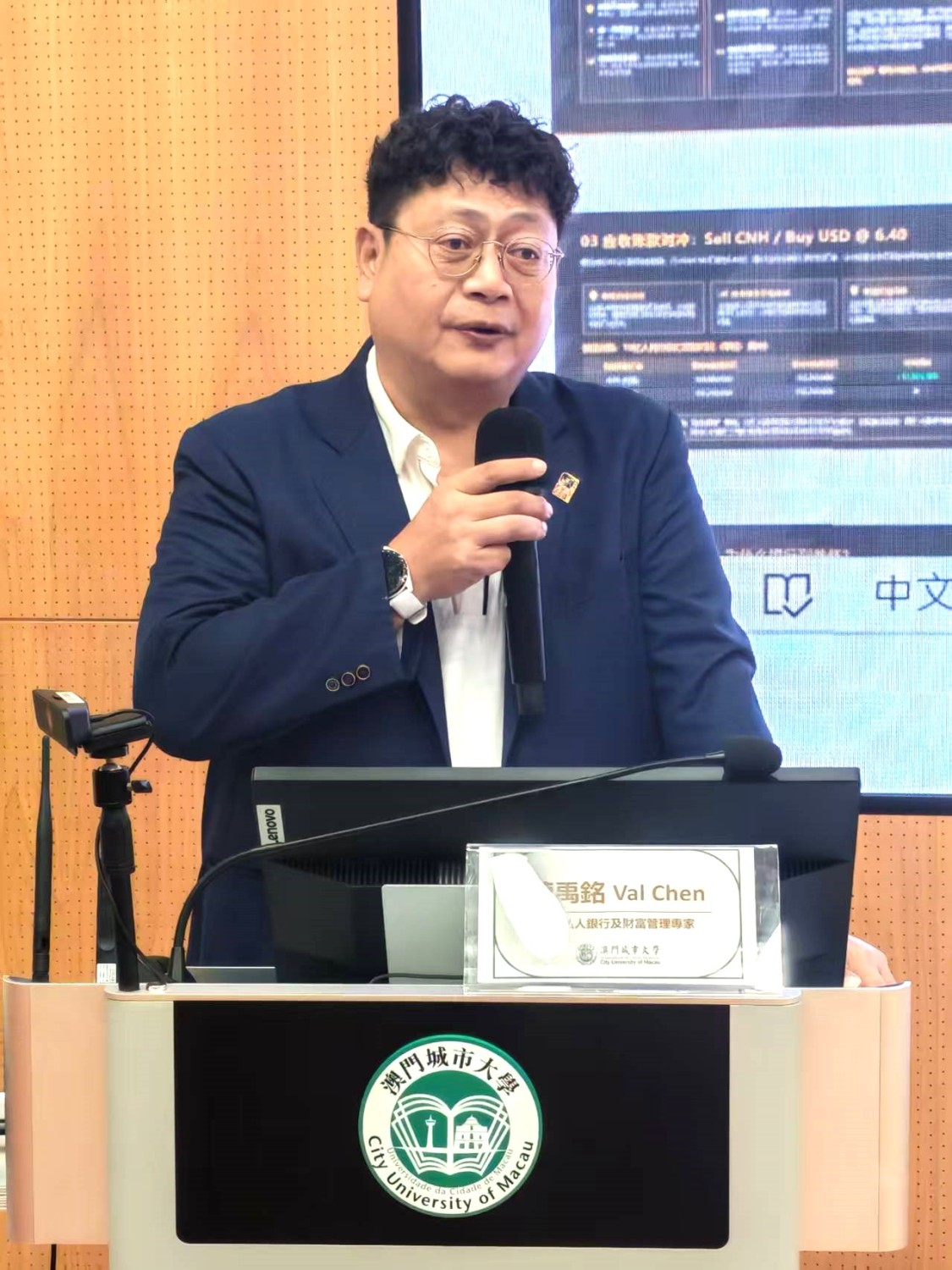
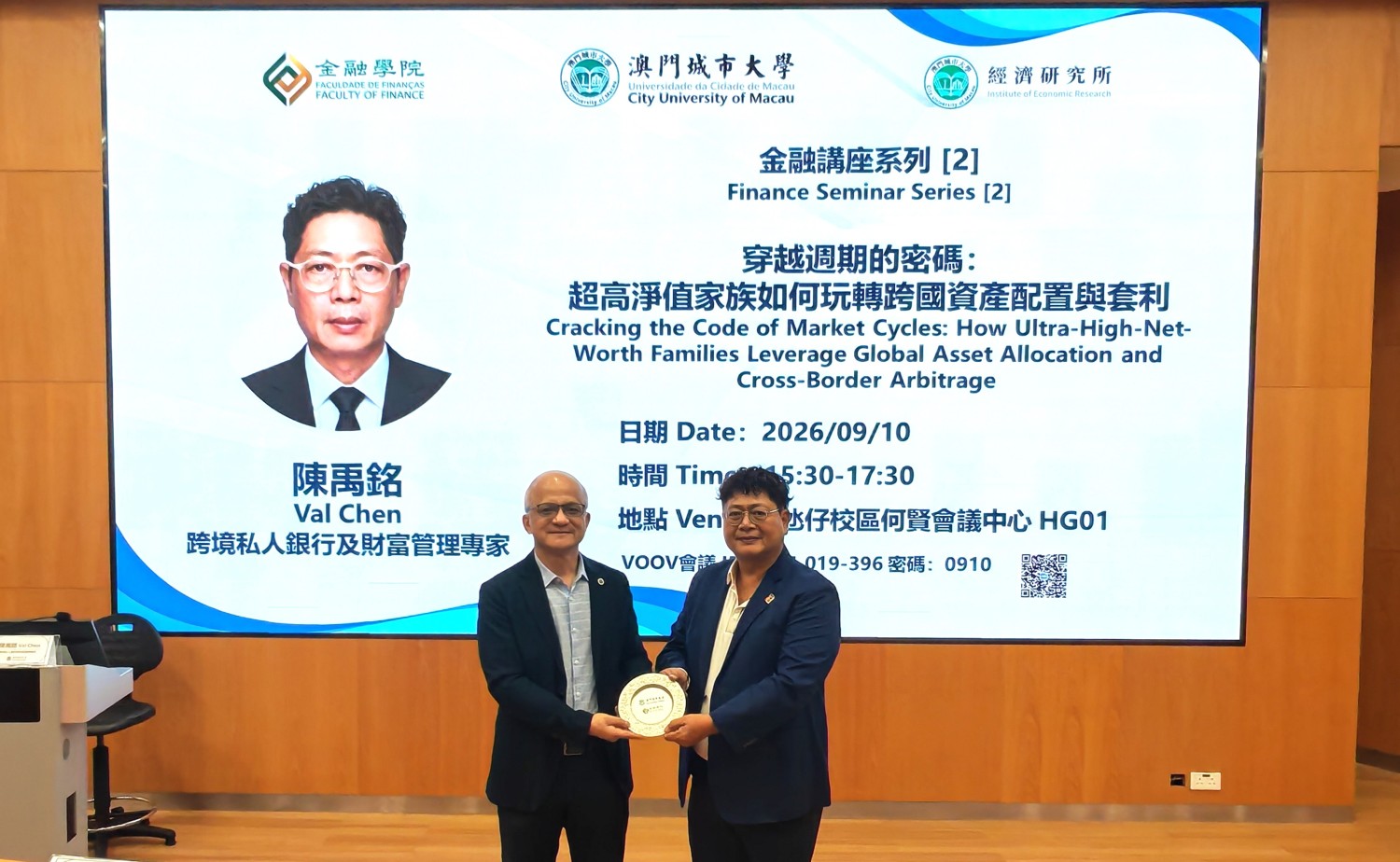
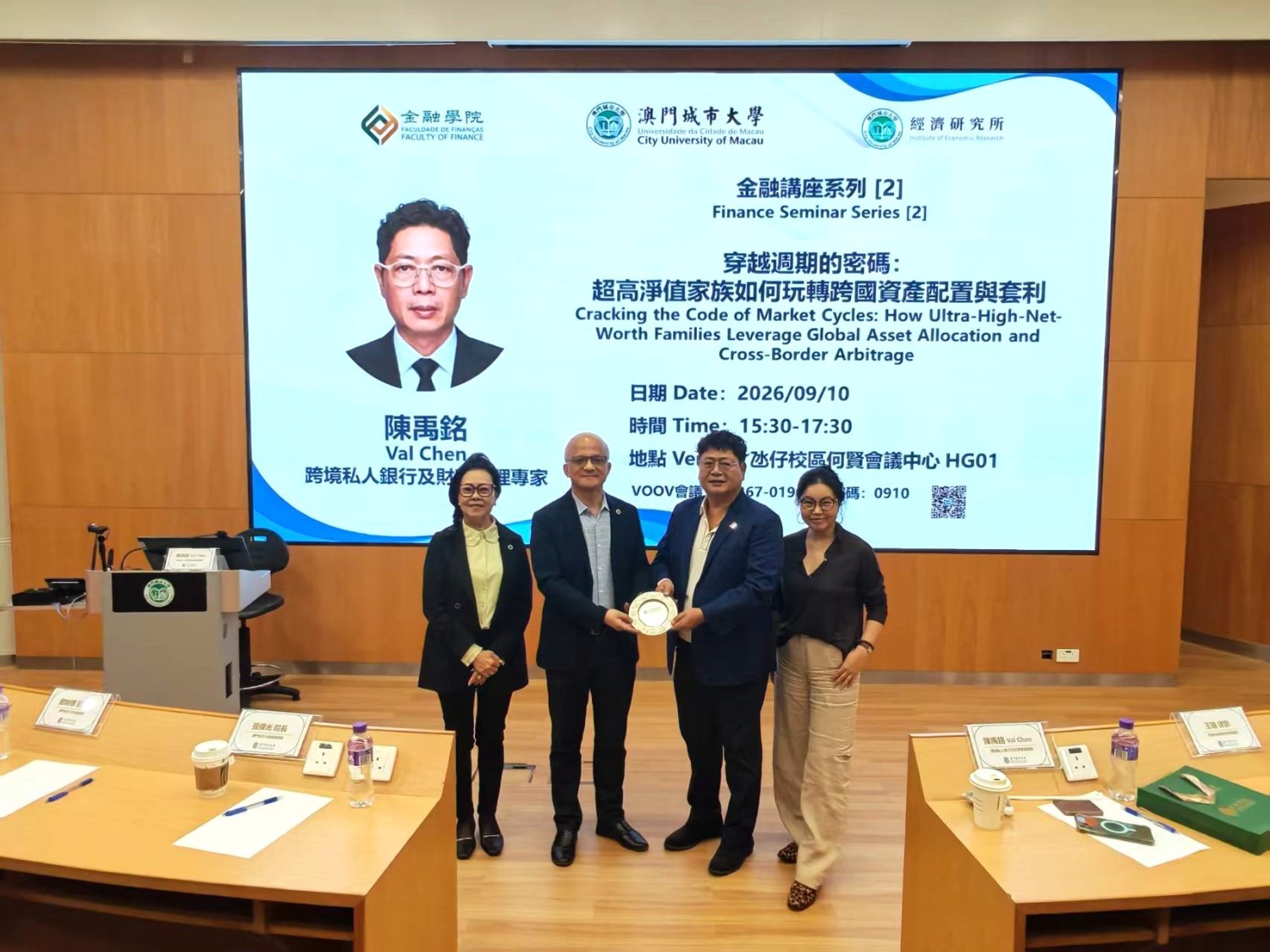
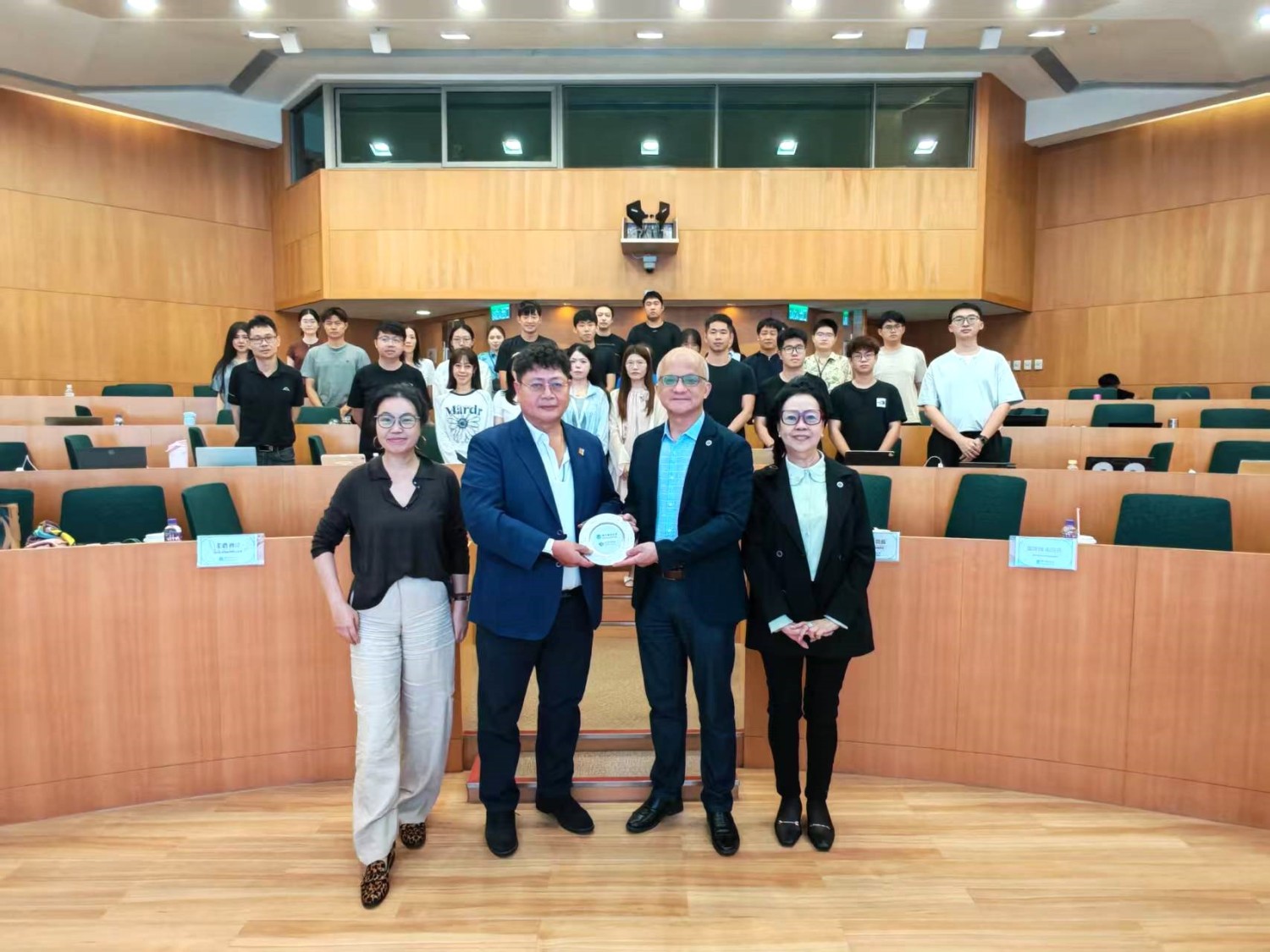
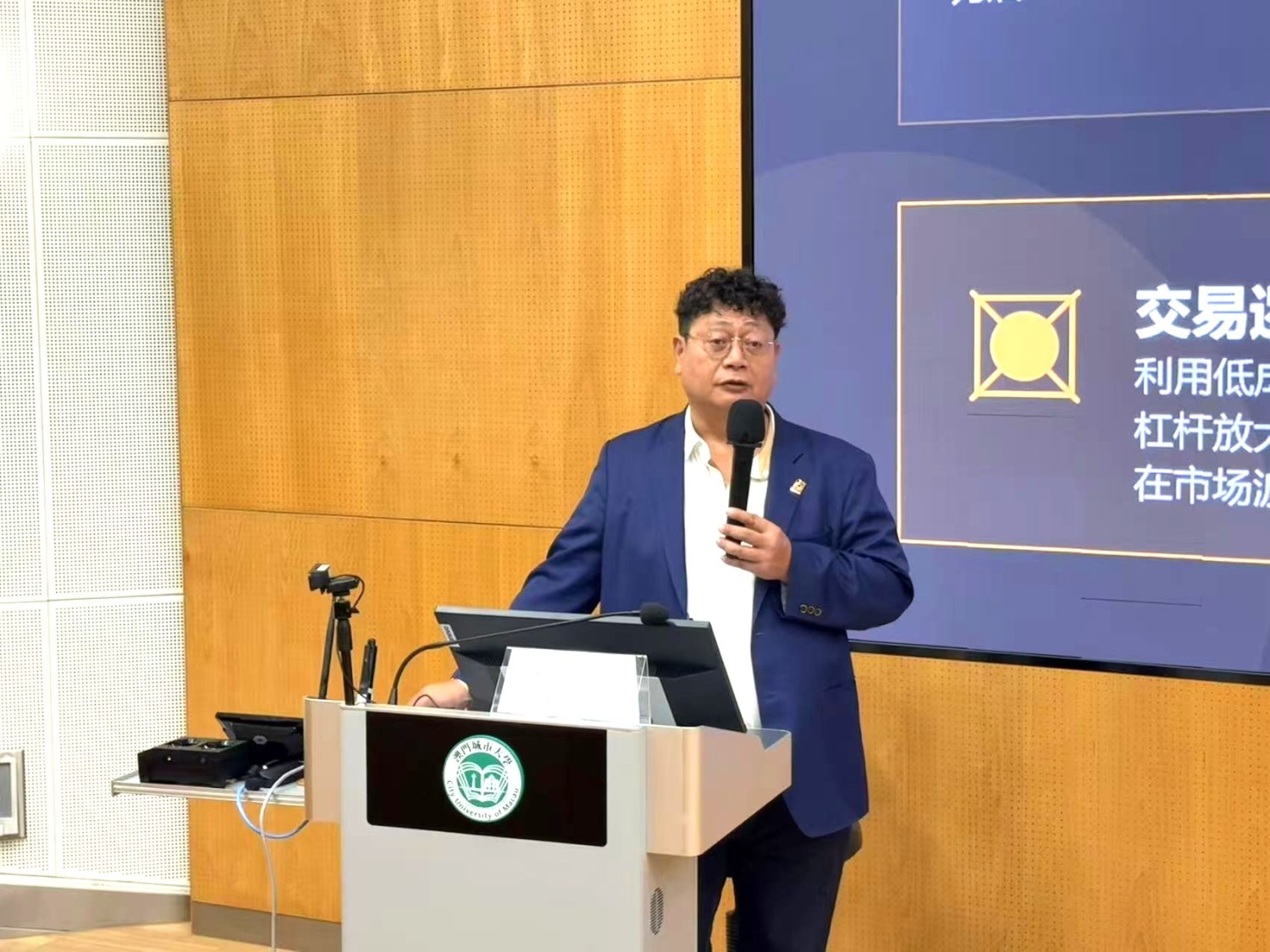
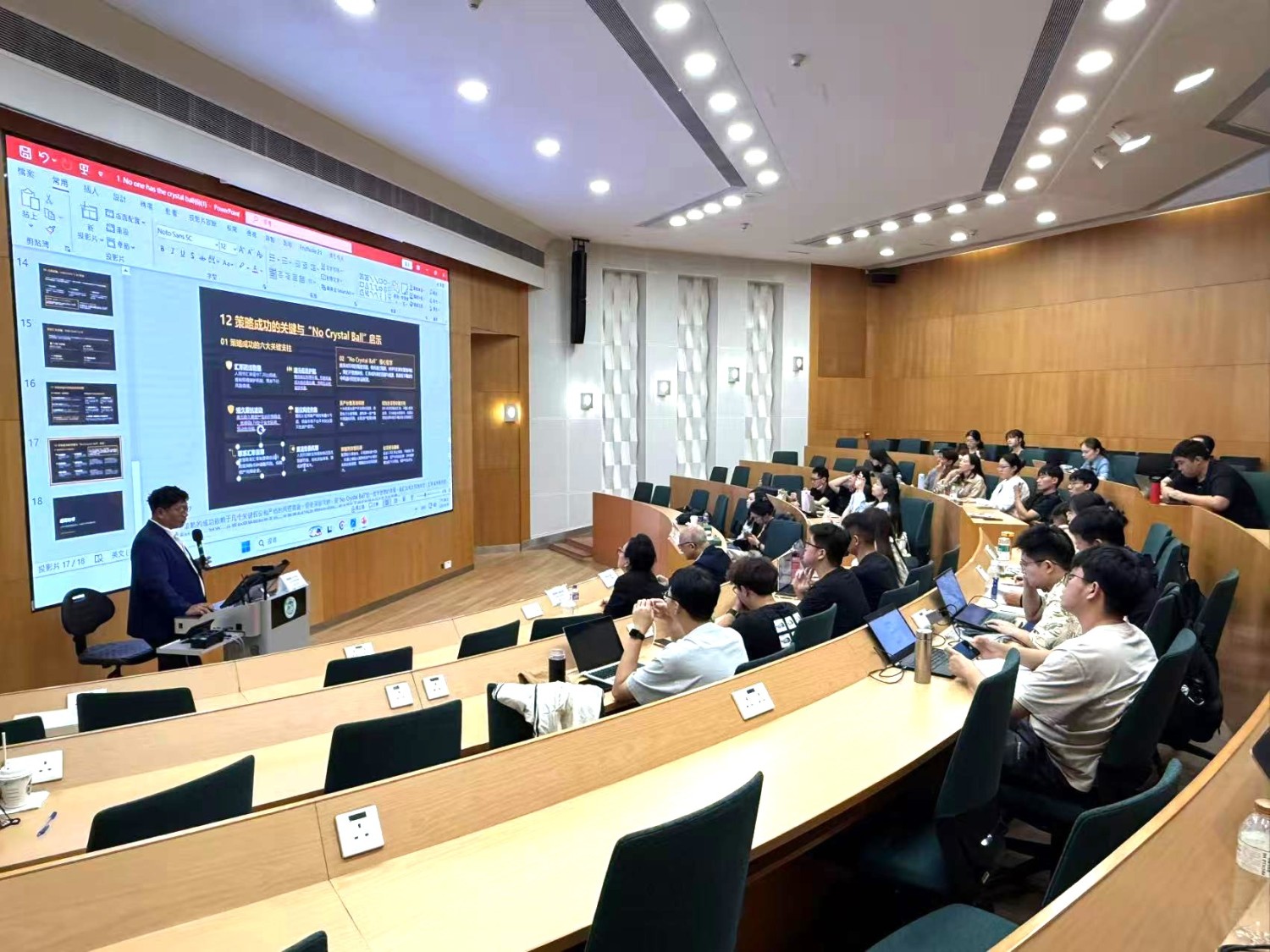
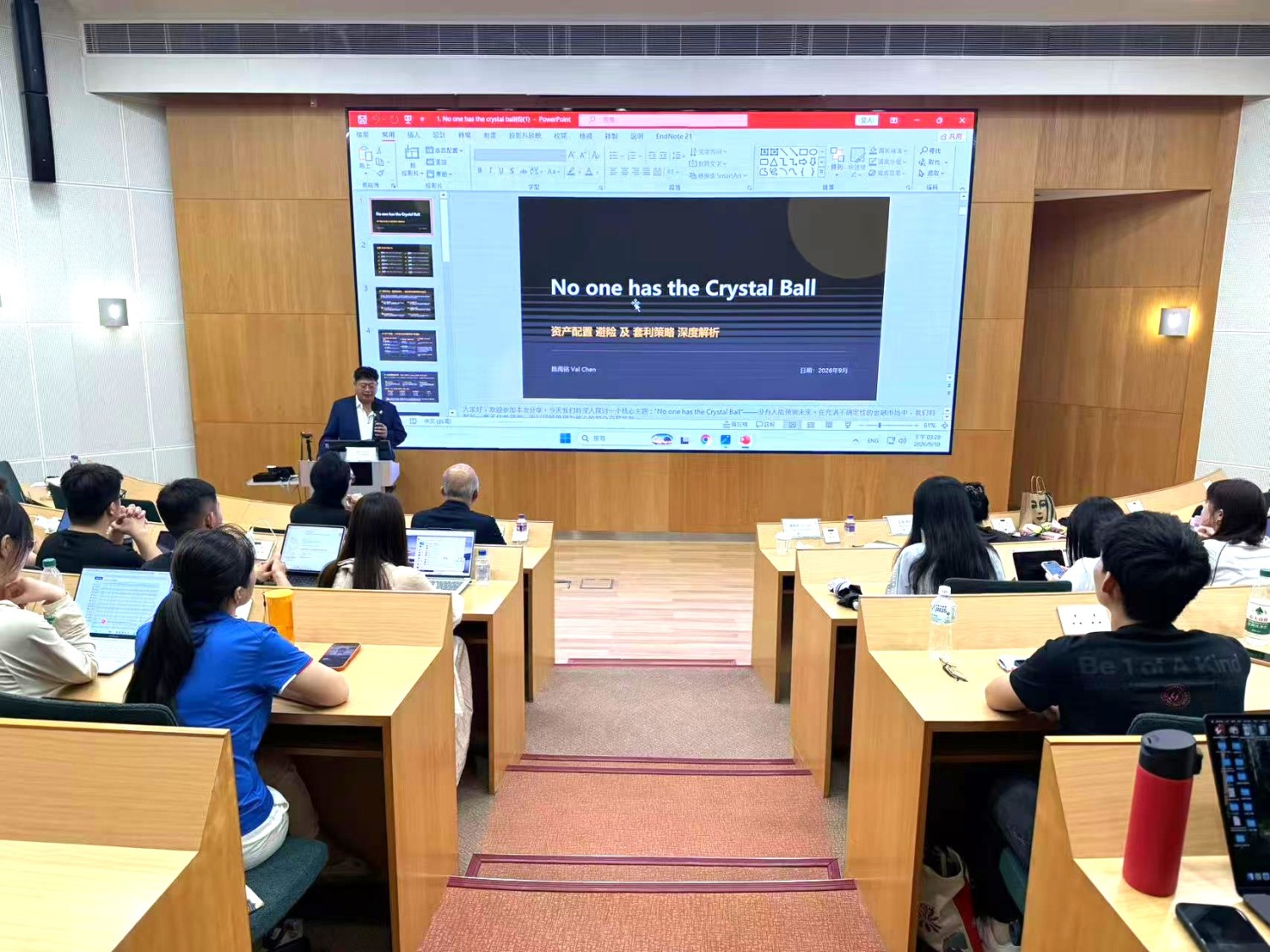
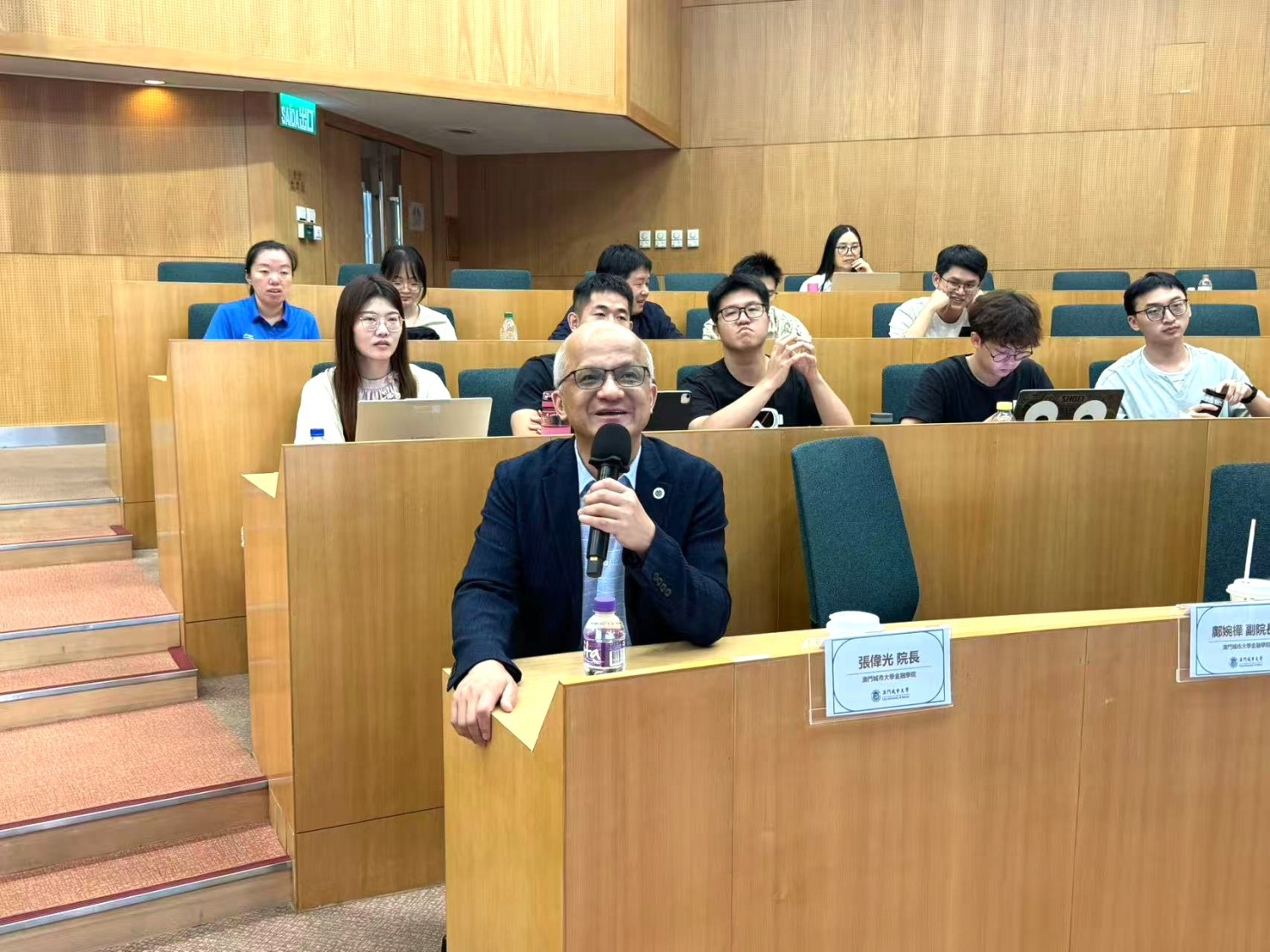
On September 10, 2026, the Faculty of Finance at City University of Macau held a finance seminar at Ho Yin Conference Center on Taipa Campus. The seminar featured Mr. Yuming Chen, a cross-border private banking and wealth management expert, as the keynote speaker. The seminar focused on the theme "Cracking the Code of Market Cycles: How Ultra-High-Net-Worth Families Leverage Global Asset Allocation and Cross-Border Arbitrage". Distinguished guests included Ms. Wang Fan, a lawyer and expert consultant on family offices and family succession, as well as Dean Adrian Cheung and Associate Dean Eva Khong from Faculty of Finance of City University of Macau.
Mr. Chen is an expert in cross-border private banking and wealth management with over 20 years of experience focused on serving high-net-worth clients in Greater China. He is highly proficient in cross-border private banking, wealth management, and asset allocation. He has previously served as a senior executive at several leading international financial institutions (Merrill Lynch, UBS, Deutsche Bank, BNP Paribas, Credit Suisse, and United Overseas Bank), and is familiar with the financial regulations and product structures of the United States, Hong Kong, and Mainland China. He excels at providing comprehensive wealth planning for multinational families and business owners. Mr. Chen 's experience covers licenses and practical experience in the United States, Hong Kong, and Mainland China, fully demonstrating his capabilities in cross-border private banking and wealth management.
During the seminar, Mr. Chen pointed out that market fluctuations are difficult to predict accurately. Instead of speculating on one-sided market movements, we should build a family asset allocation system that can withstand black swan shocks and offers a favorable risk-reward ratio by setting risk caps, diversifying asset allocation, using low-cost leverage, employing option hedging mechanisms, and applying hard stop-loss rules, thereby achieving steady wealth appreciation and risk isolation. He then discussed the logic of structured arbitrage with low financing costs and bounded risk; asset allocation: reviewing the core decision-making rationale behind selling Chinese real estate ten years ago; accounts receivable hedging: the operation and risk control of Sell CNH / Buy USD @ 6.40; Lombard Loan: the core engine for unlocking low-interest-spread funds and leverage utilization; USD fixed-income portfolio: dynamic allocation of 80% core holdings + 20% trading positions; HKD borrowing: analysis of funding costs and exchange rate assumptions under the linked exchange rate system; option enhancement: risk optimization of Put Spread combinations replacing single-leg Put selling; liability replacement: optimization and restructuring of liability-side costs through cross-border foreign exchange transactions; stop-loss mechanism: the risk control logic of the USD/CNH 7.30 mandatory liquidation line; target return: exchange rate target and return calculation anchored to USD/CNH 6.35, as well as return calculation: comprehensive return breakdown and stress test analysis under extreme market conditions.
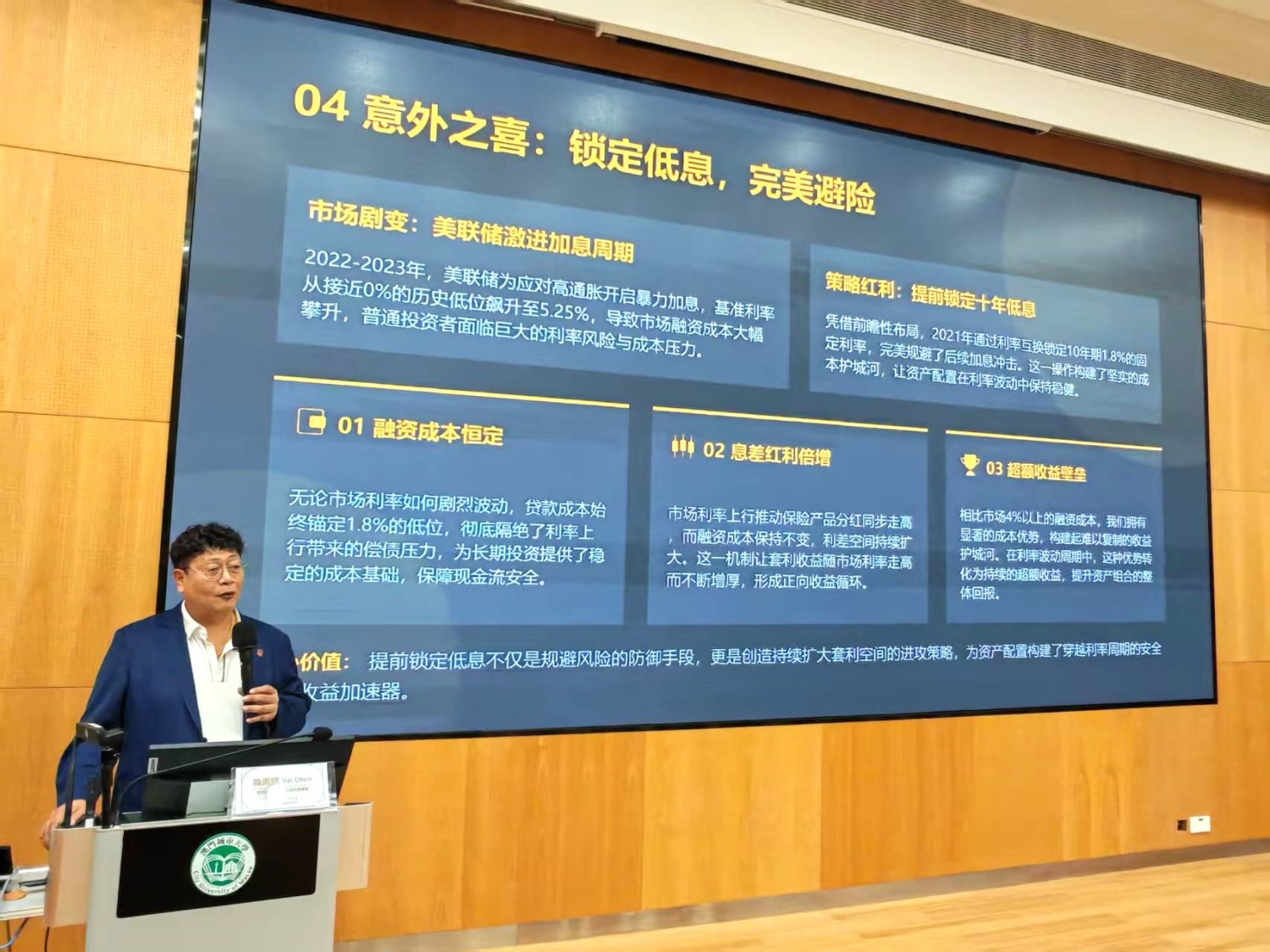
During the seminar, Mr. Chen conducted an in-depth case analysis, discussing the transaction background: a review of the 2021 "asset shortage" and the market liquidity dilemma under a low-interest-rate environment, analyzing the asset allocation pressure and return challenges faced by institutions; detailed explanation of the transaction structure: leverage and interest rate swaps, breaking down the underlying architecture of structured products and deeply analyzing the core mechanisms of leverage utilization and interest rate swap instruments; motivation analysis: "dimensional reduction strike" on the "asset shortage," analyzing how institutions break through the return bottleneck and market limitations of traditional asset allocation through innovative financial structures; unexpected gains: locking in low interest rates and achieving perfect hedging, interpreting how the transaction achieved long-term financing cost lock-in while effectively hedging risks brought by market interest rate fluctuations; hidden trap: insurance companies' reinvestment risk, digging deep into the long-term capital matching difficulties and reinvestment yield hidden dangers behind the seemingly perfect transaction structure; risk scenario calculation: the impact of dividend cuts, quantitatively analyzing the transmission effect of underlying asset dividend rate cuts on product returns and assessing losses under extreme conditions; final outcome outlook: dividends meeting targets vs. not meeting targets, deducing the differences in investment returns under two key market scenarios and predicting the product's risk exposure and return ceiling; finally, conclusions and implications: a textbook-level "empty-hand arbitrage," summarizing the industry implications brought by this transaction and reconstructing the asset allocation logic and risk control thinking in the low-interest-rate era.
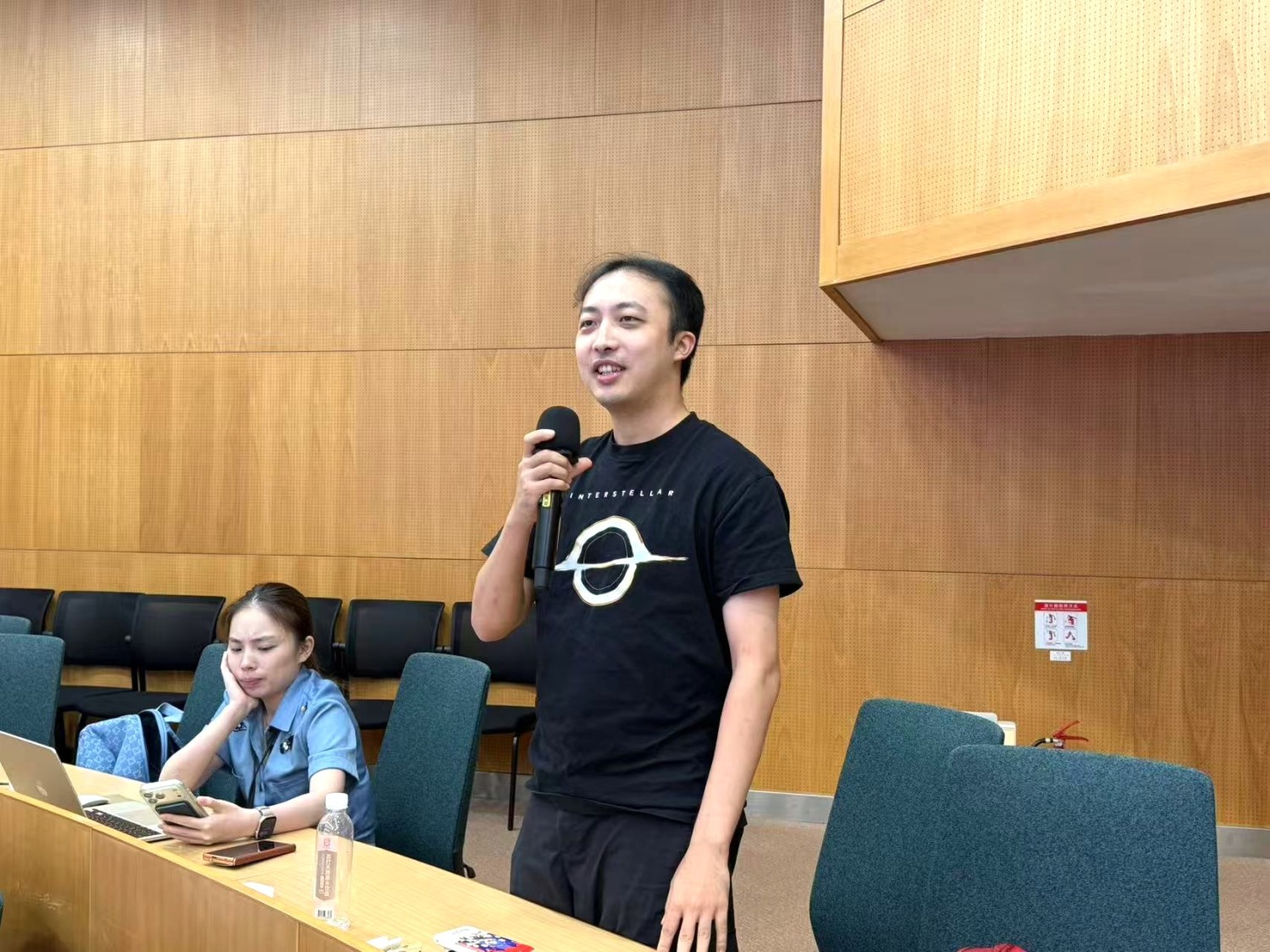
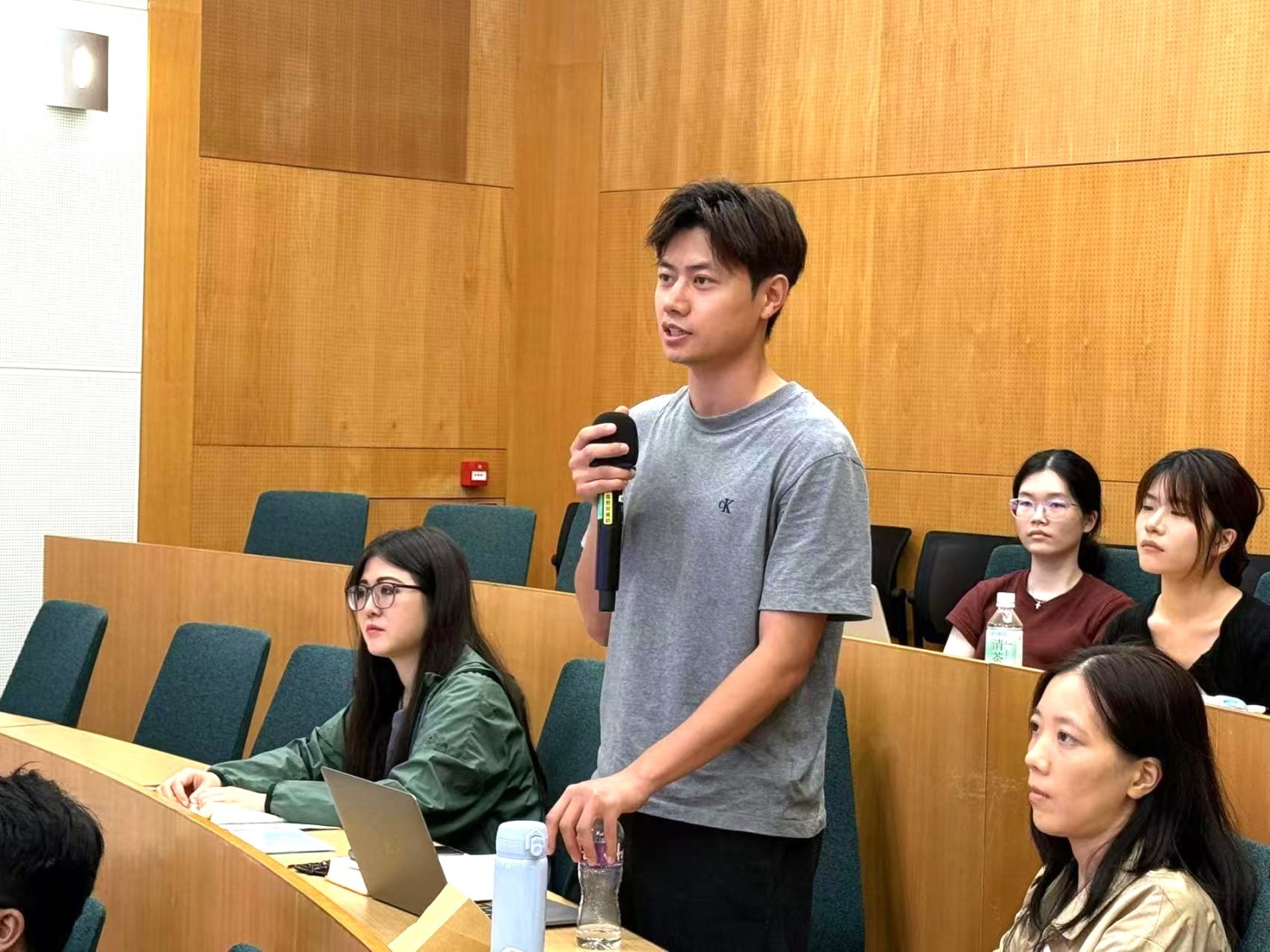
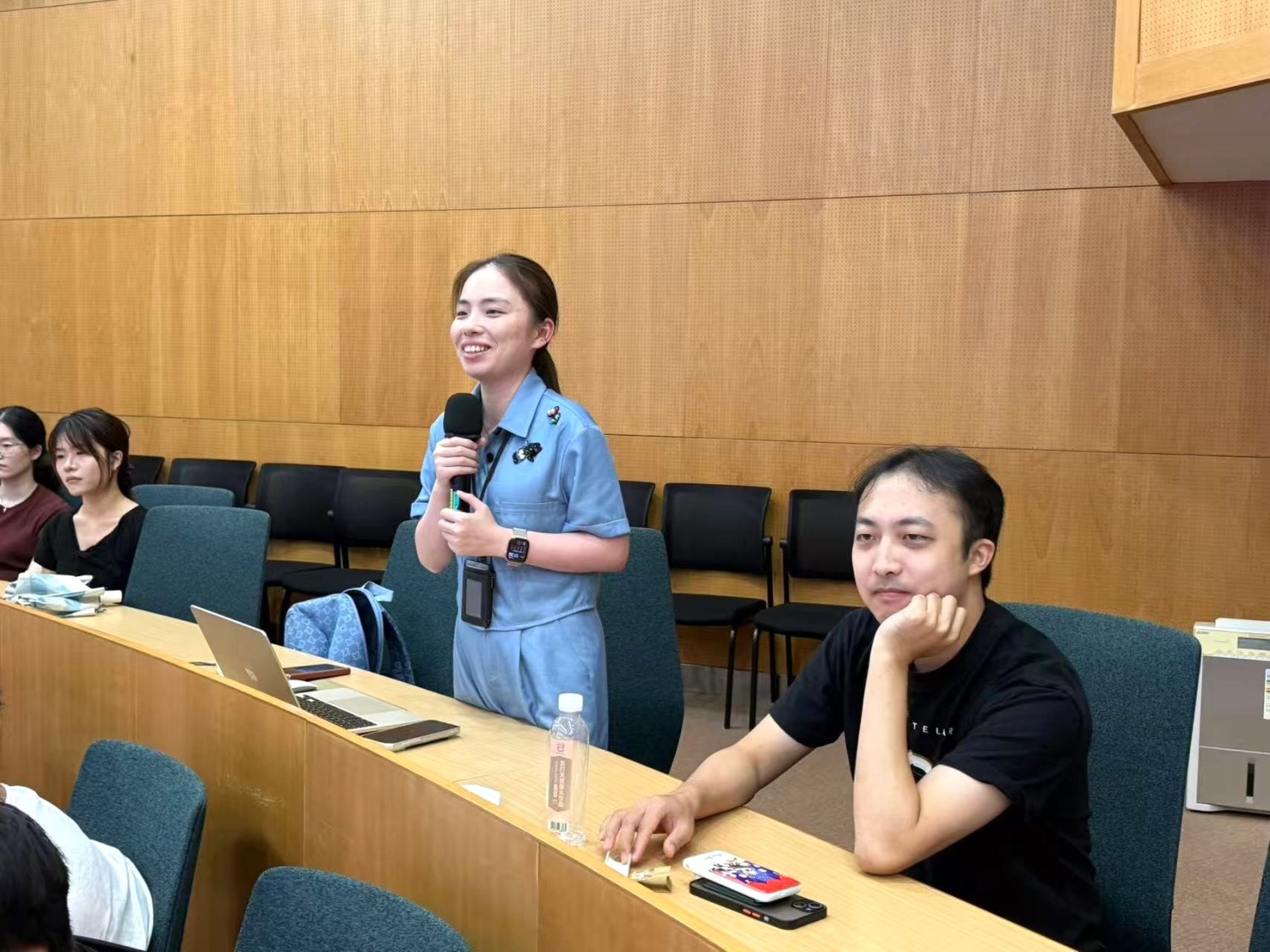
During the interactive session, students actively engaged with Mr. Chen in questions and discussions, and both sides explored multiple practical issues. Attending students expressed that the seminar greatly benefited them in professional fields such as cross-border asset allocation, foreign exchange hedging, option risk control, and structured hedging strategies, and considered it a rare learning opportunity to conduct research and exchange with Mr. Chen and his team. Finally, the faculty and students of the Faculty of Finance once again thanked Mr. Chen for his excellent sharing. The Faculty of Finance will continue to hold diversified thematic activities, promote the close integration of academic theory and industry practice, and strive to cultivate a new generation of financial professionals.