


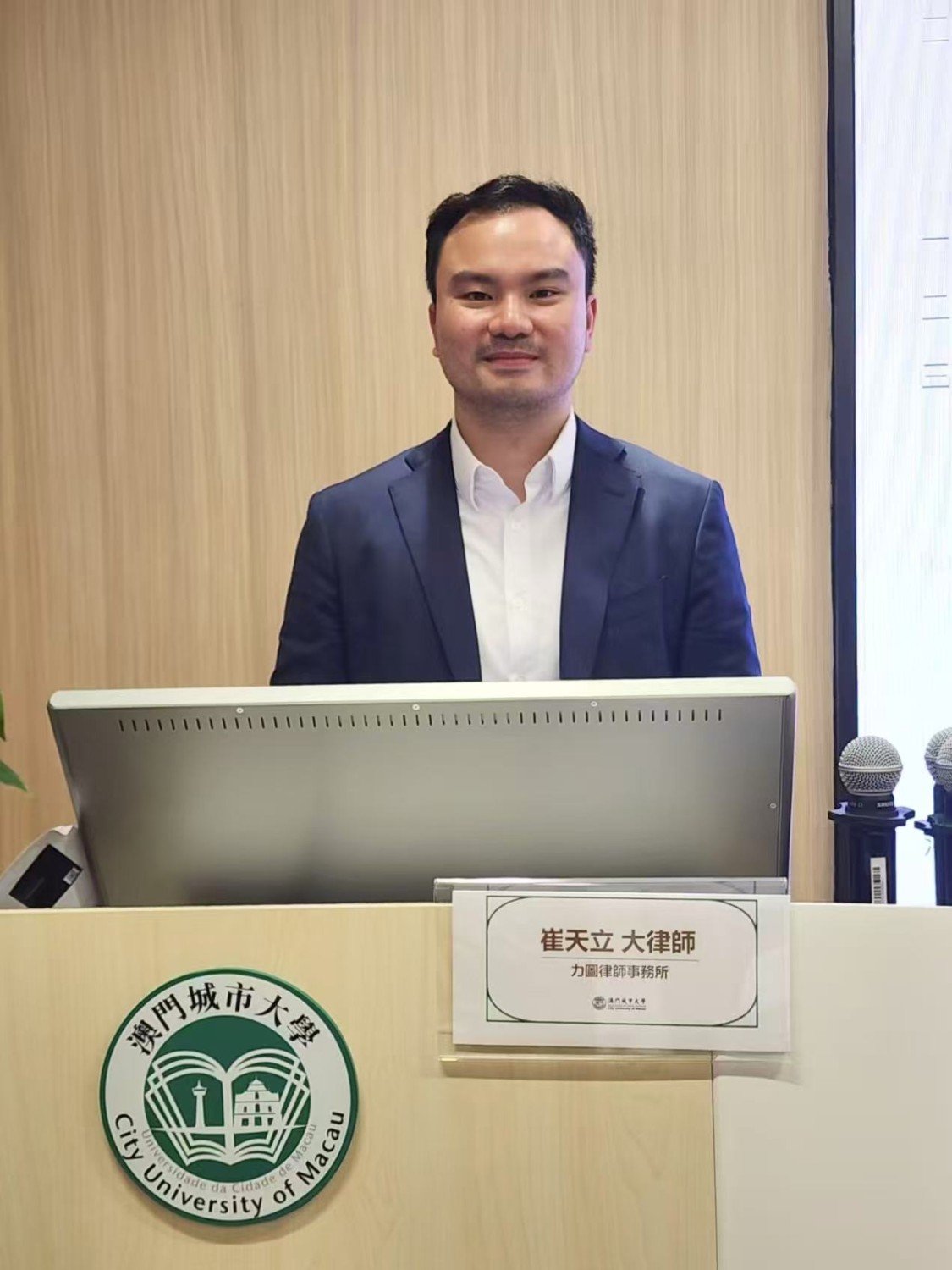
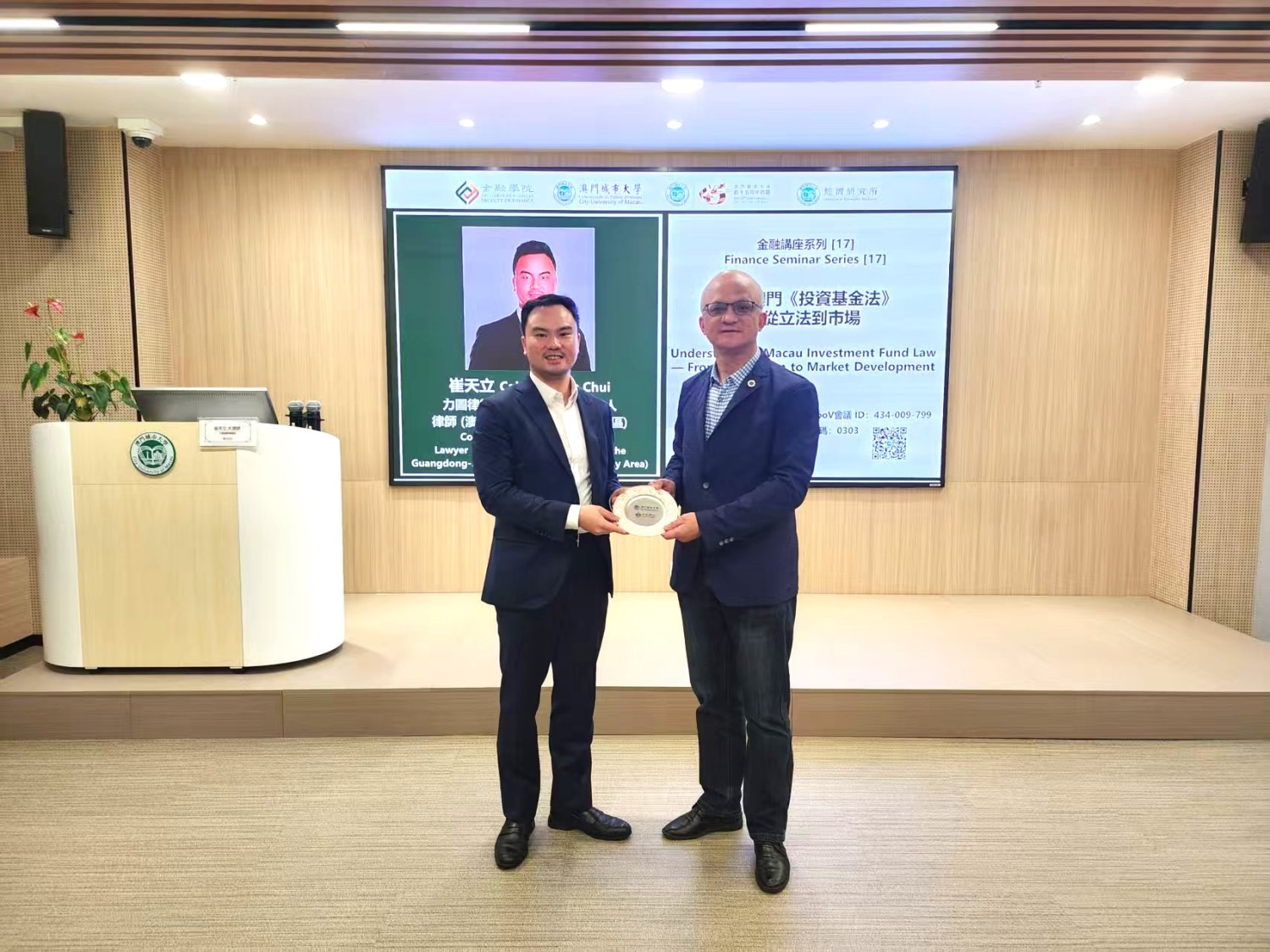
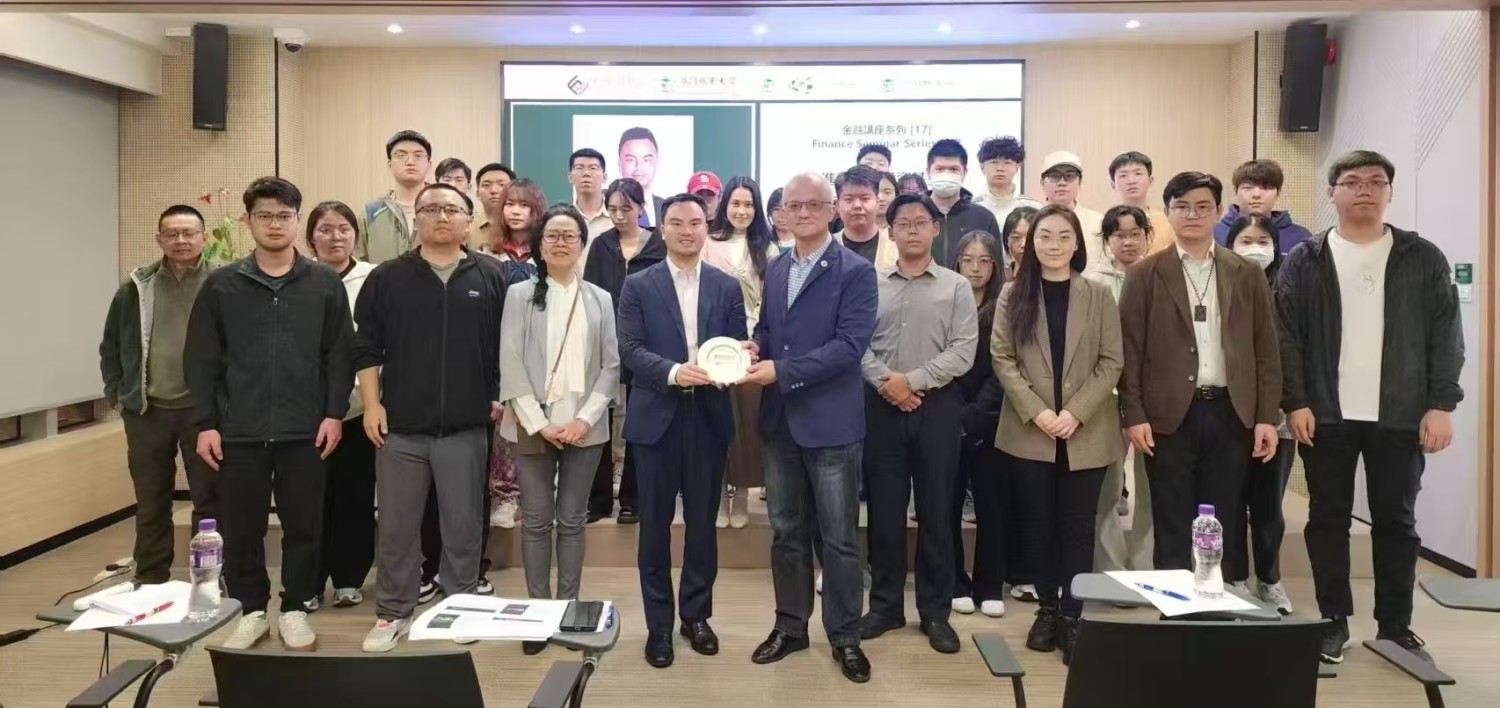
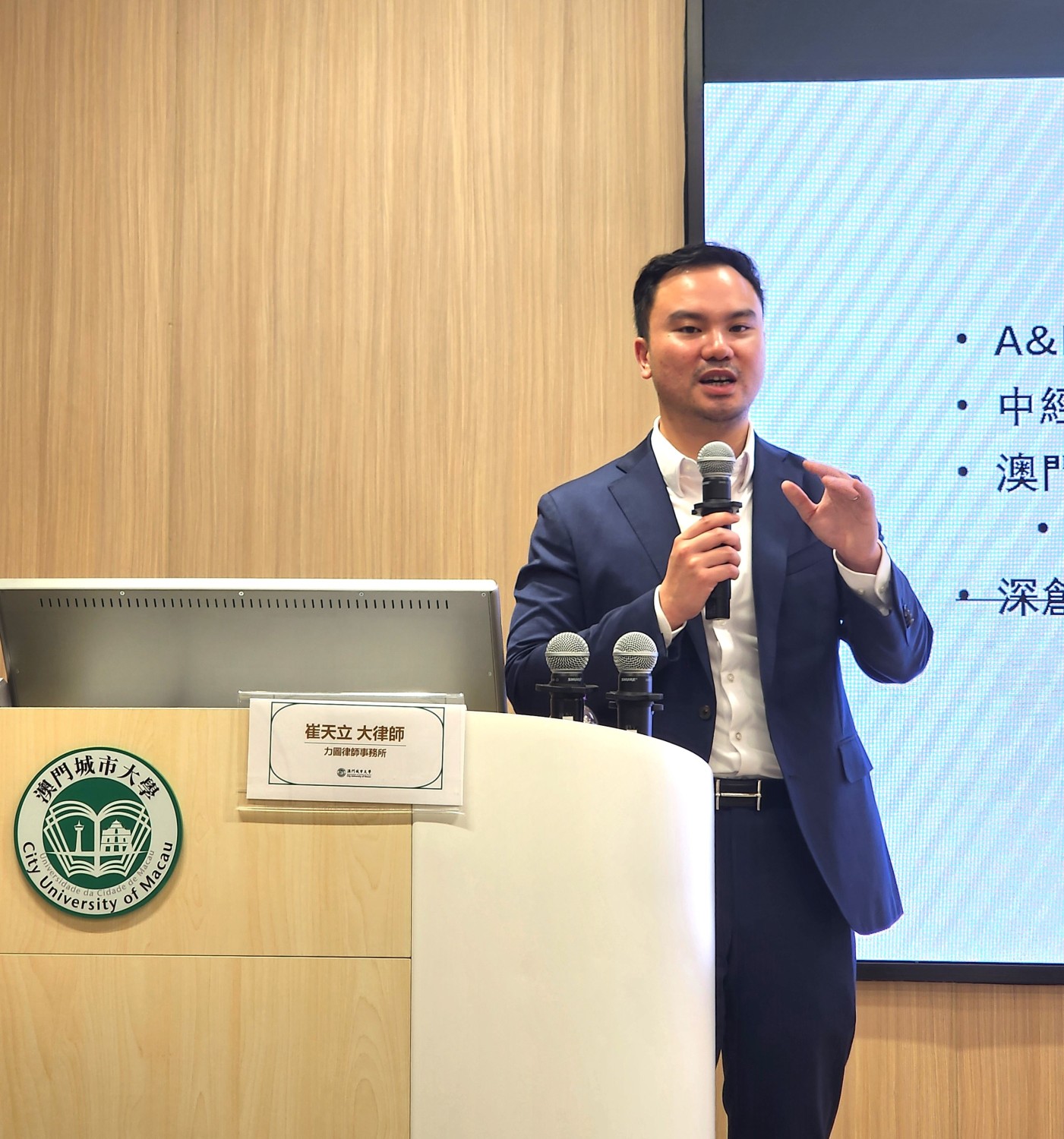
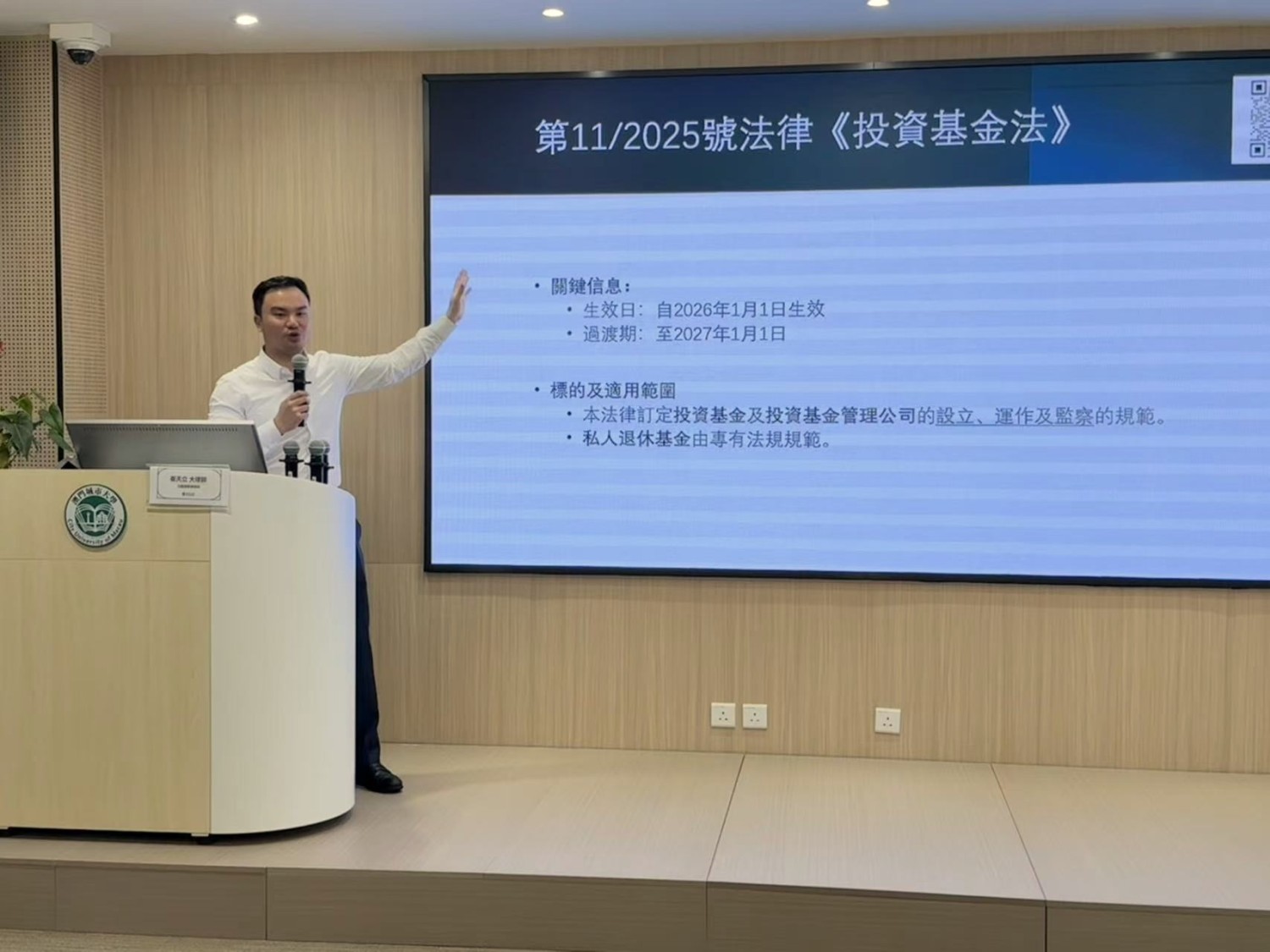
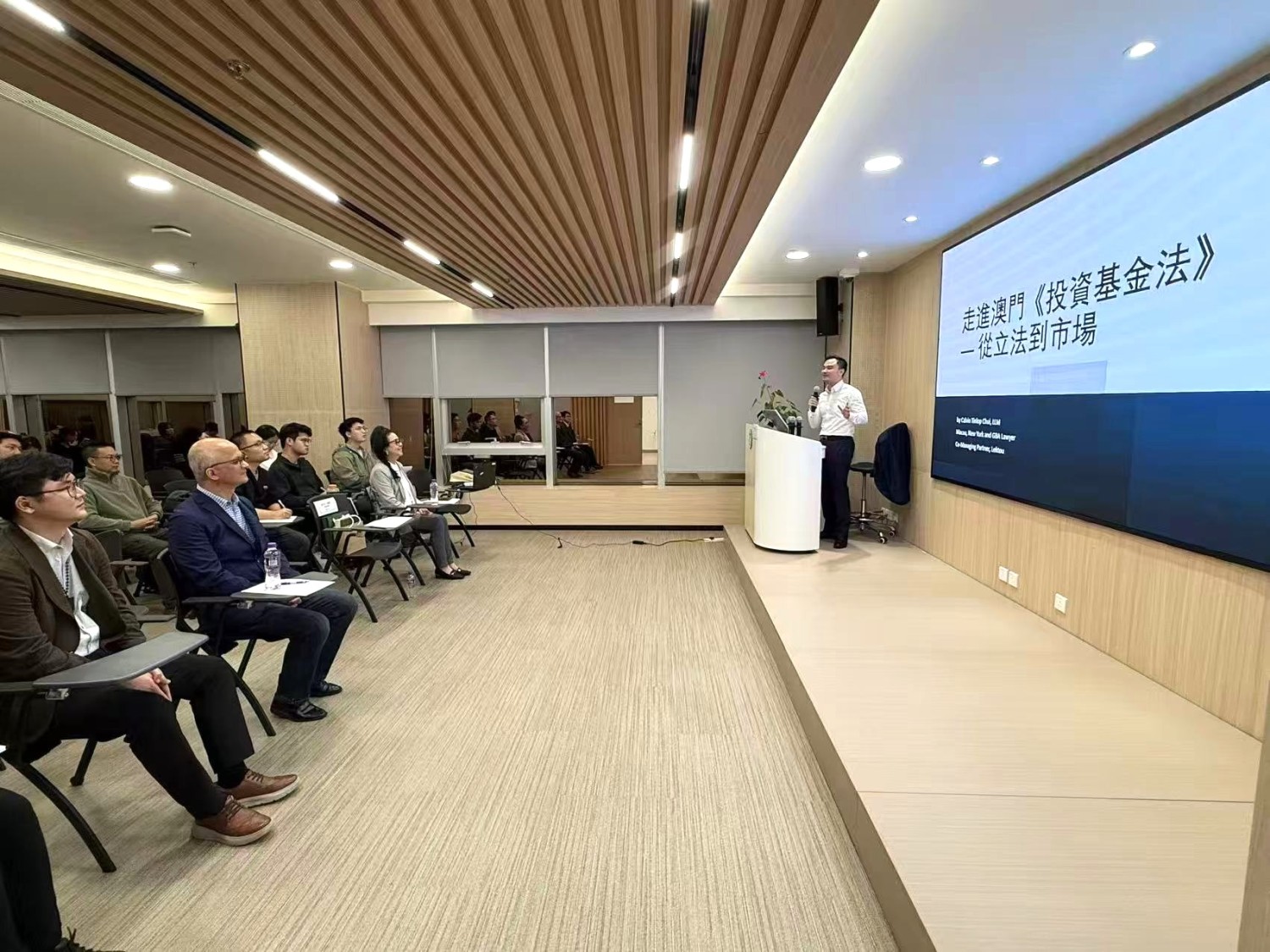

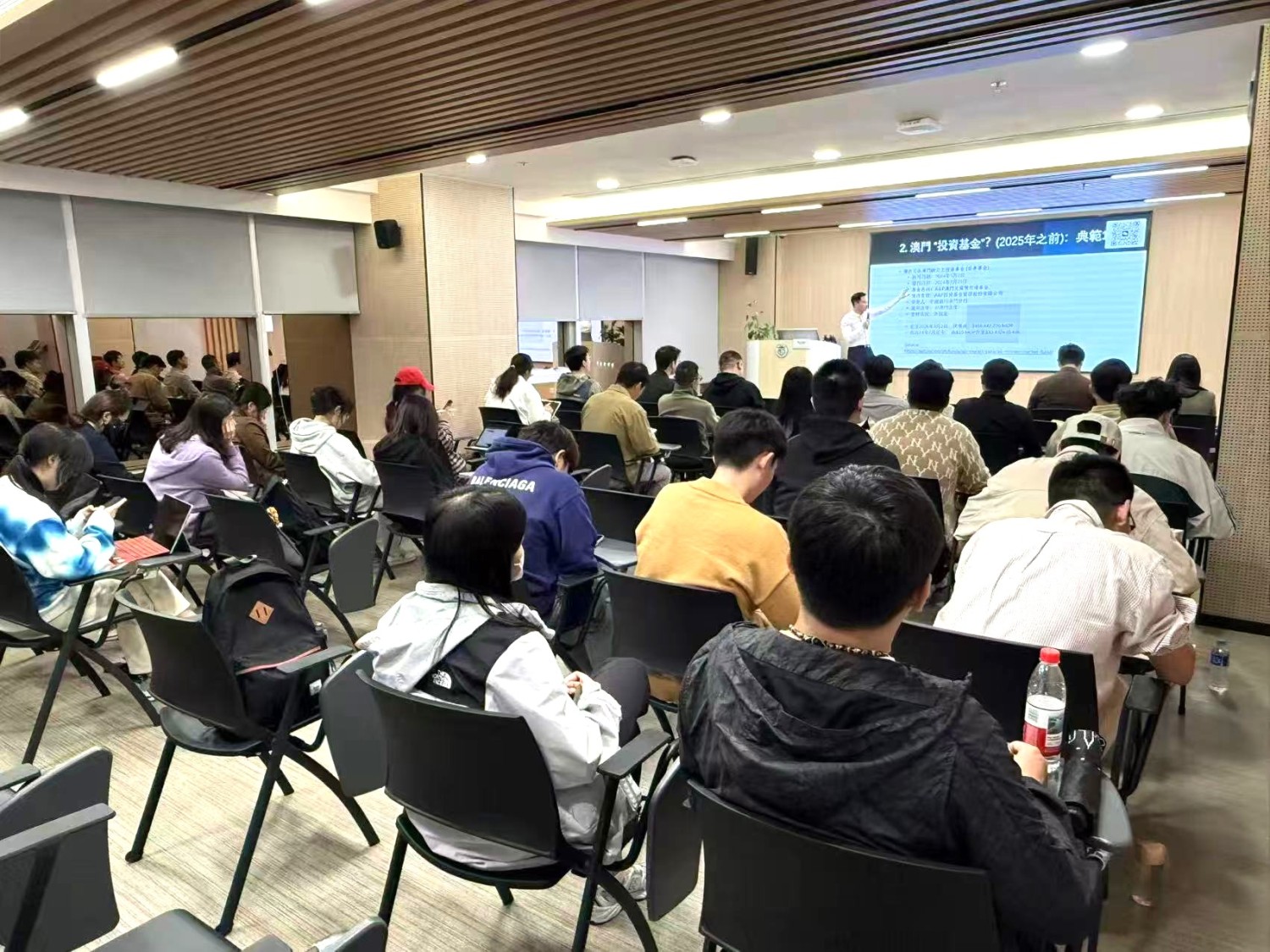
On March 3, 2026, the Faculty of Finance at City University of Macau held a finance seminar at Golden Dragon Campus, Macau. The seminar featured Mr. Calvin Tinlop Chui, Co-Managing Partner of Lektou Advogados e Notários, was invited as the keynote speaker. The seminar focused on the theme "Understanding Macau Investment Fund Law — From Legislation to Market Development." Distinguished guests included Dean Adrian Cheung and Associate Dean Eva Khong of the Faculty of Finance.
Mr. Calvin Tinlop Chui is Co-Managing Partner of Lektou Advogados e Notários, specializing in financial law. He advises banks, financial institutions, and insurance companies on matters including corporate governance, regulatory compliance, cross-border transactions, and product structuring. He has led numerous complex financial projects, encompassing bond issuances, investment funds, financial leasing and applications for financial licenses. He also possesses extensive practical experience in mergers & acquisitions, corporate restructuring, and cross-border initial public offerings. Mr. Chui currently serves as President of the Macau Financial Law Association, member of the Bond Review Committee of a local exchange, and member of the supervisory board of a bank. He has previously taught commercial law and financial law at university level. He is qualified to practice law in Macau, New York State, and the Guangdong-Hong Kong-Macao Greater Bay Area. Mr. Chui earned his Bachelor of Laws from the Catholic University of Portugal and his Master of Laws (LL.M.) from the University of Chicago Law School.
At the beginning of the seminar, Mr. Chui explained that Macau's legal system for investment funds dates back to before the handover, specifically to Decree-Law No. 83/99/M, enacted in 1999. This decree mainly consolidated relevant Portuguese legislation at the time, simultaneously regulating both securities investment funds and real estate investment funds. It defined an "investment fund" as an autonomous asset consisting of a portfolio of diversified securities based on a principle of risk dispersion, obtained by investing capital received from the public through the acquisition, by the public, of shares representing the value of that asset. Thus, it established the principle of contractual public offering funds, laying the foundation for Macau's fund industry. Mr. Chui pointed out that before the new law comes into effect in 2026, according to Law No. 11/2025 (Investment Fund Act), a clear distinction is made between public and private investment funds, with different regulatory regimes established for each.
The Macau Special Administrative Region government formulated the new Investment Fund Act with four clear objectives: strengthening alignment with international regulatory standards, enhancing investor protection, removing obstacles to the operation and development of fund management, and optimizing the development environment for fund management, thereby attracting foreign institutions to participate in developing the local investment fund business, promoting the healthy development of Macau's fund market, and facilitating connectivity with foreign fund markets.
During the seminar, Mr. Chui analyzed the specific differences in the new law concerning fund classification and structure, establishment and offering regimes, outsourcing and investment governance, disclosure and investor protection, and cross-border sales and fund redomiciliation. Mr. Chui also elaborated on the regulatory distinctions between public funds and private funds. Public funds raise capital publicly, require prior approval and licensing from the AMCM (Macau Monetary Authority), and mandate fund assets to be custodied by a qualified depositary. Public funds must adhere to the property rules and prudential limits for public funds, as well as strict selling document and information disclosure requirements. Private funds, on the other hand, raise capital through non-public means, utilize a simplified registration system for establishment, have flexible custody requirements where the management entity adopts appropriate asset safekeeping measures, offer greater investment flexibility, and have simplified disclosure requirements.
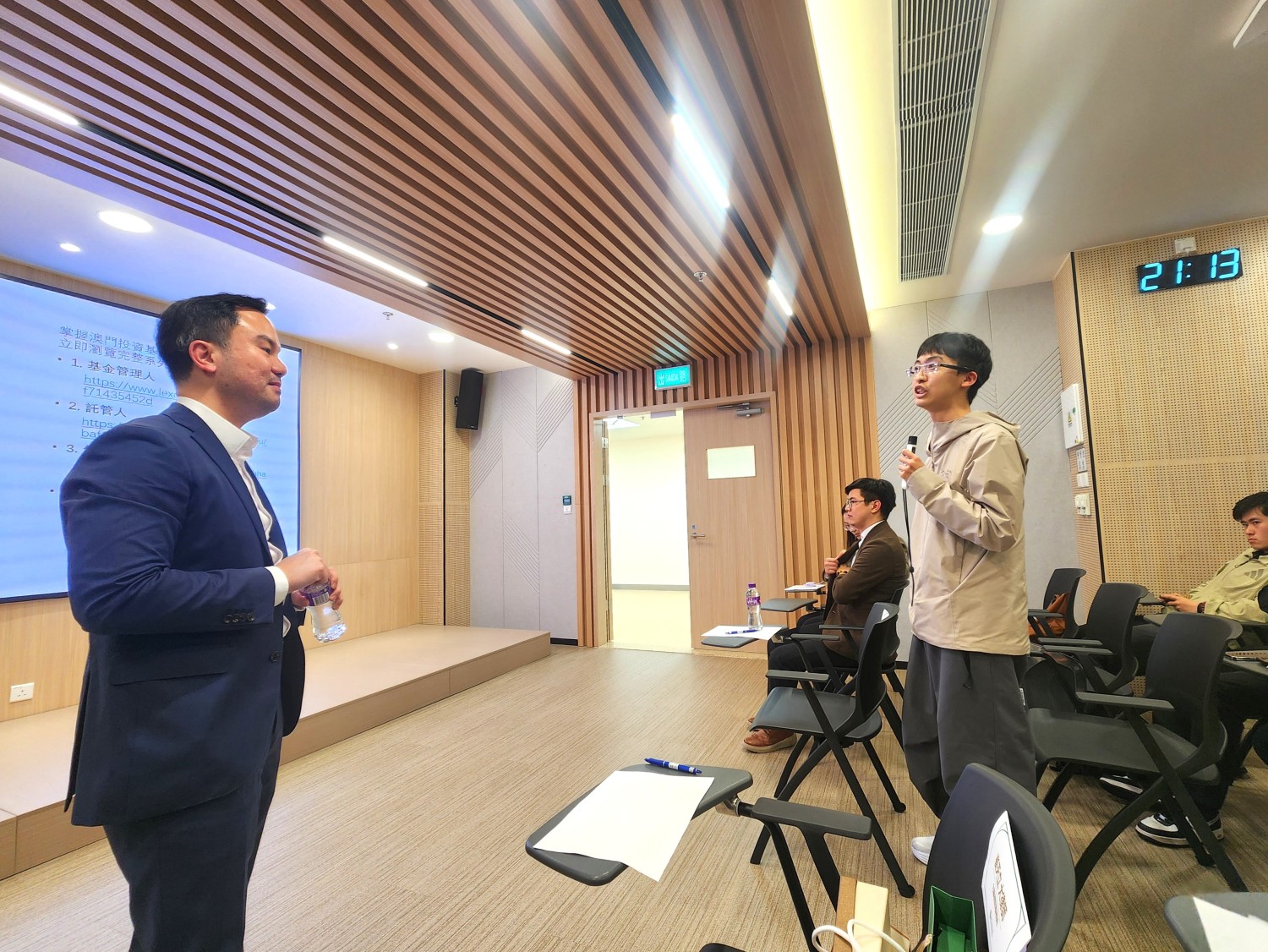
During the Q&A session, Mr. Chui engaged actively with the students, who eagerly asked legal questions related to the Investment Fund Act. Mr. Chui patiently answered their questions. This seminar provided students with a deeper understanding of Macau's Investment Fund Act, helping them grasp the current advantages of Macau's financial and fund market. The faculty and students of the Faculty of Finance once again thanked Mr. Chui for his insightful sharing, which enhanced students' knowledge of Macau's Investment Fund Act and provided a valuable learning experience.