


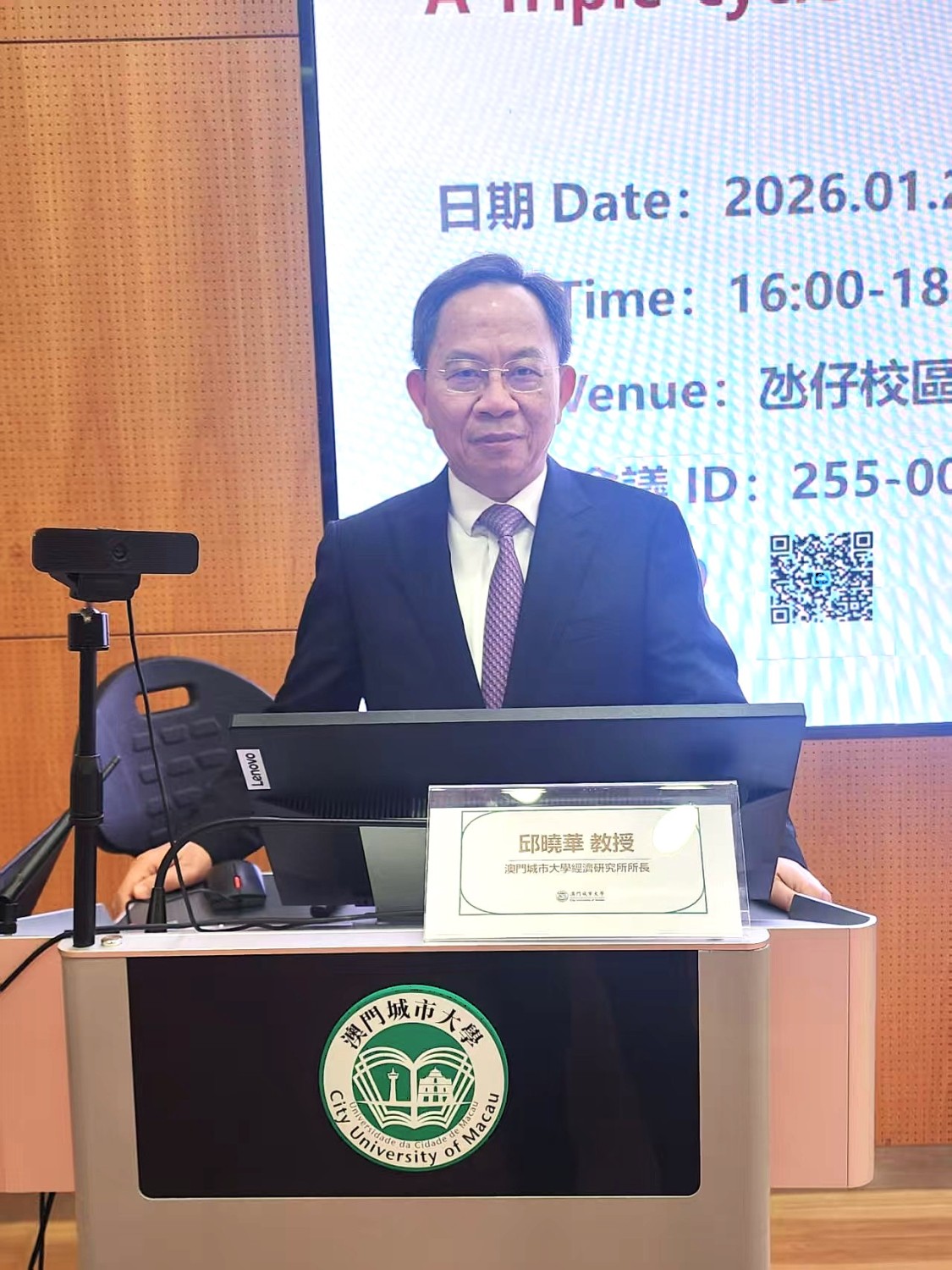
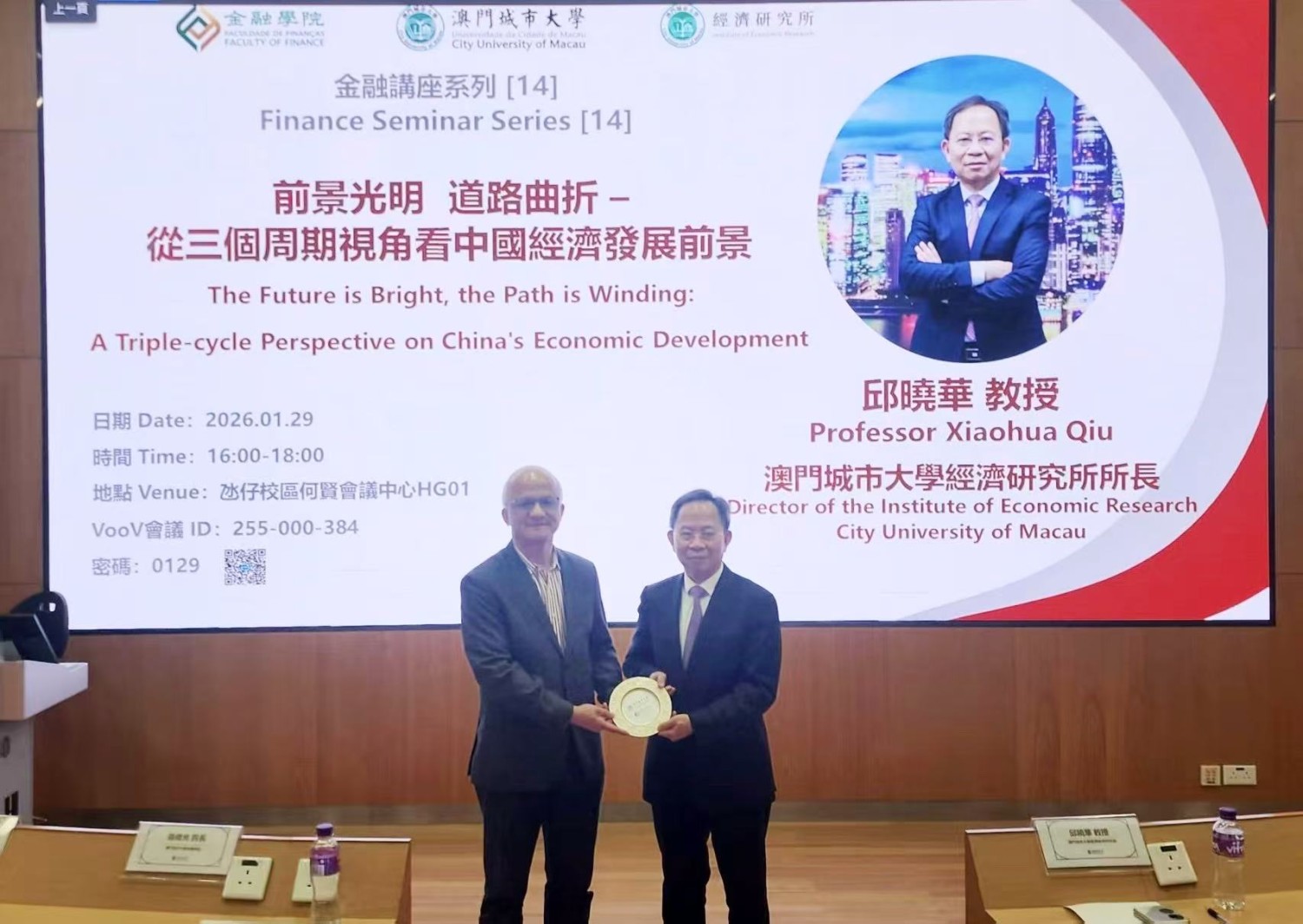
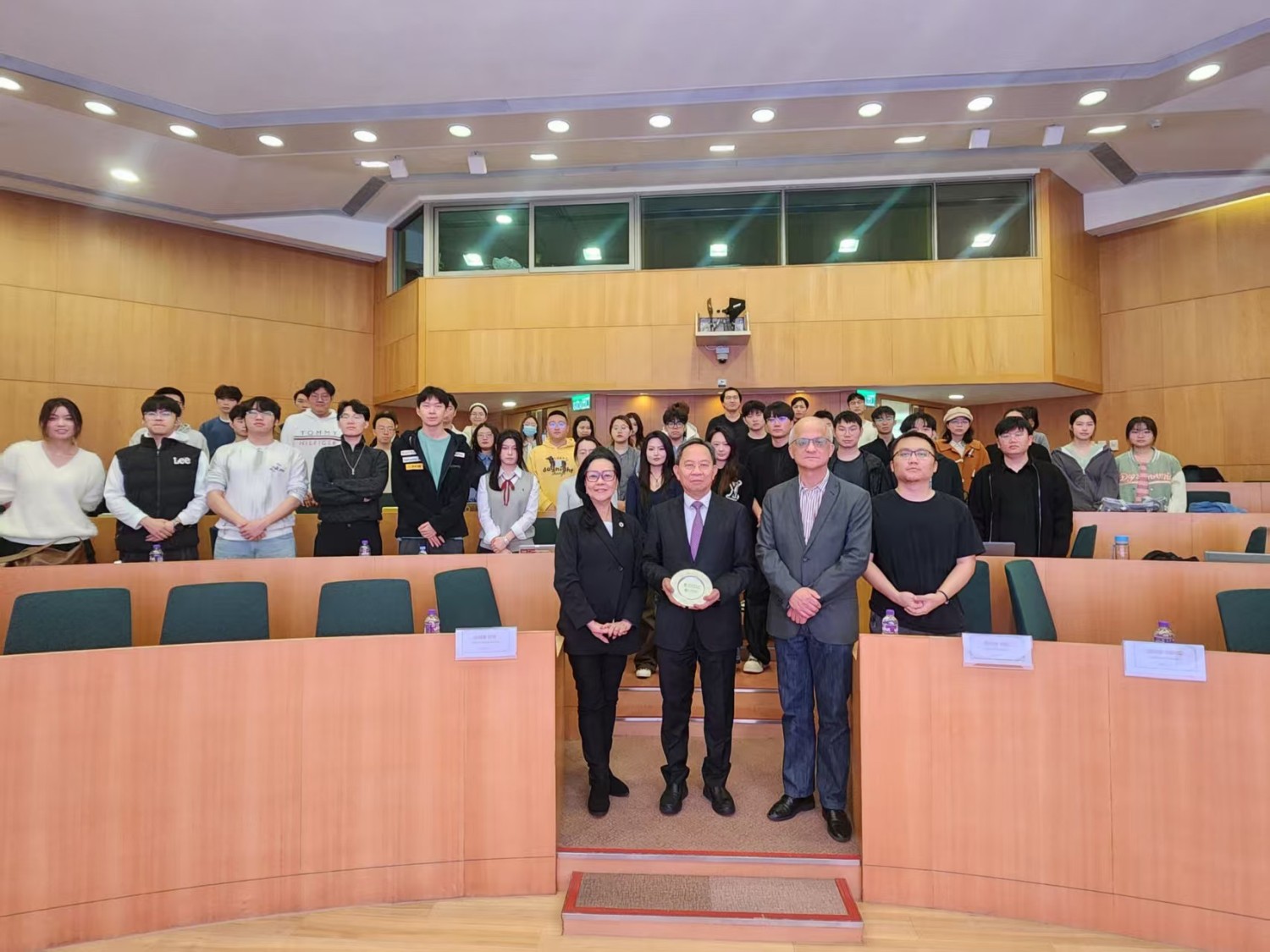
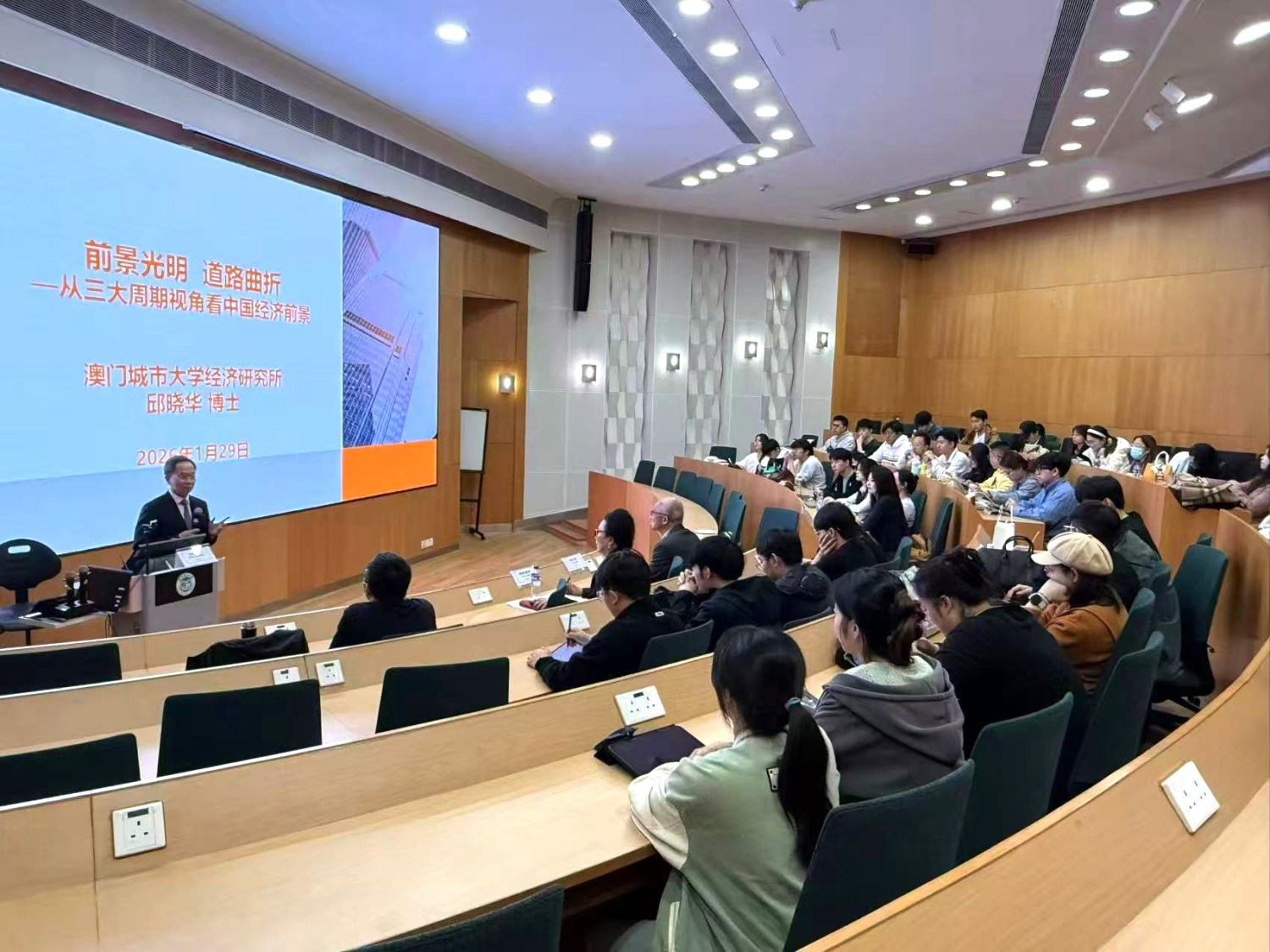
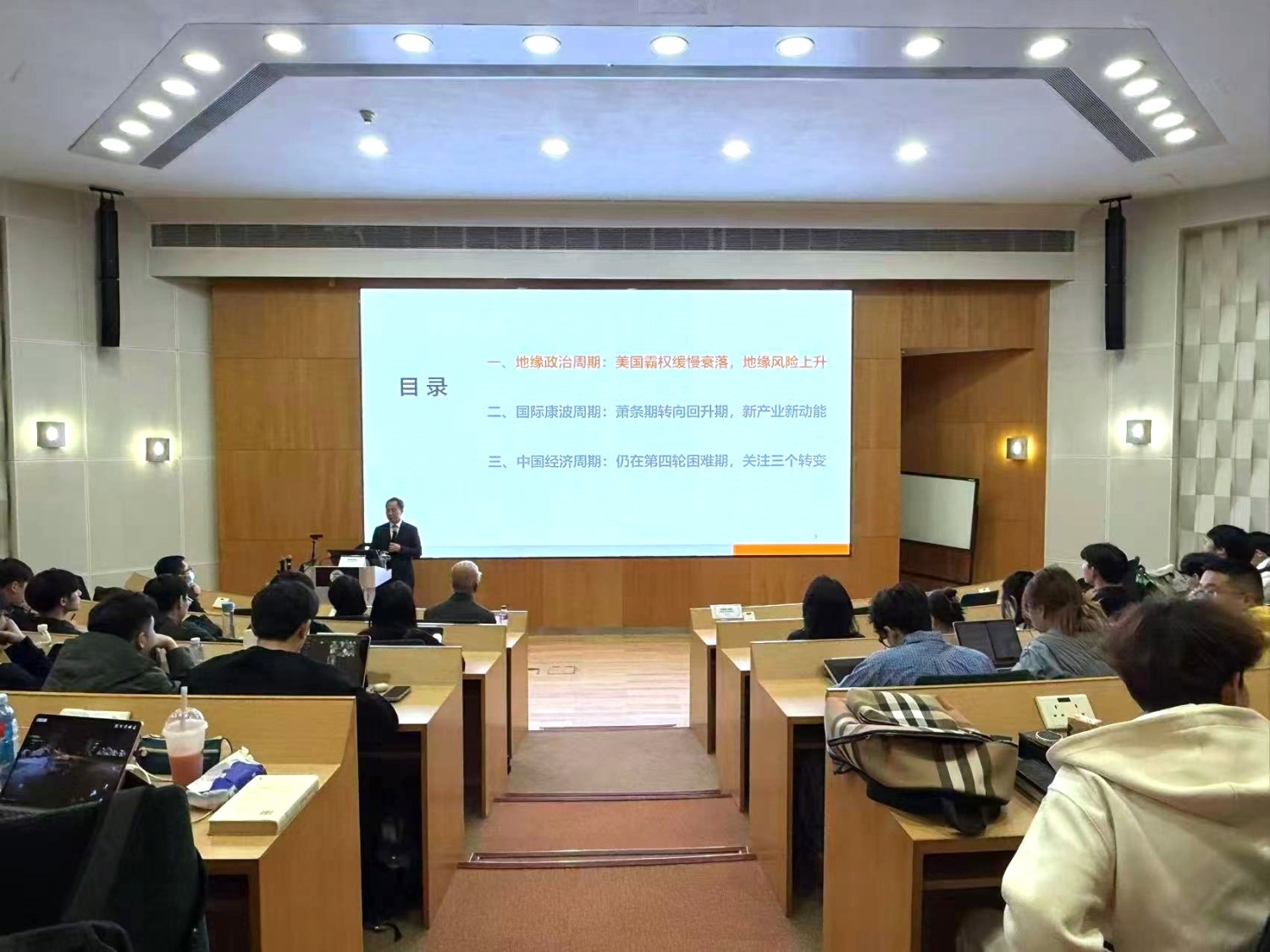
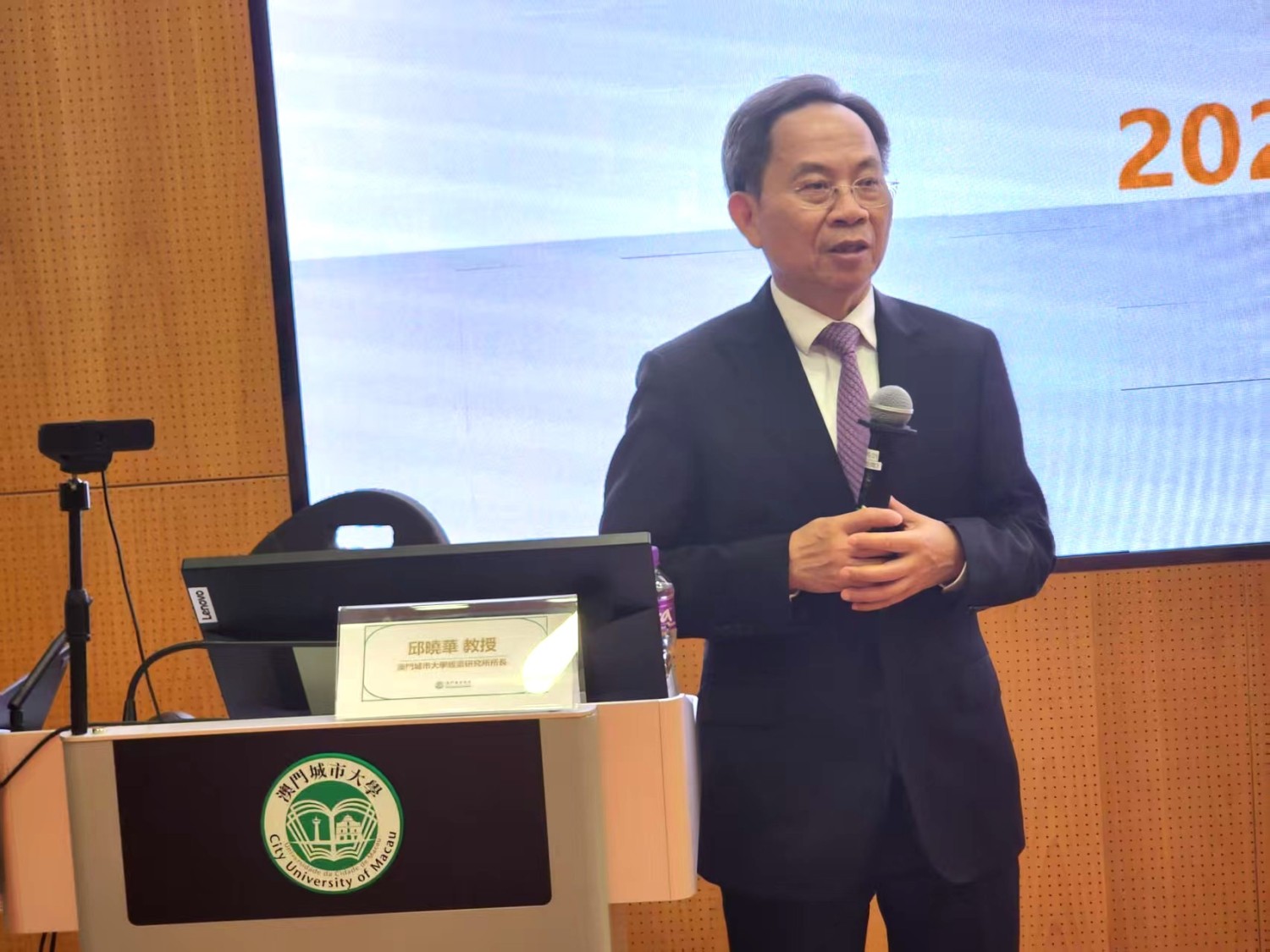
On 29th January 2026, the Faculty of Finance of City University of Macau held a finance seminar, at Ho Yin Conference Center on Taipa Campus. The seminar featured Professor Xiaohua Qiu, Director of the Institute of Economic Research, City University of Macau, was invited as the keynote speaker. The seminar focused on the theme: "The Future is Bright, the Path is Winding: A Triple-cycle Perspective on China's Economic Development." Distinguished guests included Dean Adrian Cheung and Associate Dean Eva Khong of the Faculty of Finance.
Professor Xiaohua Qiu is an economist and senior statistician from the People's Republic of China. He has served as the Director of the National Bureau of Statistics of the People's Republic of China and as a member of the 10th National Committee of the Chinese People's Political Consultative Conference (CPPCC). He has also held positions as Vice Chairman of the All-China Youth Federation and Deputy Chairman of the All-China Youth Federation for National Institutions and Beijing, as well as a member of the Monetary Policy Committee of the People's Bank of China. Professor Qiu has served as a part-time professor at various universities, including Xiamen University, University of Science and Technology of China, Xi'an University of Statistics and Economics, Beijing Normal University, Shanghai University of Finance and Economics, and Central Party Faculty of the Communist Party of China. He has also been a researcher at research institutions such as the Financial Research Center of the Chinese Academy of Social Sciences, China Reform Research Society, Research Center of the Ministry of Agriculture, and China Center for Economic Research at Tsinghua University. His main research areas include macroeconomics, comprehensive statistics, and China's economic reform and development. He has published over 400 research articles on China's economic reform and development. He has authored several books, including "Tracking China's Economic Hotspots," "Analysis of Macro Regulation during Ten Years of Reform," and "China's Path: My Perspective on the Chinese Economy." He has also been involved in drafting documents for the Central Economic Work Conference on multiple occasions.
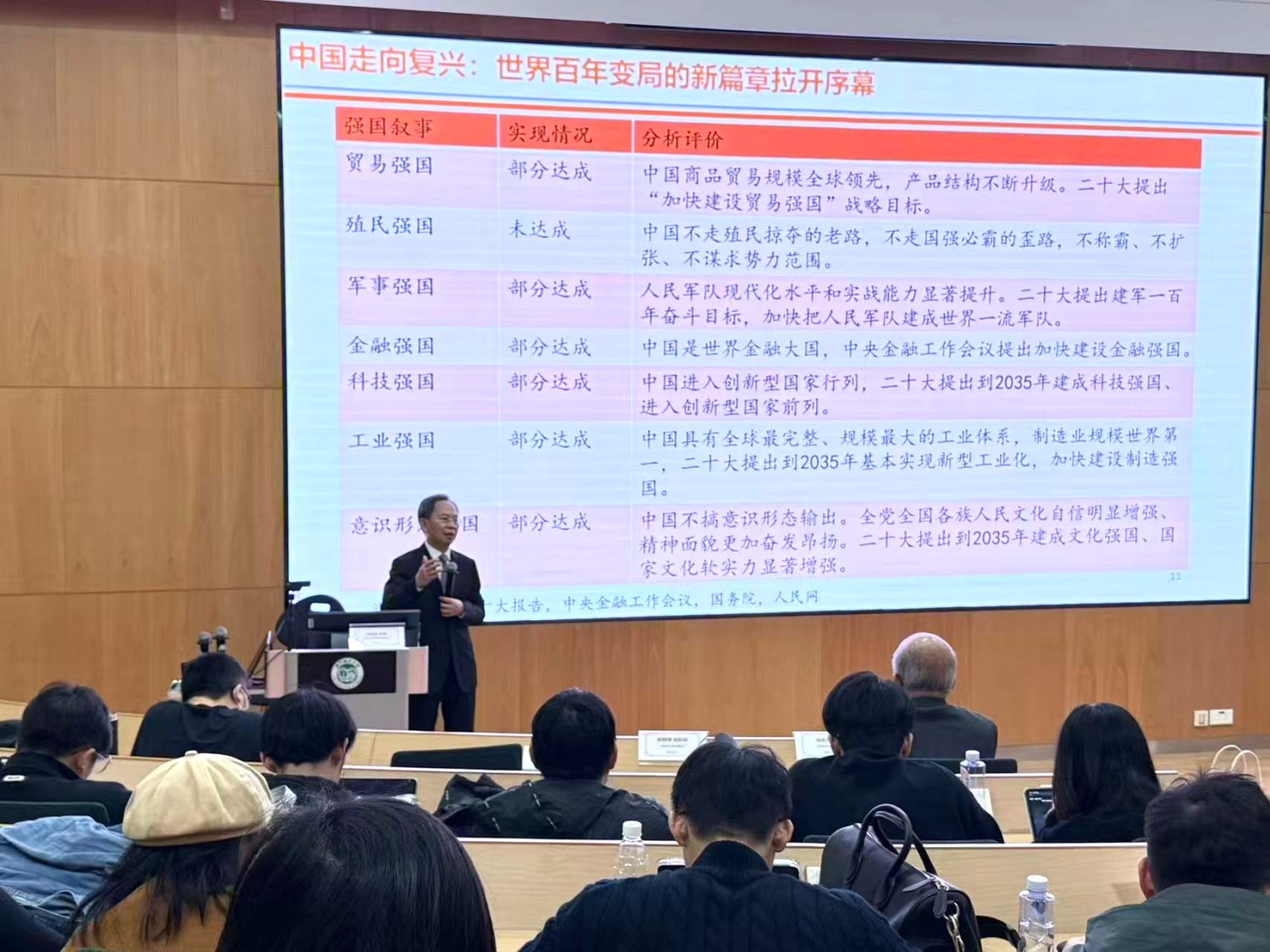
During the seminar, Professor Xiaohua Qiu used the framework of the "Three Major Cycles" to provide an in-depth analysis of China's current economic situation and future prospects. He pointed out that China's economic development faces both challenges and opportunities. Although the economy is currently encountering complex challenges and is in the fourth cyclical downturn since the reform and opening-up, its long-term prospects remain bright due to its unique advantages and the momentum of emerging industries. However, the path to recovery and high-quality development will require overcoming numerous challenges.
Professor Qiu began by analyzing the changes in the global landscape from the perspective of the "Geopolitical Cycle." The current international order is undergoing profound adjustments, with emerging forces continuing to develop. China is currently at a low point in the Kondratiev cycle, leaving limited room for further economic decline. The momentum of stabilization and gradual recovery is steadily strengthening, and new signs of emerging from the difficult period are becoming visible. Continued counter-cyclical adjustments, along with further reform, opening-up, and industrial innovation, are essential to seize long-term upward opportunities. From the perspective of the "International Kondratiev Cycle," the world is at a critical stage of a new round of technological and industrial revolution. The characteristics of the Kondratiev upswing phase include concentrated innovations in AI, with waves of innovation represented by artificial intelligence, the digital economy, and commercial aerospace injecting new momentum into the global economy. China is actively participating in and leading this transformation, having accumulated significant advantages in multiple emerging fields such as new energy vehicles and digital transformation. It is committed to promoting high-quality economic and social development through the development of new quality productive forces. Currently, the global Kondratiev cycle, China's Juglar cycle, and Kitchin cycle are all under short-term pressure but may turn optimistic in the medium to long term. Future cyclical recovery will depend on the combined effects of industrial trends and policies. Finally, focusing on the "Chinese Economic Cycle," Professor Qiu pointed out, based on data, that the economy is currently in a critical period of structural adjustment and transformation of growth drivers. In the face of internal and external challenges, China is striving to achieve three fundamental shifts in its economic growth drivers: from real estate-driven to capital market-driven, from external demand-driven to domestic demand-driven, and from factor input-driven to innovation-driven. Shifting fiscal policy toward consumption and countering "involution" (excessive internal competition) are the main themes of the economic and policy path for 2026.
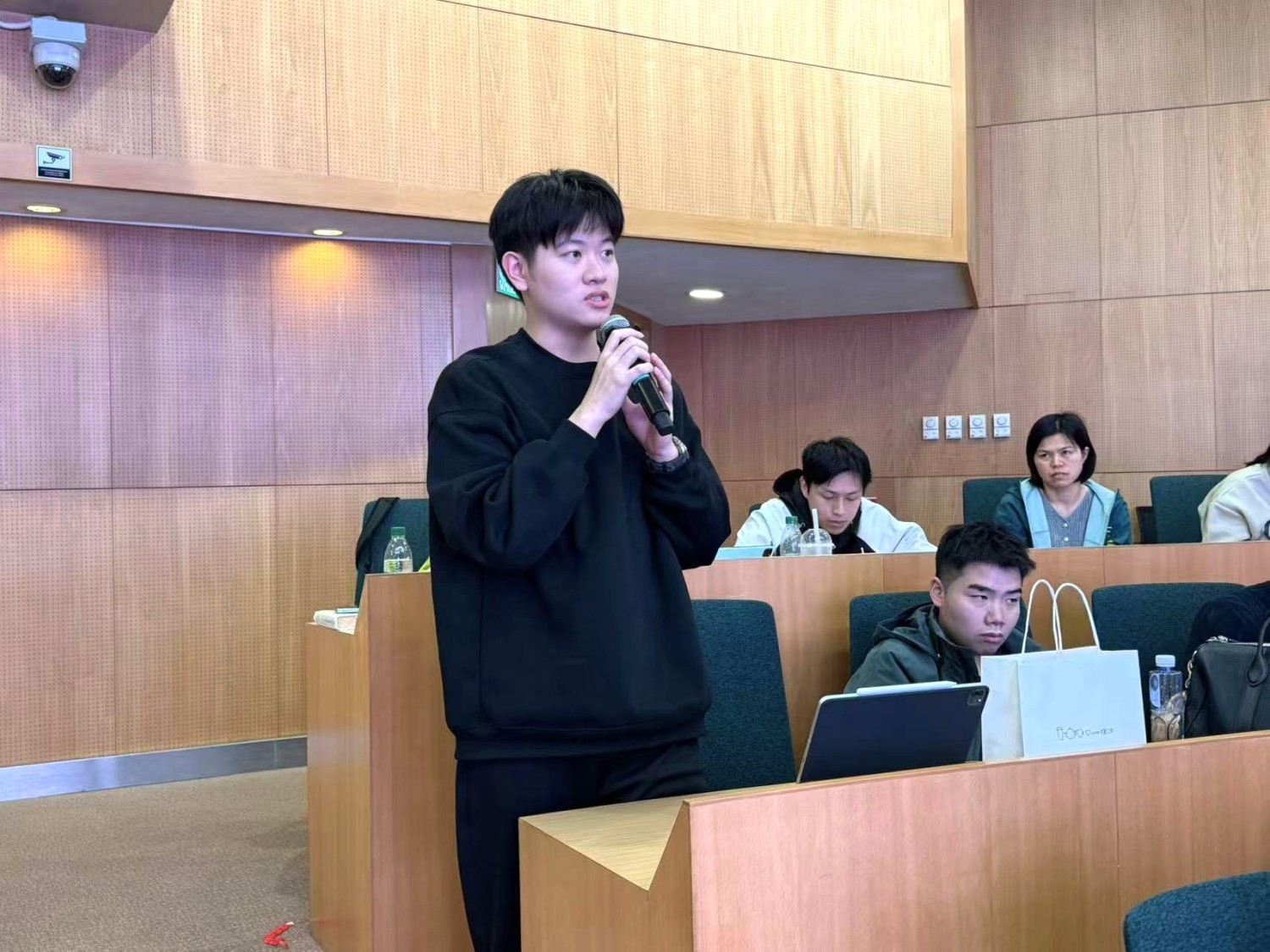
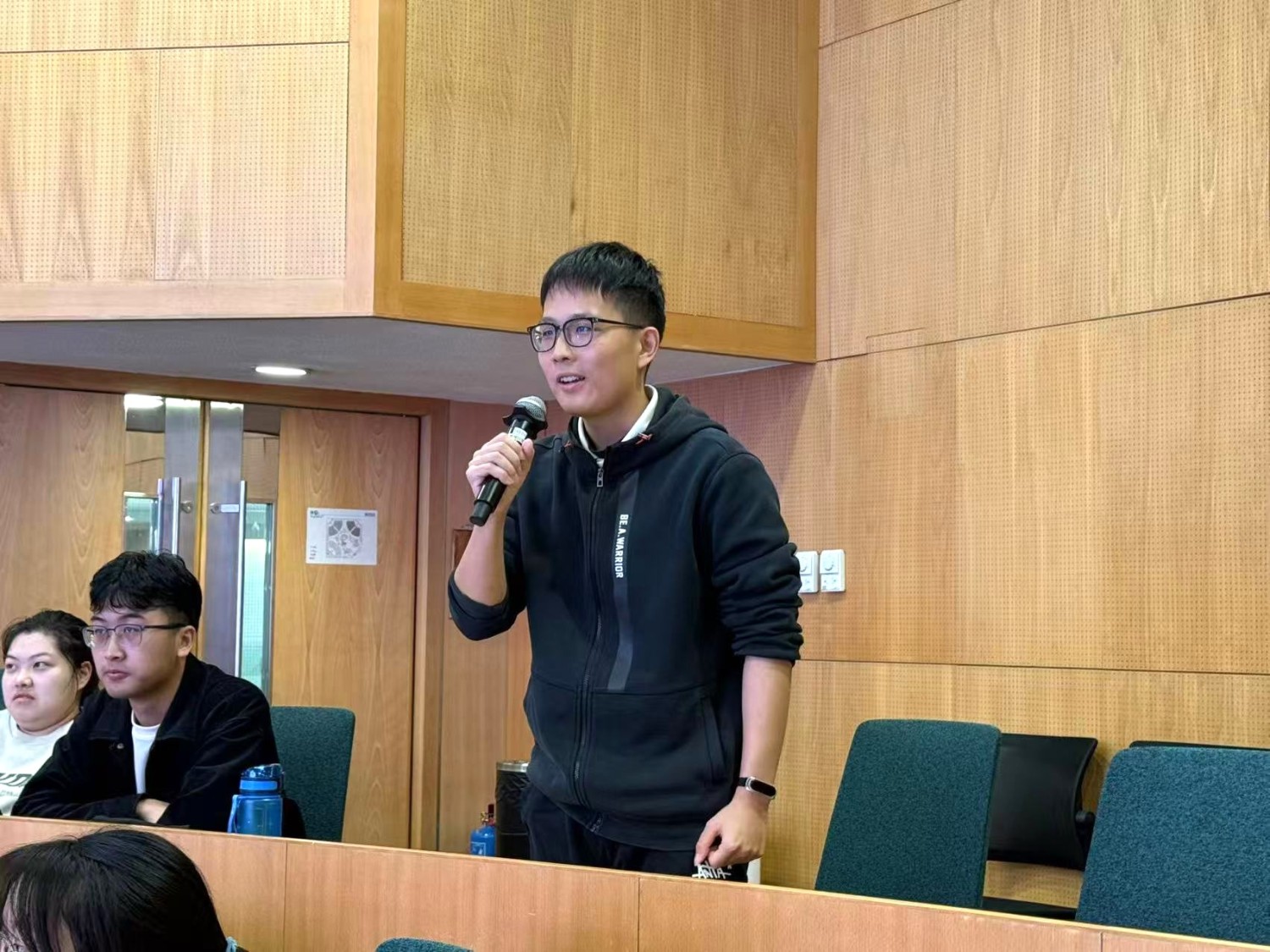
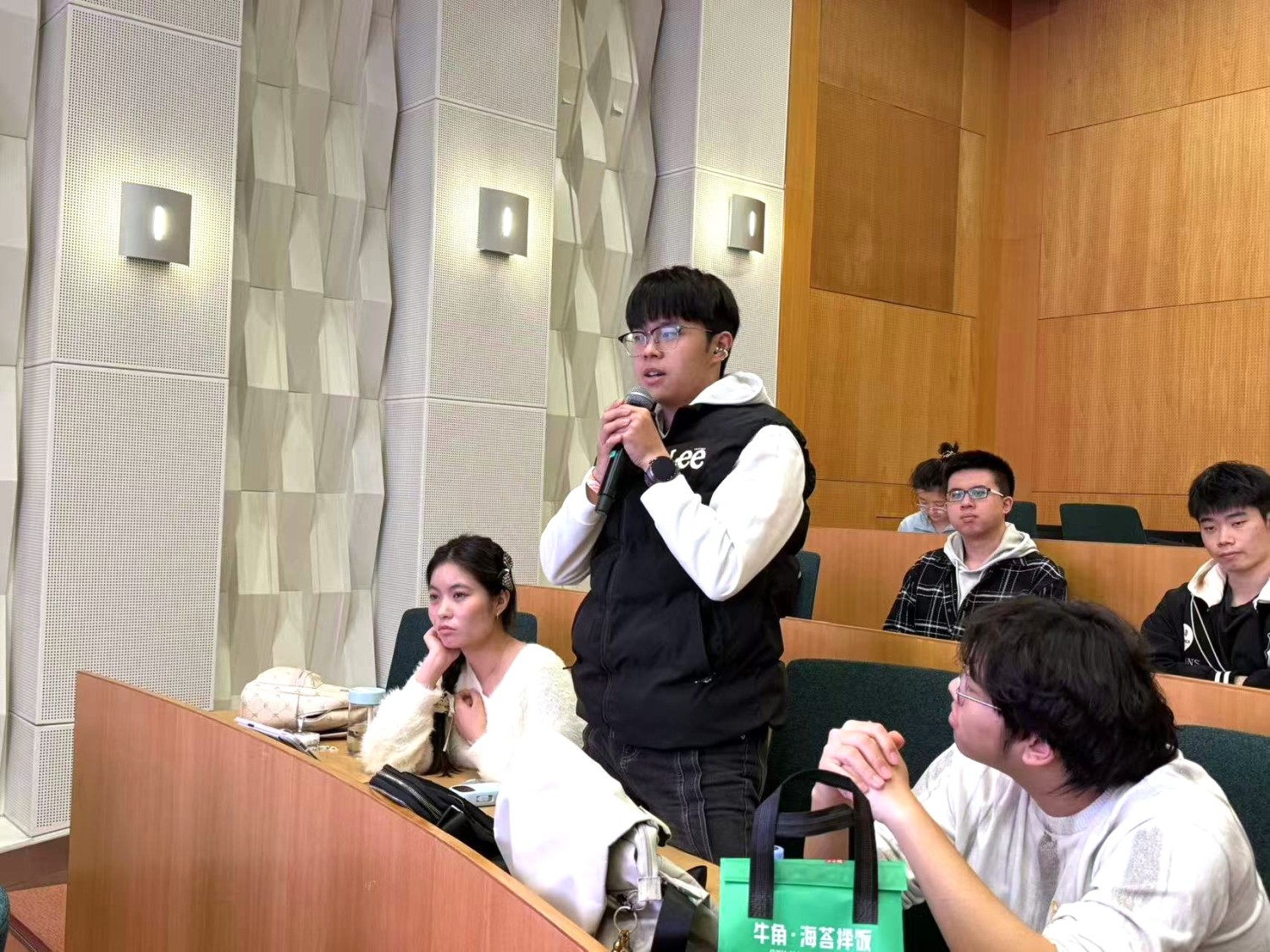
During the Q&A session, Professor Qiu actively engaged with students, who enthusiastically asked questions. This seminar deepened the understanding of faculty and students regarding China's current economic situation and future trends, providing professional economic analysis and policy insights for both academic and industry professionals. The faculty and students of the Faculty of Finance once again expressed their gratitude to Professor Xiaohua Qiu for traveling from Beijing specifically to deliver this financial seminar. Students unanimously remarked that Professor Qiu's profound knowledge, precise analysis, and engaging presentation provided them with an invaluable learning experience. They expressed great benefit from the seminar and look forward to Professor Qiu's next financial seminar, hoping for more opportunities to learn from him.